Sunday, November 15, 2015

Quetzalcoatl: The Birth and Death of the Aztecs

While the cultures of Latin America had many different gods, one of the most prevalent deities was named Quetzalcoatl.  Quetzalcoatl was worshiped as a god by many cultures in Mesoamerica, including the Aztec civilization. As one of their chief deities, he was sometimes revered as the creator of mankind. Unfortunately, historically Quetzalcoatl would play a role in the downfall of the Aztecs, coming to represent both their birth...and their death.

But just who is Quetzalcoatl?
“His name comes from quetzal, a rare bird with strikingly long green tail feathers, and coatl, which means snake. Under different names he was honoured throughout Mexico and Central America and the highest pyramid temple in Mexico, at his sacred city of Cholula, was dedicated to him.” (Gifford 21)
Quetzalcoatl was worshipped as a god of many things, including war, intelligence, and the creation of man.

One of the first places the name Quetzalcoatl appears in Mesoamerican mythology is in the stories and architecture of the Toltecs.  The word "Toltec" means artisan, and this people is often accredited with creating the great city of Teotihuacan - literally, "The City of the Gods".  Teotihuacan is home to one of the most famous temples of Quetzalcoatl: the Temple of the Feathered Serpent.

 (UNESCO video)
 
A famous leader amongst the Toltecs was a man named Quetzalcoatl.  He was a ruler who they believed had been sent by the gods to lead them.  Around 1000AD they were driven out of their city by a neighboring army led by a man called Tezcatlipoca. (Bingham 127)  Interestingly, both Quetzalcoatl and Tezcatlipoca came to be regarded as gods.  Besides simply being deified in legends, they were also regarded as brothers by those who told their story. (Flood)
 
When the Aztecs came to inhabit the land the Toltecs had previously ruled, they adapted many of the stories and myths of that earlier people. 
"According to Aztec tradition and legend, Quetzalcoatl/Tialtzin was challenged by a warlike faction who had as their tribal god the fierce Tezcatlipoca (the Smoking Mirror). The fight between the two groups, which is told as a struggle between the gods themselves, brought an end to the power of Tollan and the Toltecs.” (Gifford 13)
The Aztecs built their grand city of Tenochtitlan near the city of Teotihuacan.  As such, they would have been able to see the Temple of the Feathered Serpent, and perhaps were inspired by its grandness to place Quetzalcoatl so high in their own pantheon.
 
(Kass)
 
In the myths of the Aztecs, Quetzalcoatl became the creator of mankind.  The Aztecs divided time into a period of five suns.  During the second sun, Quetzalcoatl ruled as a sun deity who made mankind as they are seen today.  Unfortunately, man became wicked and corrupt, and so another god turned them into monkeys.  Quetzalcoatl was infuriated by his failure, and so he used a tidal wave to wipe away the monkeys.  He then stepped aside to give another god his turn at ruling the earth - but eventually Quetzalcoatl would descend into the underworld, where he used his own blood to bring life to the bones of the humans he had once made.  His sacrifice of blood raised the dead, creating the men who live in this, the fifth sun period. ("Aztec Creation Story")
 
Tragically, this being whom the Aztecs believed had brought them life would also be in part responsible for their downfall.  Another myth about Quetzalcoatl told of the god being tricked into getting drunk.  While intoxicated, Quetzalcoatl slept with his sister.  Upon waking and discovering his incestuous actions, Quetzalcoatl was ashamed.  He made a boat and sailed away into the east in self-imposed exile, but the god vowed to one day return. (Bingham 110)
 
The year of the god's return was given, and the retelling of the story lent it a prophetic air.  The Aztecs believed that the god Quetzalcoatl would return in the year they called 1 Reed.  Alas, 1 Reed was the year known as 1519: the year in which the Spaniard called Hernan Cortes invaded Mesoamerica.  The emperor of the Aztec empire during that year was called Moctezuma, and he foresaw disaster in his dreams.
 
(Bell)
 
Whether or not Moctezuma truly believed that Cortes was Quetzalcoatl returned remains unclear...but the rumors caused him to hesitate, which proved a costly mistake.
“The Aztecs believed that Quetzalcoatl would one day return from over the sea. This would happen in a year when his birthday fell on a particular day...when the Aztec ruler, Montezuma, was told of the strange men who were landing on the neighboring coast, he concluded that Quetzalcoatl had arrived to claim his land...It was only when the Spaniards revealed their warlike intentions that the Aztecs realized their tragic mistake.” (Gifford 25)
Moctezuma's uncertainty prevented him from taking immediate action against the army of the Spaniards, a mistake when "only swift and unified action could have saved the day for the Indians.” (Adams 189)  He invited Cortes into the Aztec city of Tenochtitlan, upon which the Spaniard revealed himself to be a greedy man rather than a returned god.  Moctezuma was taken captive and ultimately killed.  Many Aztecs died during the ensuing battle, and many more were killed by disease inadvertently carried by the Spaniards.  Cortes' forces were ultimately driven out of the city, but they returned with a larger troop and slaughtered the remaining Aztecs. (Bell)

And so it was that Quetzalcoatl, whom the Aztecs regarded as their creator, also proved to be their downfall.  Their belief in the prophecy of the god's return led to their acceptance of Cortes and his men...men who then turned upon their hosts and killed them, taking their wealth and property for their own.

Quetzalcoatl had not returned - but his story lives on in the records of his people.  Some individual Aztecs survived, and they passed the tales of their ancestors on to their descendants.  Because of this, the name Quetzalcoatl and the myths that surround him still live on today.
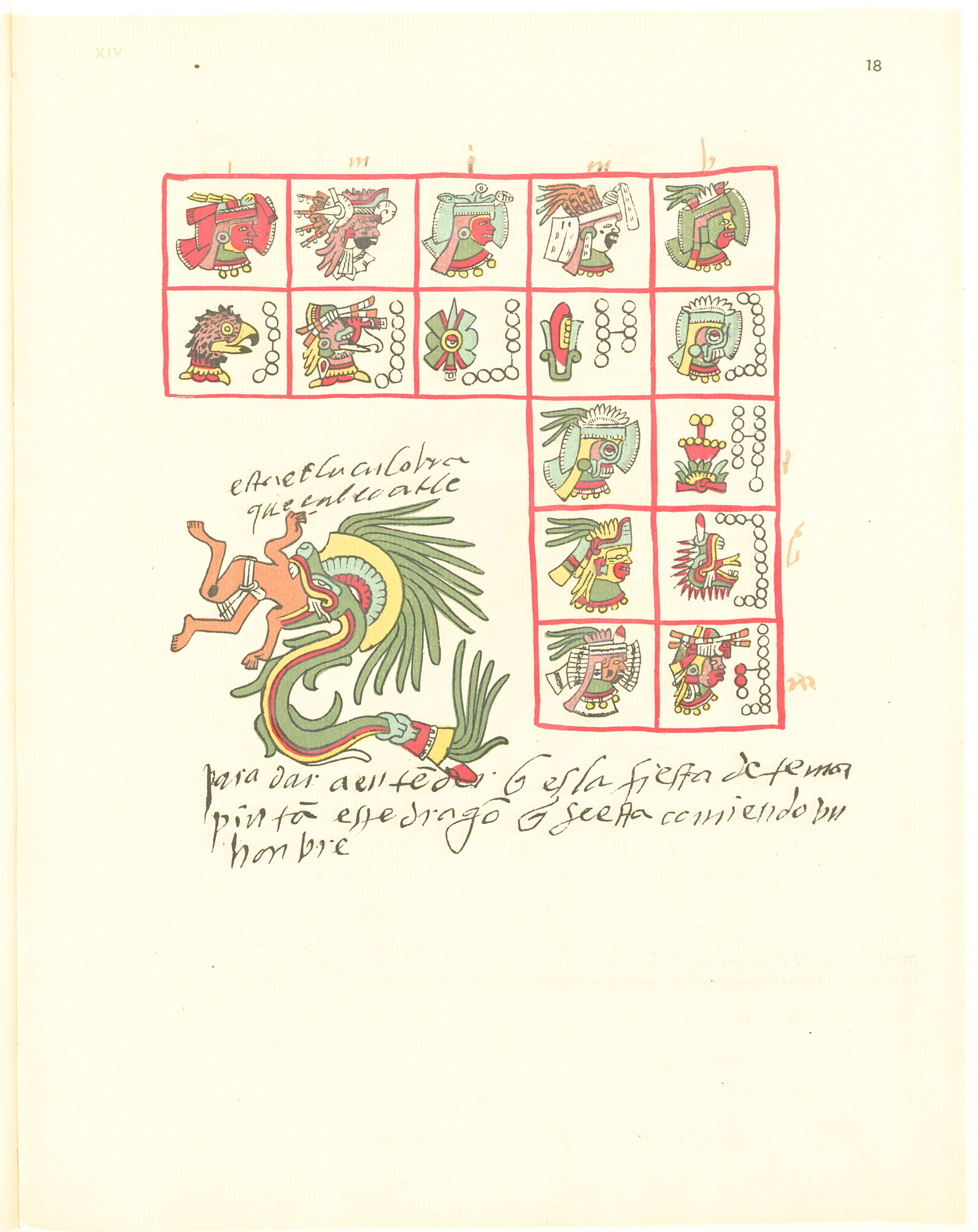
 
(Codex)
 
Works Cited
 
Adams, Richard E. and MacLeod, Murdo J. The Cambridge History of the Native Peoples of the Americas: Volume II: Mesoamerica Part 2. Cambridge: Cambridge University Press, 2000. Print.

“Aztec Creation Story”. Aztec-History. 2006. Web. 11 November, 2015. http://www.aztec-history.com/aztec-creation-story.html
 
Bell, Amy. “500 Nations II, Mexico, the Rise and Fall of the Aztecs 1 YouTube”. Online video clip. YouTube. 5 September 2012. Web. 11 November, 2015. <https://www.youtube.com/watch?v=vkI2J0FcoOc>

Bell, Amy. “500 Nations II, Mexico, the Rise and Fall of the Aztecs 3 YouTube”. Online video clip. YouTube. 5 September 2012. Web. 11 November, 2015. <https://www.youtube.com/watch?v=sdOUA8OmBZs>

Bingham, Ann. South and Meso-American Mythology A-Z. New York: Facts on File, 2004. Print.

“Codex Telleriano-Remensis page_18r”. Photograph. FAMSI. Web. 11 November, 2015. http://www.famsi.org/research/loubat/Telleriano-Remensis/page_18r.jpg
 
Flood, Julia. “God of the Month: Quetzalcoatl”. Mexicolore. 13 August, 2013. Web. 11 November, 2015. http://www.mexicolore.co.uk/aztecs/gods/god-of-the-month-Quetzalcoatl
 
Gifford, Douglas. Warriors, Gods & Spirits from Central & South American Mythology. New York: Shocken Books and Vancouver/Toronto: Douglas & McIntyre, 1983. Print.

Kass, Barry D. “Closeup of the feathered serpent god Quetzalcoatl, Temple of Quetzalcoatl, Teotihuacan”. Photograph. Images of Anthropology. Web. 11 November, 2015. http://www.imagesofanthropology.com/images/c.Pyramid_of_Quetzalcoatl_Teotihuacan_Mexico_image_2.jpg
 
UNESCO. “Pre-Hispanic City of Teotihuacan (UNESCO/NHK)”. Online video clip. YouTube. 3 June, 2010. Web. 11 November, 2015. <https://www.youtube.com/watch?v=WMsIyFGnLQA>


Sunday, November 8, 2015

Mythology in Pop Culture

Hey guys! So tomorrow I'm going to be doing a panel on mythology at my local community college. I needed to type up all of my notes for it, and it struck me as I was doing so that my presentation would make a pretty good blog post. Because of that, you get to read what I'm talking about tomorrow – which is the way that mythology influences pop culture.

Let's start by taking a look at comics, shall we?

Obviously, there's Thor. I wish I could quote Stan Lee and say “ 'nuff said”, but there's actually more to talk about. In both the comics and the myths, Thor is the Norse god of war and storms; Loki is a trickster trying to bring about the downfall of the gods; the Bifrost is a rainbow bridge; and Odin is the king of the gods. Odin is also the god of wisdom. In the myths he has two ravens who fly around the world and tell him everything that they see. One of my favorite parts about Marvel's movie is that in the first Avengers, two ravens fly by when Thor and Loki are arguing – a very nice reference to the original myths!

Although the comics and movie adaptations are awesome, there are quite a few differences between them and the original myths. For one thing, the mythological Thor isn't all that bright. He mostly just wants to hit things with his hammer.
 
Then you have Sif, who is a goddess of fertility and the harvest – she's definitely not a warrior. Perhaps the biggest difference is that Thor and Loki aren't actually brothers! In the myths, Loki is the sworn blood brother of Odin.

Thor may be the most obvious representation of mythology in modern comics, but he's not the only one. Let's move away from him and take a look at the DC comics.

First, you have Wonder Woman. Wonder Woman is an Amazonian princess. Some of her origin stories say that Wonder Woman is the daughter of Zeus, king of the Greek gods and lord of the skies. That's right – Wonder Woman is a demigod.

 
Then you have Superman. His story has close ties to the Christian and Jewish faiths – and those ties were written deliberately. There's a story in the book of Exodus about a baby named Moses. During the time period in which Moses was born, the Pharaoh of Egypt had enslaved the Jewish population. Their numbers kept growing, and the Pharaoh feared revolt, so he ordered all baby boys to be killed. To save Moses, his mother put him in a basket and sent him floating down the river. He was adopted by the Pharaoh's daughter and raised by a family not his own. Eventually, Moses grows up to save his people.

Now let's look at Superman's origin story. He was born on a world that's about to be destroyed. His parents put him in a little space-cradle and sent him away to save his life. The cradle carries him to Earth, where he is raised by an adoptive family. Superman goes on to save the world – many, many times.

(This photo was just too hilarious to not share!)

There's definitely some similarities between the two stories – and, like I said, they were put there deliberately. The writer and artist of the original Superman stories were both Jewish. The character of Superman first appeared around the time of World War II, when Jews were facing horrific persecution. Superman's creators wanted to create a figure of hope for their people, so they wove the story of Moses into the character of Superman. Pretty cool, right?

Let's turn away from comics and take a look at another aspect of popular culture. I'm a huge fan of video games – how about you? Do any of you guys play World of Warcraft?

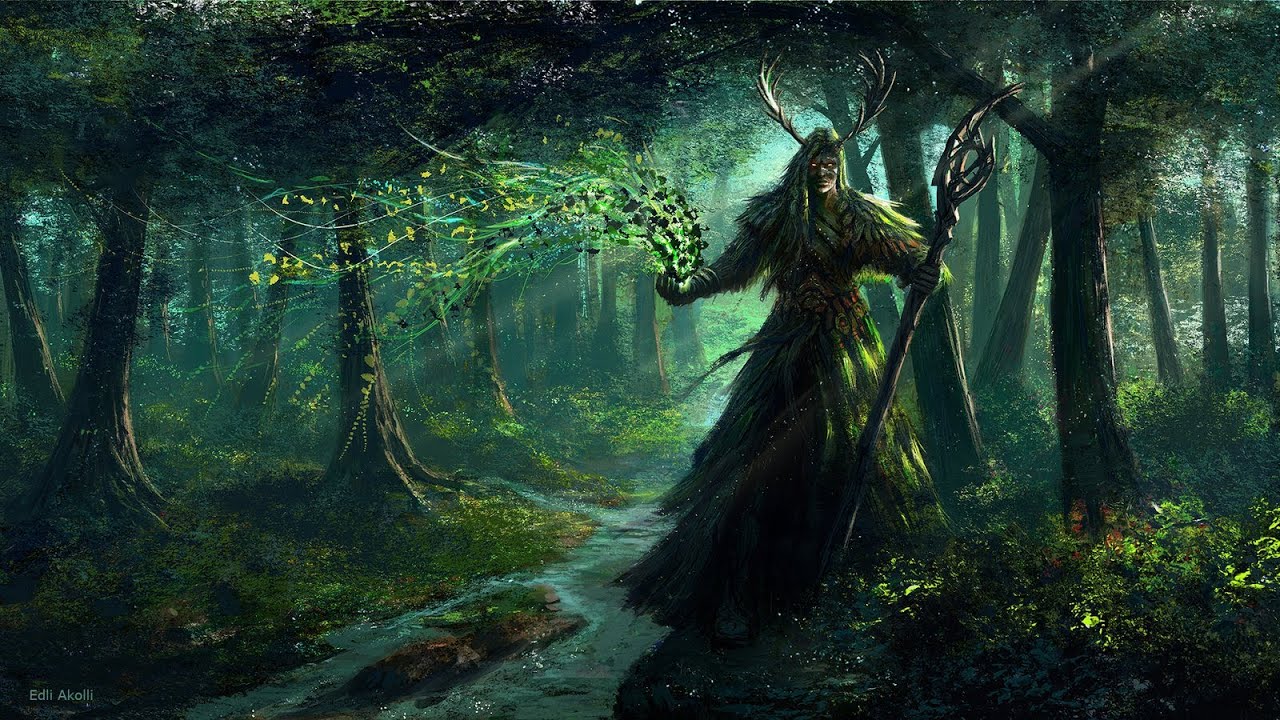
Mythology has influenced a lot of video games, but WoW is a treasure trove of mythology. I can think of about half a dozen different mythologies that show up in World of Warcraft, and that's just off the top of my head – I'm sure there are a lot more. One of those mythologies appears as soon as you go to make a character – the druid.
 
Druids have their origins as sort of priests in Celtic mythology. In the myths they have close ties to nature, and are often depicted as shapeshifters. In various stories druids turn into wolves, bears, boars, swans, and a myriad of other things.

In World of Warcraft the druid class' powers are tied to nature – sun, moon, and plants. Like their mythological counterparts, druids are shapeshifters. These are a few of their various forms.
 
 
Another mythological influence in WoW can be seen heavily in the race of the Trolls. The religion and culture of the Trolls are based on myths from Latin America. An area in WoW called Zul'Drak provides the best example of this. Take a look at the architecture: This is a temple in Zul'Drak.
 

This is the Temple of the Feathered Serpent, found in the Aztec city of Teotihuacan.


One of the most prevalent figures in Latin American mythology is the god Quetzalcoatl. He appears in the pantheons of several different Latin American cultures, including the Aztec. Quetzalcoatl translates to “the plumed serpent”, meaning a snake covered in feathers.
 
 
Creatures that match this description appear in many places in WoW.
 
 
Let's travel from Zul'Drak and Latin America to the Storm Peaks and the Norse.
 
 
This zone is perhaps the most obvious portrayal of mythology in World of Warcraft – they barely even changed the names! First you have the val'kyr, servants of the Lich King who raise the dead to join his evil army. In Norse mythology the valkyrie are choosers of the slain. They raise worthy dead warriors to a hall called Valhalla, where they have a huge drinking party until the end of days.

Perhaps the most amusing nod to mythology in this zone are the characters of Loken and Thorim. Loken is a nefarious trickster trying to bring down Thorim. Thorim has a hammer named Krolmir.
 
(Thorim with Krolmir)
 (Thor with Mjolnir)

Hmm.

I'd like to look at another genre influenced by mythology: Fairy tales.

How many of you have seen or read Sleeping Beauty? You know the story: a girl is cursed and falls into a 100-year sleep; a wall of roses grows up around her; a dashing prince finds her and wakes her up with a kiss.

Now let me tell you the story that I think inspired Sleeping Beauty – an old Norse saga called the Story of Sigurd.

I mentioned valkyries when I was talking about WoW. In addition to being choosers of the slain, valkyries were also able to influence the outcomes of mortal battles. When the Story of Sigurd begins, a young valkyrie named Brynnhilda has been ordered by Odin, king of the gods, to let one specific side win a battle. Instead, she allows the other side to win.

Not a good mistake to make when your boss is king of the gods.

To punish Brynnhilda, Odin locks her away in a castle and curses her to sleep until a man comes along and wakes her up. She will then marry this man. Odin does take some pity on Brynnhilda – he raises a wall of fire around the castle, so that only a truly brave man will be able to reach her.

That's right. Odin is Maleficent.
 
 
(They even have matching birds!) 

Brynnhilda is eventually woken up by a man named Sigurd, and the two fall in love. Unfortunately, unlike in Sleeping Beauty, the duo do not live happily ever after. Sigurd is given a potion that makes him forget about Brynnhilda. He marries someone else, and his brother-in-law finds and marries Brynnhilda. The jealous valkyrie talks her husband's brothers into killing Sigurd. She then kills herself by jumping onto Sigurd's funeral pyre.

Yeah, Norse stories aren't really known for their happy endings. If it makes you feel any better, a horse was found missing from the stables and a stablehand said he saw Sigurd and Brynnhilda riding off into the sunset together.

But I digress. The Story of Sigurd differs vastly from Sleeping Beauty in its ending, but the core concepts are pretty darn similar.


Let's look now at one of my favorite parts of modern pop culture: Star Wars.

Is anyone else totally psyched for the new movie? Because I sure am!

Anyway, Star Wars has some of its roots in Arthurian legend. You have a bunch of knights running around trying to save the galaxy from evil. They help the innocent, protect the weak, and are generally seen as virtuous – at least, until they turn evil themselves. That's pretty similar to King Arthur and his knights, right?

Well, Star Wars also has heavy ties to Buddhism. Let's take a look at the Jedi Code, which states:
There is no emotion, there is peace.

There is no ignorance, there is knowledge.

There is no passion, there is serenity.

There is no chaos, there is harmony.

There is no death, there is the Force.
In Buddhism there is a concept called The Four Noble Truths. These truths state that:
  1. There is suffering.
  2. Suffering is caused by desire and ignorance.
  3. Suffering can be ended by putting aside one's desires.
  4. The fourth noble truth details an Eightfold Path to enlightenment, which leads to the end of suffering and desire. This path includes moral conduct, meditation, and wisdom.
I see a lot of Buddhism in the Jedi Code. If you give up emotion, you will not suffer, so you will be at peace. Ignorance can cause suffering, so it follows that knowledge can prevent suffering. Without passion, one will not desire, so one will not suffer from their desires.

So...I guess the Jedi are a sort of Knight/Buddhist monk hybrid?
 

I hope you guys found this interesting! I really love seeing how mythology influences pop culture, and the way that pop culture adapts mythology to suit its own needs. What have you watched (or read, or played, or heard) that you can see mythological ties in?

Sunday, November 1, 2015

The Ladies of the Lake

Hey there! How are you? I hope you all had a wonderful Halloween!

I mentioned in an earlier post that there was more than one Lady of the Lake in Arthurian legend. In this post I'm going to take a closer look at them.


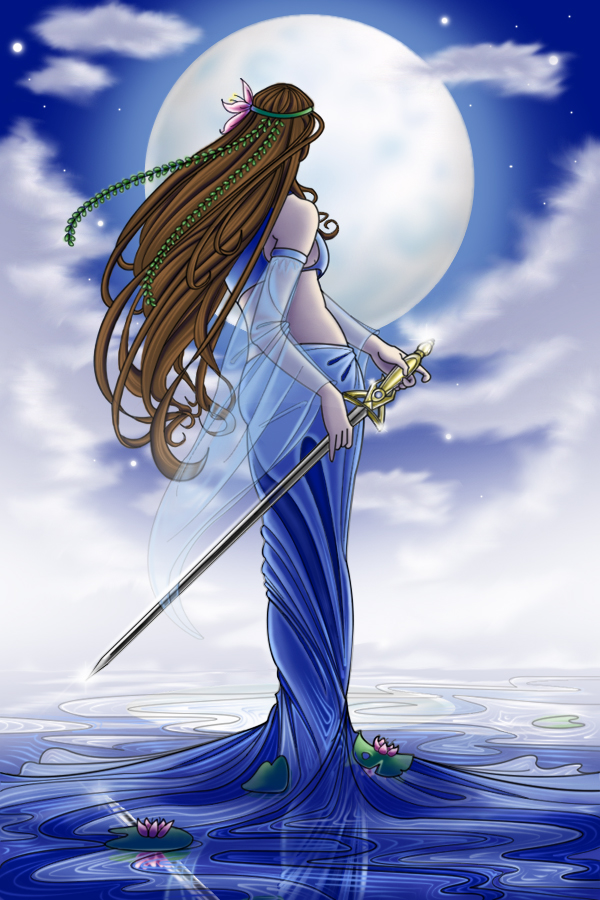
The Lady of the Lake is a figure who shows up quite often in Arthurian Legend. The Lady is almost always a helpful figure to King Arthur. It was a Lady of the Lake who gave Arthur the magic sword Excalibur, which helped grant him the right to rule. (Of course, to quote Monty Python and the Quest for the Holy Grail: "strange women lying in ponds distributing swords is no basis for a system of government".) Upon King Arthur's death, Excalibur is returned to a Lady of the Lake by one of his knights. A Lady of the Lake is also responsible for helping Lancelot rise to such prominence in King Arthur's court – although, given his eventual betrayal of King Arthur, that might not be such a good thing. King Arthur's body is escorted to the mystical land of Avalon by several women, one of whom is a Lady of the Lake.

Interestingly, women with the title of the Lady of the Lake are also sometimes quite nefarious and evil. I mentioned in my post about Merlin that a Lady of the Lake named Nimue used Merlin to learn magic and then trapped him in a tree, leaving him to die. Not something you'd think an ally of Arthur would do, right? Before that happens, another figure called the Lady of the Lake shows up at King Arthur's court and is beheaded by a knight named Balin. According to Balin (whose tale is backed up by Merlin), the Lady of the Lake had killed his mother. According the the Lady of the Lake (before she was killed), Balin had killed her brother. The best part? The Lady who gets decapitated is the same Lady who gave Arthur Excalibur! So who, exactly, is the sword returned to after Arthur's death?


As you can see, the Lady of the Lake is a figure who seems to have multiple aspects. Shortly after one dies, another woman with the same title appears. To me, the simplest explanation of the many Ladies is that there's more than one lake in Britain; ergo, there might be many Ladies of the Lake. These ladies go by quite a few names as authors attempt to differentiate them from one another. The names I've heard most often are Nimue, Nineve, Vivianne, and Elaine.

One of my favorite stories about a Lady of the Lake is about a knight named Pelleas. Pelleas had fallen in love with a woman of noble blood named Ettard, but she spurned him and wanted nothing to do with him. The knight was so in love that he allowed himself to be taken captive by Ettard's guards every day. They took him back to her castle and beat him, but Pelleas thought the pain was worth it because each day he got to see Ettard for a few minutes.

It happened that a knight named Gawain, one of King Arthur's knights, came upon Pelleas as Ettard's guards were capturing him. Gawain fought them off and asked Pelleas why he was allowing himself to be so beaten. Upon hearing Pelleas' story, Gawain was moved and promised to go and woo Ettard for the other knight. Gawain swore that he would win Ettard's favor and her hand in marriage, and then give her to Pelleas to marry.

Well, the first part of Gawain's plan worked out alright. He won Ettard's favor. Unfortunately for Pelleas, Gawain fell in love with Ettard and completely forgot about his oath. He wooed the woman for himself, not for Pelleas.

After a few days had passed without word from Gawain, Pelleas went to find out what was going on. 


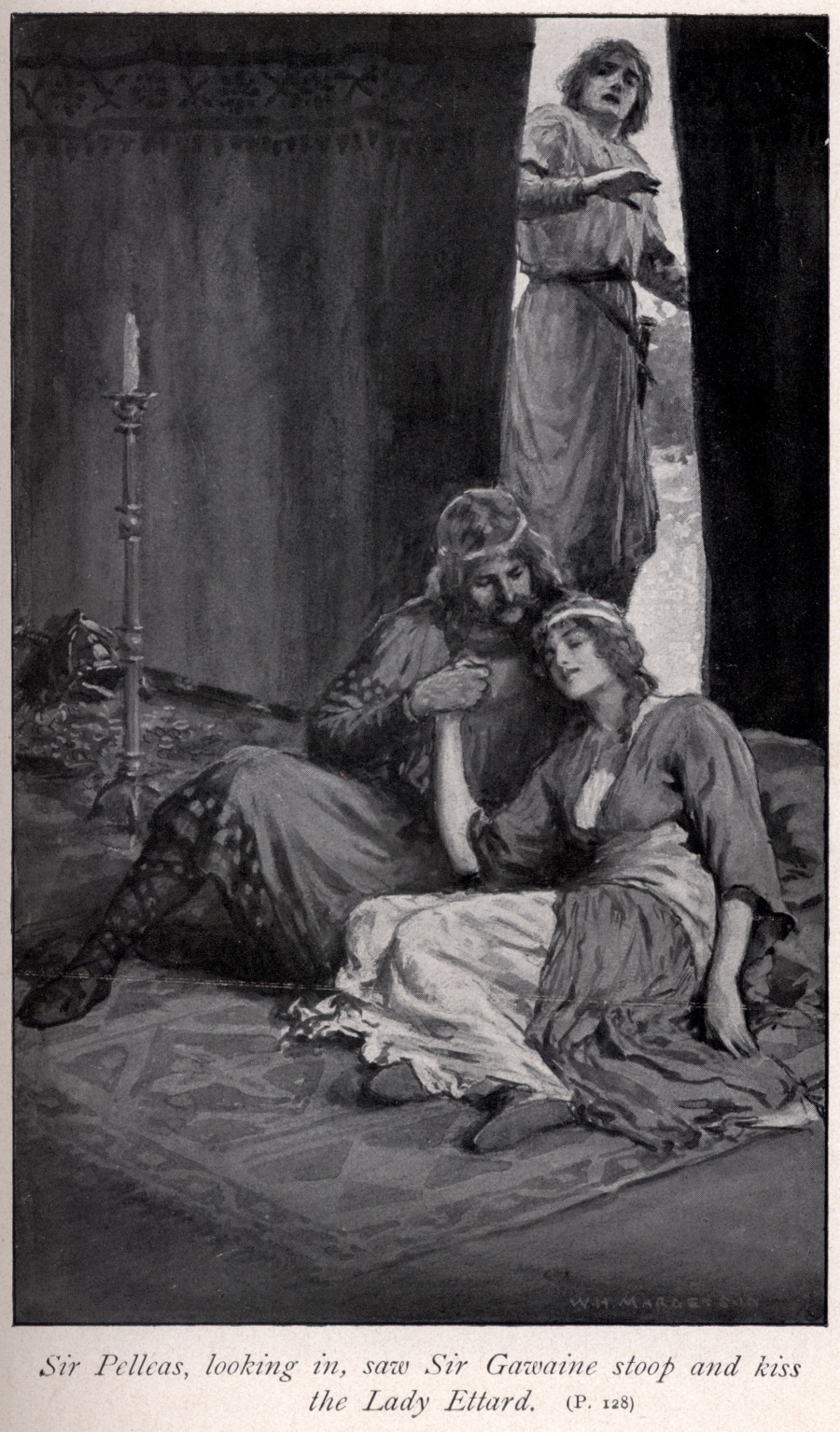
He walked in to find Gawain and Ettard asleep in one another's arms. Filled with rage at the betrayal, Pelleas drew his sword and prepared to kill the duo – but he couldn't bring himself to do it. His love for Ettard was too great. Instead, the knight left his sword beside them and went home. He dismissed his servants and resolved that he would starve himself to death.

When Ettard and Gawain woke up, she immediately recognized Pelleas' sword. Both were ashamed by their betrayal of the knight.

As it happened, one of Pelleas' servants happened across Nineve, a Lady of the Lake. She asked where he was going, and the servant explained everything that had happened to his master. Nineve was enraged and demanded that the servant take her to Pelleas. Upon seeing his sorrow, she cast him into an enchanted sleep. Nineve then went and fetched Ettard, and shamed her for having broken Pelleas' heart.

(This version calls her Nimue, for some reason.)

But Nineve was not done. She cast a spell on Ettard that made her love Pelleas as much as he had loved her. Ettard flung herself to her knees beside Pelleas, crying for the pain she had inflicted upon her beloved. This woke up Pelleas, who opened his eyes and found that he quite hated Ettard for her treatment of him.

The story ends with Ettard dying of a broken heart. Pelleas leaves the country along with Nineve. He falls in love with the Lady of the Lake, and the two marry. They have a son together, and live happily ever after.

I'm not sure why I like the story so much. I think it might be because Nineve was so furious at the way Ettard had been messing with Pelleas' heart. It just makes me happy!

What did you guys think?

I'm sorry to post and run, but NaNoWriMo has begun and between that and school I am crazy busy.  (Don't know what NaNoWriMo is?  It's short for National Novel Writing Month.  During the month of November writers are challenged to write 50,000 words.  I've done it for four years now - both of my books were written during NaNoWriMo.)  I've got posts planned for the rest of the month, but I'm not sure how many more will be about Arthurian legend.  I'll keep you posted as I learn more!

I'll see you next week!

Sunday, October 25, 2015

Halloween: Tricks, Treats, and Pagan Rituals

I wrote this post a few months ago, and I've been so excited to put it up!  That's why you're getting it today instead of tomorrow.  Happy early Halloween - because that's the holiday we're talking about!

Before starting this post, I really have to thank the librarians at my community college.  They have graciously put up with 4+ years of me asking for tons of books on a myriad of strange topics that have absolutely nothing to do with my degree.  When I was researching for this post I checked out books about the origins of Halloween (for this), Santa Claus (a future post), Russian mythology (for a writing project), and gluten-free, allergy friendly cooking (a medical necessity).  The librarians didn't even bat an eye at my strange mix of books, and were quite helpful in suggesting additional resources and ordering them for me.  I love my librarians!

So...Halloween.  It's one of my favorite holidays.  For the past two years I've dressed in a different costume every day of the week leading up to Halloween.  I love coming up with costumes!  I also (still) love trick-or-treating, despite not being much of a candy eater.  Halloween has been a much loved part of my life for longer than I can remember - yet, I never really knew what Halloween was about.  I celebrated fun costumes, The Pumpkin Who Couldn't Smile, and pumpkin patches - but I didn't know the origins of the holiday.

Eventually I became aware that Halloween was somehow tied to Samhain (I believe Jim Butcher and the Dresden Files taught me that).  Still, I didn't know much about Samhain until I started researching it for this post.  When I looked into it I found out that Samhain is an old Celtic festival from which Halloween originates.  However, Halloween is more than just a modern reflection of Samhain.  The holiday we know and love has been shaped by many things.  The ones I'll be talking about are Samhain, All Saints' Day, All Souls' Day, Guy Fawkes Day, and Dias de los Meurtos.  Interested?  Good!  Let's get started.

Samhain

As far as I can tell, this is where Halloween started.  Samhain was a Celtic festival that took place on November 1st.  During this time the spirits of the dead were able to cross between our world and the world of the dead.  Bonfires were lit to guide the dead on their way, and special food was made for the spirits of loved ones.

At least, that's one way fire and food was used.

You see, on Samhain spirits were able to roam freely - and not all spirits are good.  Bonfires were used to keep the nastier spirits at bay, and food was offered to appease their wrath.  People would dress as evil spirits, hoping that disguising themselves would fool the spirits and make them pass over those who were costumed.


Samhian was celebrated as the start of the Celtic year.  It marked the end of the harvesting season and the beginning of winter.  Its traditions were celebrated for centuries without really changing...until the church came along.

All Saints' Day/All Souls' Day

Saint Patrick converted the Irish to Christianity sometime around 300-400AD.  It was around that time that the rituals of Samhain became modified by the church.  Note that I say modified - not gotten rid of.  The church was rather brilliant in its attempts to convert the Celtic people.  Instead of forbidding a pagan practice, the church changed it to suit their own agenda.

It began with declaring November 1st to be All Saints' Day: a day in which all of the saints who did not have their own special day were honored.  Upon realizing that this didn't really have anything to do with Samhain, the church made November 2nd All Souls' Day.  On All Souls' Day those who died in the previous year are remembered and celebrated.

The church made sure that the Irish knew that worshipping the Celtic gods as they had done on Samhain was wrong.  The restless spirits Samhain's rituals sought to keep at bay were changed to servants of the devil - demons, ghosts, and witches amongst them.  All of these remain popular modern Halloween costumes.

It is from All Saints' Day that we get the name for Halloween.  All Saints' Day is November 1st.  It was also called The Eve of All Hallows (from Hallowed), which is shortened to Hallow-Even (from evening).  This is sometimes shortened even further to Hallowe'en, or Halloween.

Guy Fawkes Day

Fast forward about a thousand years and look at Britain.  On November 5th of 1605 a man named Guy Fawkes attempted to blow up Parliament.  He was stopped, arrested, and killed quite graphically.  The event was commemorated the following year as a celebration of his actions having failed.  The holiday was named Guy Fawkes Day.

Sound familiar?  The movie V for Vendetta recalls these events.  "Remember, remember, the 5th of November, the gunpowder, treason and plot?  I know of no reason why the gunpowder treason should ever be forgot."

Of course, it might sound familiar because you're from a place that celebrates Guy Fawkes Day.  The holiday is still enormously popular in Britain and other parts of the world.  I'm sorry, readers from across the pond, but Guy Fawkes Day isn't celebrated over here; at least, not in my town/state that I'm aware.  Please let me know how your celebrations go!

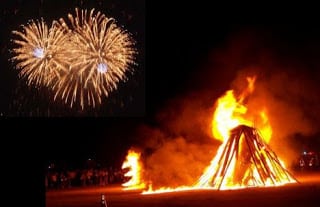
You might be wondering what Guy Fawkes Day has to do with Halloween.  It is the traditions of Guy Fawkes Day that I want to look at.  Fireworks and bonfires are both lit to celebrate Fawkes' failed plot.

The bonfires could be held over from the older celebration of Samhain, but an important new tradition arises here - that of begging.

Leading up to the day of the holiday children create a straw or rag effigy of Guy.  They stand on a street corner with "him" and beg passerby for a penny for the Guy.  Could this act of children begging adults for a "treat" be where our own trick or treating comes from?

Fast forward a little more, and we come to America.

A Melding of Cultures

America is many things, including a giant melting pot of cultures.  The USA began as a British colony, so the tradition of Guy Fawkes Day was doubtless known to its denizens.  America also had a heavy influx of Irish settlers in its early days.  These settlers likely brought celebrations of Samhain, All Saints' Day, and All Souls' Day with them.  These traditions combined in America, and eventually became the Halloween we know today.  The transition was gradual, though...and aided by a little mischief.

Trick or Treat

The cry is familiar from my Halloweens, but I've never heard any trick-or-treater say it expecting to not get a treat.  Despite this, when you look at the statement you'll see that it is an either/or declaration.  There can be a trick, or there can be a treat - but not both.  As such, it's a little bit of a threat.

In the 1800-1900s tricks were pretty common around Halloween from the teenage population.  They were mostly harmless - gates temporarily being removed from fences, windows being dirtied, that sort of thing.  Shopkeepers ingeniously got out of that last one by decorating their store's windows for the holiday in the hopes that the wild youths would like it and not deface the windows.  Is this where Halloween window decals originated?

As time progressed, the tricks began to escalate.  Part of this was due to rising social tensions.  Unrest over the difference in living styles between the rich and the poor led to more tricks targeting the wealthy.  The conflict between whites and African Americans was growing, and many saw Halloween as a time to work off a little stress.  Things reached a head around the time of the World Wars, when fear and stress overflowed.  Tricks were no longer mostly harmless, and some serious damage was caused.

It was around this time that housewives began to have a brilliant idea.  On Halloween they would bake some sort of goody - donuts, brownies, hot cider, etc. - and keep an eye out for teenagers looking to trick their house.  Upon seeing a group, the woman would invite them into the house for refreshments.  It was hoped that the food would placate the tricksters and make them less likely to deface the house - and it worked!

News spread, and within a few years it became a common practice to offer treats on Halloween.  Youths began to visit houses in their neighborhoods for the express purpose of getting treats, and would spend the evening socializing in the homes of their neighbors.  Throughout all of this, the cry of trick or treat remained as a warning of what could happen if they weren't given some delicious goodies.

Over the years this practice has changed considerably.  Fear of poisoned goodies or blades hidden in apples led to a switch to pre-wrapped candies.  These were faster to eat, so more houses were visited in a night.  Children were discouraged from entering the house of someone they didn't know well, so much of the social aspect of Halloween was lost as the threshold ceased to be crossed.  Once again, that made the process faster, so children were able to expand the range of houses they visited.

That brings us up to today, when the cry of "Trick or treat!" still remains.


Dia de los Meurtos

I grew up in Southern Arizona, so it would be somewhat remiss of me to not mention Dia de los Meurtos.  Dia de los Meurtos, or "Days of the Dead", is a Mexican holiday.  It takes place from October 31st to November 2nd, and is a Mexican variation of All Souls' Day.

I'm not sure how much Dia de los Meurtos contributed to America's celebration of Halloween, but I can see some of its influence each October.  On Dia de los Meurtos Mexican families celebrate their deceased loved ones.  Small shrines are placed at their grave sites alongside food offerings, and a party is held in memory of the dead.  It might sound sad to you, but it's actually a very festive time.

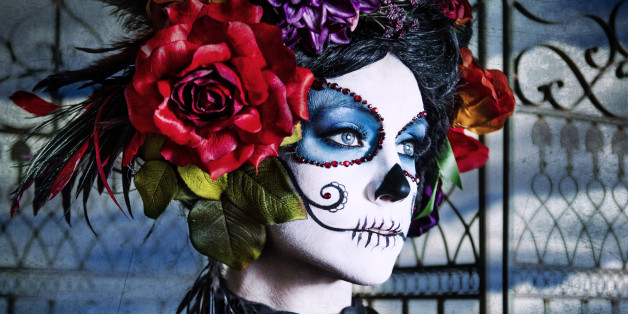
Skeletons are a mainstay of Dia de los Meurtos, and my local Halloween stores always feature bright, flowery skeleton costumes.


Sugar skulls, a treat on Day of the Dead, can be bought as both decorations and noms.  I'm not sure if Tucson has these just because of our proximity to Mexico, or if they can be found all over the US during Halloween season.

You guys tell me - do you find Dia de los Meurtos items near you in October?  Or is it just a local tradition?  I'm especially curious to know if my readers from other countries are familiar with them.  If nothing else, I know that World of Warcraft has worked the celebration into their Day of the Dead holiday from November 1st to 3rd.

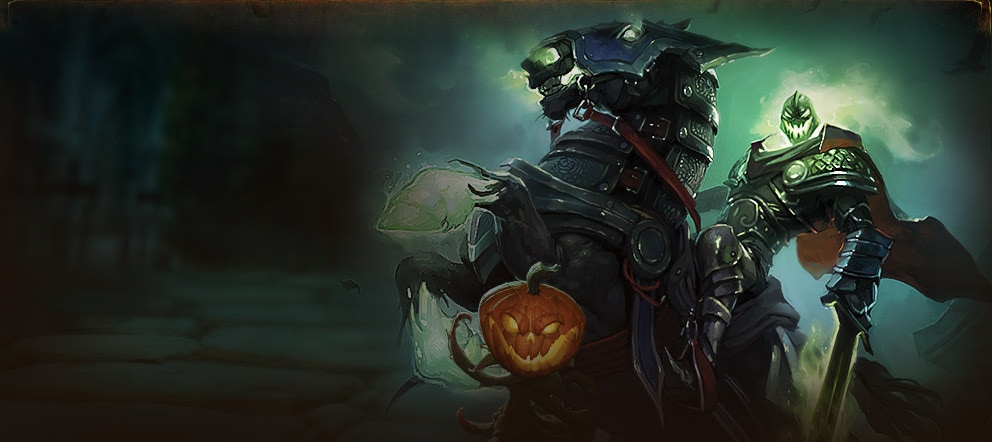
(And, speaking of World of Warcraft: Halloween is celebrated in WoW as Hallow's End.  Here are two pictures from that holiday that I just had to share.)

(The Headless Horseman is a boss monster you can fight during Hallow's End.  So cool!)

I hope you guys found this post interesting!  I had a ton of fun researching Halloween and finding out about its origins; I hope you did too!

If you're interested in learning more, I highly recommend the book Halloween and Other Festivals of Death and Life.  It is a fascinating collection of articles on the various subjects I've talked about here, as well as many others that I didn't have room to include.  (I figured this post was long enough already!)

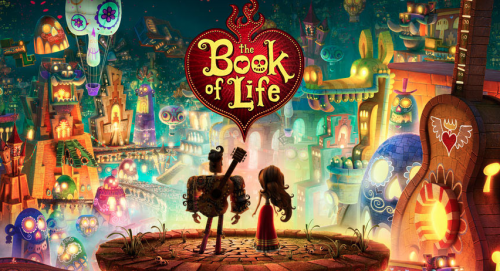
Lastly, because I love it so much, I have to recommend the movie The Book of Life to anyone curious about Dia de lost Meurtos.  It is a gorgeous look at the Day of the Dead, and it has a fun story to boot.  Those visuals!  So pretty!


I hope you all have a wonderful week and a safe, fun Halloween!  I'd love to see your costumes; feel free to send me pictures!  Happy trick or treating!

Sunday, October 18, 2015

Lovesick Published, Upcoming Panel, and Comic-con Appearance

Hey guys!  This has been a super exciting weekend, and I have some awesome news to share with you!

First off - we passed the 3000 pageview mark this weekend!  Thank you all so much for reading my blog!  I shall do my best to keep it entertaining for you.

Next: I published Lovesick!  You can purchase it here, or click the link to the right under "Buy my books".  Information about Lovesick can be found in this post, and you can read the first chapter here.  I hugely appreciate your support of me, and I hope you enjoy the book!  If you read it, I'd love it if you left me a review!


But wait - there's more!

On November 6-8th I will be at Tucson Comic-con as a vendor!  This is my first appearance at a con, and I would love to see you guys there!  I don't know what table I'll be at, but I'll keep you updated as I learn more.  I'll be selling both Hammerfall and Lovesick, signing books, and geeking out!  (Also, I'll probably be in costume.)  Come by and see me!


Last news for today: I'm going to be part of a mythology panel at Pima Community College!  I am hugely excited for this, and I'd like to invite you all to come and listen.  The panel is on November 10th; more information can be found on the poster below.  I'm going to be talking about the way mythology influences modern pop culture.  Comic books, World of Warcraft, Disney, and Star Wars (yes, I know it is technically Disney) will all be mentioned.  Basically, I get to spend the whole night geeking out about my favorite fandoms and tying them into mythology.  I'd love to hear your thoughts on the matter, so please join me!


That's all I've got for today!  Stay tuned...next week I've got a spooky surprise that fits the upcoming holiday.  I'll see you all then!

Monday, October 12, 2015

Merlin the Prophet

Hey guys! How are you? How was your week?
This post we're talking about Merlin, a figure who has been portrayed in a wide variety of mediums. When I think of Merlin, I always think of him as a wizard – a sort of Gandalf-esque figure, if you will. This is because a lot of different modern adaptations of Merlin focus on him as a wizard, a being with magical powers. He had these powers in the original stories, but they have been thoroughly expanded on until the wizard aspect of Merlin overcame his original role in Arthurian legend – that of a prophet.


The story of Merlin's birth is an interesting one. He was born the child of a woman (sometimes a noble, sometimes a nun) and an incubus. The word incubus is not used often in modern American culture, so I'd like to explain it a little. An incubus is a male demon who is incredibly handsome and possesses great powers of seduction. They impregnate females, and the resulting child is usually evil given their part-demonic nature. There is a female version of an incubus, called a succubus, who is seen more often in recent pop culture.
 
(For instance, the succubus is one of the demons a Warlock in World of Warcraft learns to summon.)

Anyway, Merlin's mom was impregnated by an incubus. She confessed what had happened to a priest, and he was able to bless the child so that when Merlin was born, he was not evil. However, Merlin maintained some of the powers he had inherited from his demonic father – notably, a gift for prophecy. He knew the past and was able to see the future, which came in handy when Merlin began to aid first Uther and then Arthur.

One unique catch to Merlin's prophetic abilities was the fact that he had to abide by what he saw in the future. In one story, Merlin becomes the tutor of a woman gifted with magical abilities. The woman has many names in the various translations of the story, but I'm going to stick with Nimue. (Remember the name – it will be important in a few posts!) Merlin falls in love with Nimue and teaches her everything that he knows.

Unfortunately, Merlin also sees that Nimue will betray him and imprison him in a magical tree, leading to his death. He knows that this will happen, but is unable to change the future he has seen – just as he is unable to prevent Arthur's eventual death.


I find this concept fascinating. Let me ask – if you could have any superpower in the world, what would it be? I've known a lot of people who wanted to be able to see the future. It makes sense; if you could see the winning lottery numbers, or whether your crush would ever like you back, you could make your life a lot better...or so a person might think. But Arthurian legend explores another side to the power of prophecy – what if you knew what was going to happen, but were unable to stop it? What if you saw your own death, but couldn't do anything to prevent it? How would you like to see all of your friends die horribly in a vision, then have to live with them knowing that just such a thing would come to pass?

It's a horrible idea, but one that the stories in Arthurian legend play out well.

As I said, Merlin eventually became known more as a wizard than as a prophet. His abilities were made more magical as the stories were retold, and eventually his role as a prophet was almost forgotten. Instead, stories focus on his ability to shapeshift, to teleport from place to place, or other various and sundry magical tricks.

(Anyone remember this shapeshifting duel from The Sword in the Stone?)

But, originally, Merlin was a prophet – and his powers were as much a curse as they were a blessing, given their origin in a demonic father.

I hope you guys found the post interesting! I really do want to know – if you could have any superpower, what would it be?

We'll be taking a short break from Arthurian legend for the next two weeks. I have two very special posts written up...so stay tuned, and I'll see you next Monday!

Sunday, October 4, 2015

Arthur and the Sword in the Stone

Hello! I hope your weekend was as totally utterly amazing as mine was. I got to go to a reptile and amphibian exhibit yesterday. There were crocodiles and alligators (one of which I got to pet!!!), some gorgeous snakes and lizards, and for some reason a mammal-filled petting zoo. The capybaras were adorable, as was the gargantuan bunny (20+ pounds – bigger than my cats! Soooo soft and fluffy) – but the porcupine named Cuddles took the cake. Yes, I spent yesterday petting a porcupine's head and getting my hand thoroughly licked in return. Kind of (read: totally) an awesome day.

Anyway, on to today's post!

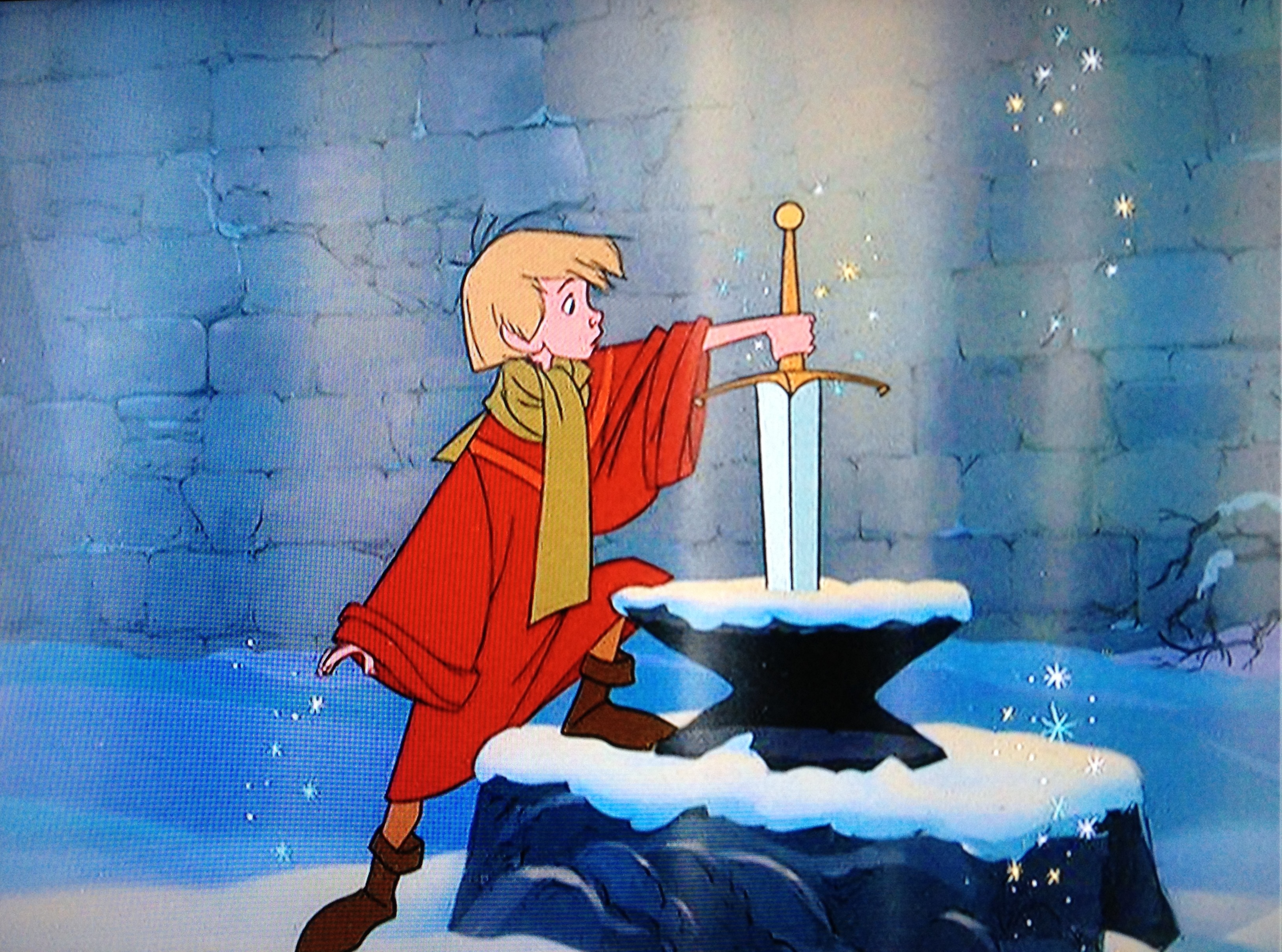
 I think most of us have probably heard some variation of the story of the Sword in the Stone. The story has Arthur heroically withdrawing the sword from its magical entrapment in the stone (as the name implies). Maybe you've read about it, or seen it in one of these shows/movies. However, the original story is...a little different than you might be familiar with.

For starters, what is the sword that Arthur pulls from the stone? It is frequently assumed to be and portrayed as being Excalibur, the great sword that King Arthur made famous. That assumption is false. There are actually a lot of swords with magical origins in Arthurian legend. Excalibur is a sword given to Arthur during his kinghood (kingship? Let's go with reign) by a Lady of the Lake. (I say a Lady of the Lake because there are actually several women with that title that appear in Arthurian legend. I'll talk more about that in a later post.) Arthur replaces the Sword in the Stone – which, as far as I know, never had another name - with Excalibur as soon as he gets it.

The next major difference between the original legend and modern portrayals lies in Arthur's claiming of the sword. Arthur is frequently shown taking the Sword in the Stone as an adult or older teenager. In fact, he took the sword before he was 10 years old. Even those stories that get Arthur's age right tend to show Arthur claiming the sword and the kingship for himself. In fact, Arthur was considerably more humble than that. Let me tell you the story.

In last week's post I talked about King Uther, Arthur's father. Arthur was born of a union between Uther and Igraine – and the boy was promised to Merlin in exchange for the wizard's...”matchmaking skills”. As soon as Arthur was born Merlin took him and gave him to the knight Sir Ector to be raised.
 
Neither Ector nor Arthur knew of the child's royal origins.

Not long after giving up his son, Uther took ill. The king did not survive for long – only a few years after the birth of his son. Finally, the end drew near. On his deathbed Uther summoned his advisers, including Merlin. Under the wizard's prompting, Uther named his son Arthur his heir and the future king. Uther then died.

Of course, there were a few problems with this. Firstly, none of the advisers (save Merlin, of course) knew who Arthur was. The wizard also faced a dilemma – Arthur was still incredibly young. Were he to take the throne now, youthful and untrained as he was, Arthur would risk being used as a puppet king. Merlin needed to figure out a way to stall for time.

The death of the king left a serious power vacuum. Many lords were wealthy and had large armies, and they expected to be crowned king since no heir was readily apparent. To thwart them, Merlin went to the Archbishop and asked him to summon every noble to the city on Christmas. Merlin swore that God would provide some miracle to show who He would make king.

The nobles all answered the summons, and come Christmas morning they were found praying in the church. When they left, a great stone stood in the middle of the yard. Within the stone was a sword, and an inscription on the rock read that whoever was able to pull the sword from the stone was the rightful king.
(Sounds a little bit like Marvel's Thor and Mjolnir, doesn't it?)
 
Of course, everyone rushed to try and withdraw the sword – but none were successful. Realizing that the rightful king was not present, the Archbishop declared that a great tournament would be held to draw all of the knights of the realm to the city.

Let me back up and change perspectives for a little bit. Arthur had grown up and been educated in his foster father's house. (In some stories, Arthur's education was helped along a bit by some tutoring from Merlin himself.) Sir Ector and his wife also had a son who was several years older than Arthur, a boy named Kay. Kay had recently been made a knight, and his family – including Arthur – were quite proud of this fact.

When news of the great tournament to be held reached Sir Ector's house, Kay immediately wanted to go and compete. His wish was granted, and the day of the tourney came. Ector and Arthur went with Kay to the tournament grounds, where Ector went to find a seat while Arthur helped his foster brother to prepare.

Unfortunately, Kay had been so excited to compete in his first tournament that he had left his sword at home! Kay began to panic and sent Arthur to retrieve his sword and bring it to him before the tournament began.

Arthur raced home, eager to help his foster brother. To his dismay, he found the house locked, since everyone was at the tournament to watch Kay.

Unwilling to fail his foster brother, Arthur came up with a plan. He had heard of a sword just sitting in the churchyard, waiting for someone to claim it. Arthur hurried to the church and easily pulled the sword from the stone.
 
 
He then returned to the tournament and gave it to Kay.

Kay immediately recognized the sword – and, unlike Arthur, he knew the story behind it. He called Ector to him; as soon as his father arrived, Kay said that he had the Sword in the Stone – which made him the rightful king. And Arthur did not protest!

Ector was shocked by the news, but he recognized the sword. He took Kay and Arthur to the church, where he asked Kay how he had come by the sword. Kay replied that his brother Arthur had brought it to him. Ector then turned to his foster son and asked how he had found the sword. Arthur told the story to them casually, not realizing the significance.

Upon hearing of how Arthur had pulled the sword from the stone, Ector asked him to put it back in. Arthur easily slid the sword back into the rock. Both Ector and Kay tried to remove the sword, but they could not. Ector then asked Arthur to reclaim the sword, and the boy did so. Upon seeing this, Ector and Kay bowed down to Arthur as their rightful king.

Of course, the lords of the land were not pleased to hear that a boy had done what no knight or noble could do. Twice they tested his right to the kingship by having the sword placed back into the rock. All the knights and lords tried to remove it, and they all failed. Only Arthur was able to claim the sword.

At last, after tests and protests, the commoners cried out that they loved Arthur, and that he was their rightful king. The boy was crowned, and he became a fair and just ruler, much loved by all.

And so you have the story of the Sword in the Stone! I find it very interesting that the sword is not placed in the stone by magic – at least, not according to Merlin. He claimed that God would show the rightful king. Are we then to assume that the sword was placed by divine providence? Or did the wizard work a little magic to help God's plan along?

What did you guys think? Did you know this version of Arthur's story, or was it new to you?

I'll see you next week with a post about Merlin himself!