Showing posts with label World of Warcraft. Show all posts

Monday, July 18, 2016

Trolls: Stay Away From da Voodoo

Hello all!

To finish off our look at the mythologies in World of Warcraft, this week we're looking at one of the most complicated spiritual systems within the game: the worship of the loa.

The loa are known to other races, like the night elves, by the name “Wild Gods”. They are powerful, highly intelligent animals who are nigh immortal and were some of the first to wander Azeroth (the actual world of World of Warcraft). These deities each possess distinctive personalities and traits. Some are kind and nurturing; many act as guardians of the wilderness, or specific creatures within the wild; some are vengeful and bloodthirsty.

Many denizens of Azeroth worship the Wild Gods by one name or another. Druids are particularly respectful of the Wild Gods, and four of the Wild Gods are revered in Pandaria under the name of “the August Celestials”. However, their most prominent followers can be found amongst the trolls, who call the Wild Gods the loa.


Worship of the loa has been integral to the trolls since before their first civilizations dawned. “The loa came and granted trolls their very nature, bargaining in return for eternal supplication and worship.” They guided troll culture for millennium, and even granted some of their power to trolls the loa deemed worthy. Troll culture included a number of priests devoted to the loa. The highest, most honored religious devotees who undergo and pass set trials are known as Shadow Hunters. Shadow Hunters are in direct communion with the loa, able to pass into the realm of shadows to speak face-to-face with their gods. It is upon Shadow Hunters that the loa bestow their greatest gifts, and so troll societies look up to Shadow Hunters as spiritual leaders and prophets of a sort. The current leader of the trolls (and of the Horde), Vol'jin Darkspear, is a Shadow Hunter.


The loa are a very diverse bunch of gods, representing a number of animals and traits. Bwon'samdi is the guardian of the dead, who welcomes all trolls into his realm. He is a bloodthirsty god, preferring his sacrifices to be worthy opponents slain in battle. Interestingly enough, Bwon'samdi has only been seen in spiritual form, in which he resembles a troll.


Elortha no Shadra is a massive red spider whose physical form is worshiped by a tribe of trolls. She is also known as Venom Mother and Silk Dancer. All spiders are the children of Elortha no Shadra. This loa has been known to send visions of the past, present, and future to her devotees amongst the trolls.

Some members of the loa are more bloodthirsty than others. One such is Hakkar, who puts even the blood lust of Bwon'samdi to shame. Hakkar demanded sentient sacrifices in his honor. His hunger grew with every being killed in his name, until eventually a group of trolls realized that his thirst for blood would not end, even with the destruction of every living being. They killed or banished all trolls who worshiped Hakkar, and even defeated the physical avatar of the loa himself. Despite this, Hakkar's loyal followers continued their devotions to him and raised a temple they dubbed Atal'Hakkar.


The bloodthirsty nature of the god so disturbed the denizens of Azeroth that even the green dragons took note. They sank the temple deep into the surrounding swamps and set themselves up to guard it, preventing worship of Hakkar from ever resuming in his temple.

The sacrifice of sentient beings was not limited to Hakkar alone – many of the loa were pleased to receive such offerings during the height of troll power. However, as the years passed, the great troll civilizations dwindled. One tribe, the Darkspears, eventually joined up with the Horde. The other races in the Horde were disturbed by some of the troll practices, including sentient sacrifice and cannibalism. (Eating one's enemies was believed to imbue the consumer with their strength.) Such practices were termed “voodoo” by the trolls. To stay within the Horde, the Darkspear tribe adapted their religious practices. Cannibalism was done away with entirely, and the sacrifices to the loa were changed to animal sacrifices. Hence, many troll non-player characters in WoW will give the dialogue of “Stay away from da voodoo!” when clicked upon, a reminder to not return to the practices they gave up when they joined the Horde. However, this change was only amongst the Darkspear tribe – other troll tribes continue their practices without change.

If players in WoW are interested, they can interact directly with a number of the loa in a zone called Zul'Drak. A lengthy quest chain within Zul'Drak surrounds the deities. The trolls in this area have been threatened by the undead within the surrounding areas. They realize that a source of great power lies around them, contained within the gods they have long worshiped. To gain access to this power, the trolls are killing the loa. One of the loa, Har'koa, recruits the player to aid them in stopping to trolls and saving their brethren. The story, and the models, are absolutely fantastic.


It's worth noting that the religious practices – and, in fact, the entire culture – of the trolls is heavily based upon ancient Latin American civilizations. Just as there were three great empires that rose in that area (the Aztecs, the Mayans, and the Incas), the trolls had several mighty tribes who created vast empires (the Zandalari, the Gurubashi, the Drakkari, and the Amani). Below is a picture of the Zandalari capital of Zuldazar, whose architecture draws heavily from Latin American influence.


The gods in Latin America tended to have heavy ties to animals, much like the loa. Human sacrifice was not uncommon, particularly amongst the Aztec empire. In addition, as I mentioned in a previous post, the similarities between the Latin American god Quetzalcoatl and the loa Quetz'lun are great, particularly when looking at a comparison of their temples.


(The bottom is from the real-world Temple of the Feathered Serpent.)

I hope you guys enjoyed this post! What do you think of troll religion? The loa are a pretty fascinating bunch. If you'd like to see Vol'jin interact directly with them, providing a fantastic look at troll culture, I'd highly recommend the book Vol'jin: Shadows of the Horde by Michael Stackpole. (It's also a great look at the culture of the Pandaren!)

This'll be my last post about Warcraft mythology for the time being.  I hope you guys enjoyed the look at WoW lore!  There are several races whose beliefs I still haven't talked about, ranging from the playable race of Forsaken, to cultures such as the Jinyu and Kalu'ak, to the insanity-inducing Old Gods.  I definitely plan to do another series of posts at some point!

Starting next Monday I'll be taking some of the myths and folktales of Africa.  Tune in next week for my Intro!

Monday, July 11, 2016

Dwarves: By the Makers

The races in World of Warcraft that I've talked about so far have varied in how they interact with their gods. The draenei are able to see the naaru and even speak with them directly, and the orcs share a similar relationship with the elementals. The August Celestials have actively worked alongside the pandaren to help guide them and protect them throughout their history. Humans can tap into the power of the Light, though they are unable to communicate with it. Night elves worship Elune, despite never having seen her, and are blessed in return by her gifts. The tauren strive to please the Earth Mother, believing that they catch glimpses of this deity in all aspects of nature.

Then there's the dwarves.

The dwarven race on Azeroth is interesting in that it knows exactly what beings created it, but chooses to worship the deities of other races. The two primary religions amongst the dwarves are shamanism and the path of the Light. Neither the elements nor the Light were what created the dwarven race, however. That distinction lies with a race known to the dwarves as the Makers.
While most races take their gods on faith, the dwarves long ago embarked on a quest to find those who made them and learn more about these “Makers”. With the support of Magni Bronzebeard, king of the dwarves, an organization called the Explorers’ League set out to find proof of the dwarves’ origins. One of the most famous and successful explorers of this league is Brann Bronzebeard, brother of the king himself.
 

Piece by piece, one artifact or dig site at a time, the Explorers' League was able to put together the story of the creation of the dwarves. In fact, they (and players) are able to interact directly with some of the Makers in the game, helping the dwarves to better understand their past.

In World of Warcraft, a race of mighty beings known as the Pantheon exist. The Pantheon wander throughout the universe seeking out life forms like themselves – for each member was once a world, one which gained sentience and eventually woke up to begin their roamings. Life forms like the Pantheon who are still sleeping are known as “world souls”, and one such world is Azeroth itself.
 

When the Pantheon discovered Azeroth they found it under attack by the Old Gods – forces of the Void, the ancient enemy of the Light. (I've mentioned them briefly in an earlier post; they're rather similar to the various insanity-inducing gods in Lovecraft's works.) Desperate to keep the dormant world soul safe from the corruption of the Old Gods, the Pantheon set out to destroy them. However, they feared that they could not combat the Old Gods without damaging the world too much, given their size and power. To this end, the Pantheon created a race of beings they called the keepers.

It is the keepers who are known to the dwarves as the Makers.

Though many were lost in the battles which followed, the keepers were eventually victorious over the Old Gods and their forces. Most were killed, while the Old Gods themselves were imprisoned deep within specially constructed jails. The Pantheon, satisfied, decided to return to their cosmic wanderings. They left Azeroth in the hands of the keepers, and tasked them with keeping it safe.

(The keepers in WoW are based heavily upon different real world mythologies – and I mean heavily. A simple look at their names proves my point: There's Ra, Odyn, Loken, and Thorim...oh, and Thorim has a big lightning hammer named Krolmir. Yes, I'm serious. It amuses me greatly.)

While the Old Gods had been defeated, there remained other threats to Azeroth that the keepers sought to eliminate. A few straggling forces from the armies of the Old Gods yet remained; corruption from the Old Gods themselves had seeped into the land and needed to be dealt with. In addition, Azeroth itself had been badly damaged in the battles between the Old Gods and the keepers. It needed to be repaired.

To these ends, the keepers decided to make new life forms out of stone to aid them in retaking and restoring Azeroth. The first to be made were the anubisath, the mogu, and the tol'vir.


Each of these races was to serve a different purpose. Giants had already been made during the war with the Old Gods. Additional species were later formed, also from stone: the earthen and the mechagnomes.
 

It is here that the dwarves first enter the picture, because they began as earthen. The earthen were tasked with carving out mountains, mines and valleys for Azeroth.


(In fact, this post also gives you the origins of the gnomes – they started out as mechagnomes, who were inventors of fantastic machinery.)

With the task of protecting Azeroth in the hands of their creations, the keepers largely became absorbed in their own matters. Freya wandered Azeroth, with new plant life springing up in every realm she touched. During this time she met and befriended the Wild Gods – deities worshiped by a myriad of races, including the pandaren and the trolls. Tyr fought battles against the forces of a mighty dragon, ultimately losing his hand in the process. (This hand was to serve as the namesake for the Light's Knights of the Silver Hand.)

Unfortunately, there was also dissent amongst the ranks of the keepers. Odyn was jealous that Ra had been left in charge by the Pantheon, and so he split off from the other keepers and created his own kingdom, the Halls of Valor. Ra himself remained unaware of this fact, having departed his brethren to guard against the return of the forces of the Old Gods in the south.

Petty squabbles between one another, along with their own duties, kept the keepers from seeing a larger threat until it was far too late.

The power of the Old Gods is great, and the mighty prisons which held them were not enough to entirely stop them. One god, Yogg-Saron, was able to worm his way into the keeper Loken's mind. Loken had long been in love with his brother Thorim's wife, Sif. They had been having an affair for quite some time, but Yogg-Saron prompted Loken to tell Thorim of their relationship. Sif vehemently opposed this plan, and when Loken insisted she broke off their relationship. Consumed with jealousy, Loken killed her.

Loken instantly regretted what he had done, but it was too late. Fearing the wrath of his brother, he sought to cover up Sif's death.
 
(Thorim discovering his wife's body.)
 
It was then that Yogg-Saron's plan became truly nefarious. The Old God took the form of Sif and appeared to Loken, offering him forgiveness. “She” then told her lover just what he needed to do to avoid being brought to justice.

Loken feared not only the other keepers, but also the eventual return of the Pantheon. To hide his small act – the killing of Sif – he decided to completely sabotage the entire operation of the keepers. It definitely wasn't the smartest thinking on his part, but, in his defense, he was being manipulated by an ancient and evil being bent on the extermination of life itself.

Under “Sif's” guidance, Loken went to the machine which was responsible for the creation of the keepers' helpers. Known as the Forge of Wills, it had made the earthen, the mogu, and all of the other stone beings who helped the keepers. Loken made an army of his own in order to combat the keepers...but, while he did so, Yogg-Saron sabotaged the Forge. From then on, any creatures made by it were tainted with an affliction which would come to be called the “Curse of Flesh”.
 

A long saga follows, in which Loken wages war on his own kind. Eventually, all that remain of the keepers shut themselves away in isolation, leaving their creations alone on the world. It's somewhat depressing, and since this post is rather long I'll have to encourage you to look into it on your own.

As far as the dwarven part in the tale goes, the earthen found themselves without their Makers. Determined to still carry out their duties, they did their best for a long time. Eventually, however, the earthen found themselves becoming afflicted with the Curse of Flesh. Their stone skin began to turn to flesh, weakening them greatly. Hoping that their Makers would return to cure them, many of the earthen were placed into hibernation, watched over by the mechagnomes.
 

Due to the chaos caused by Loken, the Makers never showed up to aid the earthen. When they eventually awoke, it was as creatures entirely of flesh. The earthen had become dwarves.  They set out from the ruins in which they had hibernated and created a kingdom for themselves, the capitol of which is Ironforge.
 

(In fact, the Curse of Flesh infected all of the creatures formed by the keepers. In time, the mechagnomes became the fleshy gnomes of today's Azeroth. The mogu, the anubisath, the tol'vir...all of them became creatures of flesh and blood, though those three longed for the return of their mighty stone-formed bodies.)
 

My favorite part about this whole story is the way it ties together the different zones. The various creations of the keepers are spread throughout all of Azeroth. The dwarves fill the middle part of the continent called the Eastern Kingdoms. The tol'vir and the anubisath roam the bottom of the continent of Kalimdor. Giants, earthen, and mechagnomes can be found all over the continent of Northrend. The mogu roam the continent of Pandaria.

(In fact, this post ties in quite nicely with my one about the pandaren. I spoke there about a mogu emperor known as the Thunder King, who gained his powers from a mighty being. That being was the keeper Ra, who was taken by surprise after his long years of self-imposed exile. He was imprisoned by the Thunder King, who siphoned off the keeper's powers.)
 

I hope you guys enjoyed the post!  I'll be back next week to wrap up my WoW series with the story of the trolls - which was actually the first one I wrote for this set.  See you then!
 

Monday, July 4, 2016

Tauren: Walk With the Earth Mother

Hey guys!  I hope you're all doing well.  Happy Independence Day to all of my American readers; enjoy your BBQ and fireworks responsibly, please!

Today's post is relatively short, but I wanted to talk briefly about the religion of the tauren in WoW.  While the draenei are the goat people of World of Warcraft, the tauren are most certainly the cows.


Their culture is simple yet elegant, and has always been one of my favorites in game.  There are strong ties in both culture and religion between the tauren and Native Americans.  In addition, the tauren capital city remains, in my opinion, the most gorgeous city in World of Warcraft.

(Thunder Bluff, the main city of the tauren.)

The tauren in World of Warcraft have a pantheon with several deities, each of them representing some aspect of nature. I mentioned in my night elf post that the tauren revere the moon goddess, Mu'sha. They tell the story of when a Wild God named Apa'ro became trapped in the stars. Mu'sha saw Apa'ro and fell in love with him. She promised to free him, if he would give her his love in return.  The child of Apa'ro and Mu'sha is Cenarius, a demigod with strong ties to nature who trains druids.
 
(Baby Cenarius sleeping against Apa'ro, with Mu'sha looking on.  Too cute to not post!)
 
Another god in the tauren religion is An'she, the god of the sun.  An'she provides powers to tauren priests (called Seers) and paladins (the Sunwalkers).
 

However, Mu'sha and An'she are but two parts of a larger whole.  The primary focus of worship in the tauren culture is the Earth Mother.  All of their other gods reflect aspects of this chief goddess.  Mu'sha and An'she are the two eyes of the Earth Mother - though An'she was ripped from her face, and is now chased by his lunar counterpart.

The Earth Mother is the physical embodiment of nature.  She can be seen in the plants, the rivers, the oceans, the skies, the stars...all aspects of the world.  She represents the land.  Respect for the Earth Mother is shown by respecting the land and all upon it.  As such, the tauren use a subsistence strategy of living, taking only what they need to survive.  Mining and logging for profit are viewed as desecration of the land, and thus of the Earth Mother.  The same is true of needless killing of the land's creatures, which is abhorred by the tauren.

 
In their mythology, the Earth Mother is said to have created the earth, the sun, and the moon.  She is also said to be the maker of the tauren.  Many of this bovine race show their devotion to the Earth Mother by becoming either druids or shaman, connecting them intrinsically with nature and the earth.
 
 
Interestingly, there's a reference in World of Warcraft to the Sky Father.  If I recall correctly, it's mentioned in quest dialogue during a holiday.  Once a year, during a week in summer there is a holiday in-game called the Children's Week.  During this week players can adopt an orphan from their respective faction (either Alliance or Horde).  This orphan has a series of adventures they want to go on, and the player is responsible for accompanying them.  Grunth, the Horde orphan, wants to go and see a tauren ceremony honoring their fallen chieftan, Cairne Bloodhoof.  I believe it is during the funerary rites that the Sky Father is mentioned - if memory serves, by Cairne's son Baine.  There's little more information out there about the Sky Father, but I think it's interesting that he exists, balancing the female nature of the Earth Mother.
 
What do you guys think of the tauren?
 
 
I have two more posts written up about the various species in World of Warcraft, and after that will be making a return to real world mythology.  I'll be back next week with a post about the dwarves of WoW.  See you then!

Sunday, June 26, 2016

Night Elves: Elune Light Your Path

Hello all, and welcome to another week of Warcraft mythology!

This week we're going to be taking a look at the religion of the night elves. One of the older races in Azeroth, the night elven kingdom at one point spanned most of the world. Ruins of their architecture can be seen on almost all of the continents, including statues and temples honoring their pantheon.

Originally the night elves were not called the night elves, because there was no need for the distinction. The night elves and the blood elves in today's Azeroth both stem from the same ancient civilization, a race of elves who called themselves the Kaldorei. This beautiful word means “the children of the stars,” showing that from the very get go elves were fascinated by celestial matters.

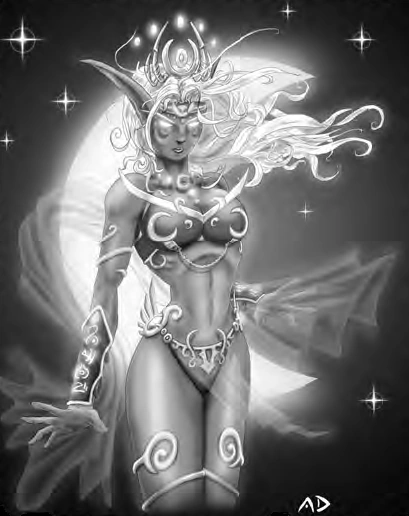
While there are a number of being on the elven pantheon, the most prominent is the goddess known as Elune. If the elves are the children of the stars then Elune is their mother moon, lighting their way and guiding them towards paths of peace. There are two moons within the sky of Azeroth, and Elune is associate with the larger of the two, called the White Lady.

 
Elune watches over her children and protects them. She is a goddess of peace, mercy, and healing. All living things are under her protection, and her goal is to spread harmony amongst the different races of Azeroth.

Those who worship Elune are gifted with some of her powers - healing, the ability to call down powerful beams of moonlight upon their enemies, and even the ability to raise the dead.

While Elune is worshipped by almost all night elves, there was a time when she was served by only females.  Rituals to Elune were performed by priestesses.  Male Kaldorei often turned to the earth and nature instead, becoming druids (heavily based upon Celtic myths) and revering the demigod known as Cenarius.  In more recent years both orders have opened up their ranks, allowing men to serve Elune as priests, and women to become druids in their own right.

The current center for worship of Elune is the Temple of the Moon, located in the night elf capitol of Darnassus.
 
 
Elune's current high priestess is also the leader of the night elves, a woman by the name of Tyrande Whisperwind.  Tyrande has served Elune faithfully for hundreds of years, beginning during her early years as a priestess when the demonic army known as the Burning Legion first invaded Azeroth.
 
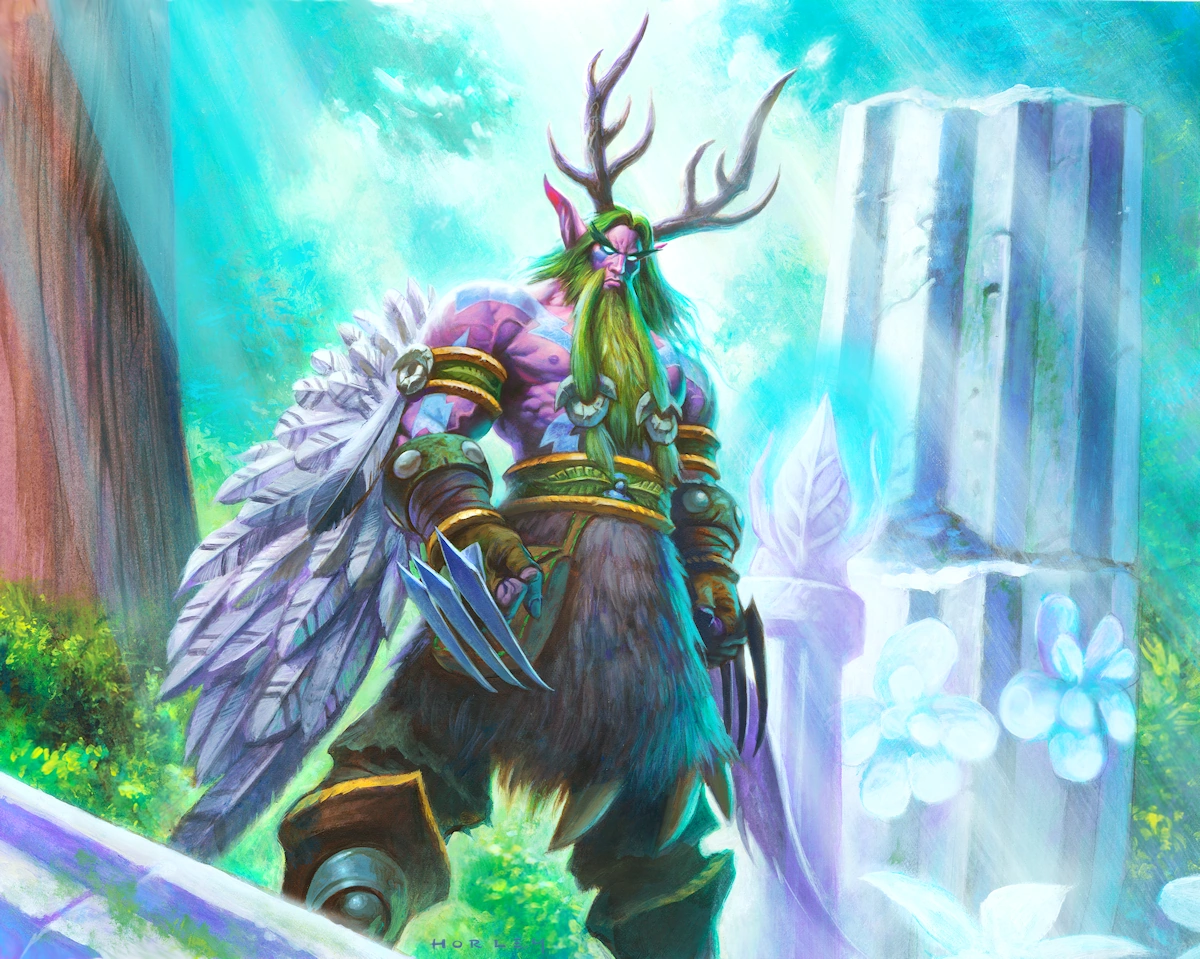
Interestingly enough, Tyrande's consort Malfurion is the leader of the night elven druids. 
 
(Much like their inspiration from the Celtic myths, druids in WoW are able to shapeshift into various creatures.  Something different happened to Malfurion during a druidic sleep, and he wound up merging his natural form with those of many different animals.)
 
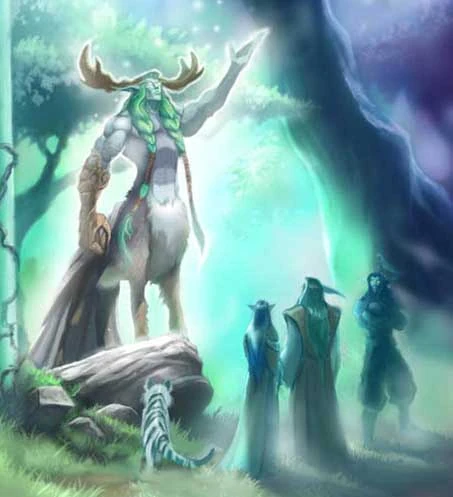
The relationship between the Kaldorei followers of Elune and the path of druidism is fascinating to me.  I mentioned that those who become druids revere the demigod Cenarius?  Well, Cenarius is actually the son of Elune, tying druids and priestesses intrinsically together.  His father is Malorne, an ancient stag who belongs to the group of deities known to the night elves as the Wild Gods.  (These same beings are known to the trolls as Loa and to the pandaren as the August Celestials.)  To tell you the story of the courtship of Elune and Malorne, I first need to take a look at another culture in the World of Warcraft.
 
There's another race within WoW called the tauren.  The night elves sided with the Alliance, and the tauren with the Horde, but both are immensely respectful of nature.  They were the two first races in WoW to have druids as a playable class.  I was fascinated when looking into their mythology to discover that the tauren and the night elves both worship Elune, Malorne, and Cenarius...albeit under different names.  Despite the name differences, the deities are pretty much the same in both cultures.

To the tauren, Elune is known as Mu'sha.  The Wild God Malorne is called Apa'ro.  In tauren tales Apa'ro ran from the tauren (called the Shu'halo) upon the earth and fled to the sky.  He became trapped in the stars, and could not set himself free.  Mu'sha saw him there and fell in love with Apa'ro.  The moon goddess offered to set him free, if he would give her his love in return.  Apa'ro agreed, and the two became consorts.
 
 
Their offspring was Cenarius, a being who made nature his home.  He trained many of the night elves, including Malfurion Stormrage, to become druids.  In fact, early on in Kaldorei history both Tyrande, Malfurion, and the night elf named Illidan Stormrage were pupils of Cenarius.  Each would go on to walk their own unique path - Tyrande becoming High Priestess of Elune, Malfurion the leader of the druids, and Illidan...something darker.
 
 
There has been speculation for some time amongst some Warcraft players that Elune is, in fact, a naaru - one of the ancient beings of Light worshipped by the draenei.  Elune herself has never been seen; only her light, and the peaceful, uplifting feeling that surrounds her.  This is similar to the sensations experienced by those who are around the naaru.  It's a very interesting theory, and one that I'm enjoying reading into more closely.  If you'd like to take a closer look, check out this link.

Be she Elune or Mu'sha, naaru or other deity, I'm quite fond of the night elven goddess.
 
 
What do you guys think of her? 
 
I'll be back next week with a post about the tauren culture and religion! See you guys then.

Monday, June 20, 2016

Pandaren: White Tiger Watch Over You

Hello readers!  I hope you all had a lovely weekend, and a fantastic Father's Day.

Today we're taking a look at one of my favorite races in World of Warcraft: the pandaren.  While often accused of being blatant rip-offs of Kung Fu Panda, the pandaren have actually been around for longer than that animated film has.  They are adorable yet fierce, with a rich and honorable culture.  Their mythology is the same.  Though I haven't talked about Chinese mythology yet, the pandaren religion has a lot in common with it.  In addition to four fascinating deities, the pandaren culture also has a sort of spirit/ancestor worship which revolves around the last emperor of the pandaren, Shaohao. Shall we take a look?

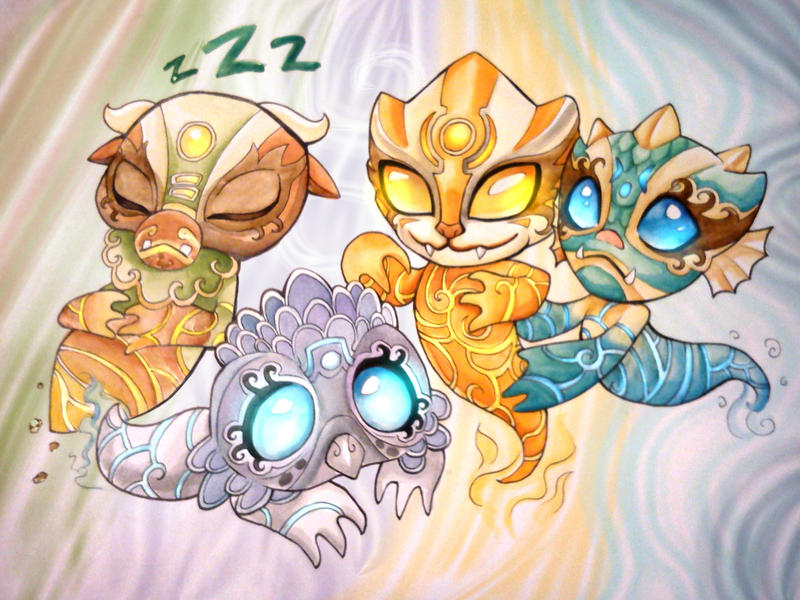
Like several other races in Azeroth (including the trolls and the night elves), the pandaren worship the Wild Gods. However, the pandaren religion is built around only four of these mighty beings, for it was these four who walked in the lands that would come to be called Pandaria. They know them by the collective name of “The August Celestials”, and consider them to be benevolent deities.

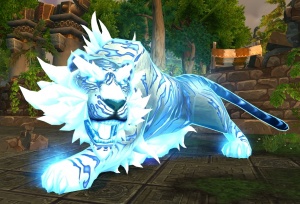
Xuen, the White Tiger, represents strength – both physical and that of the heart.

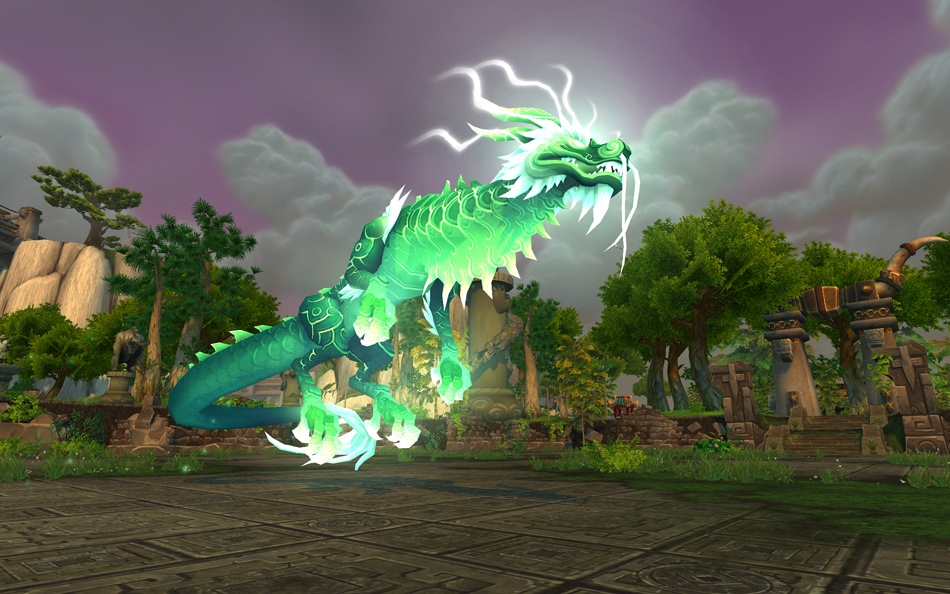
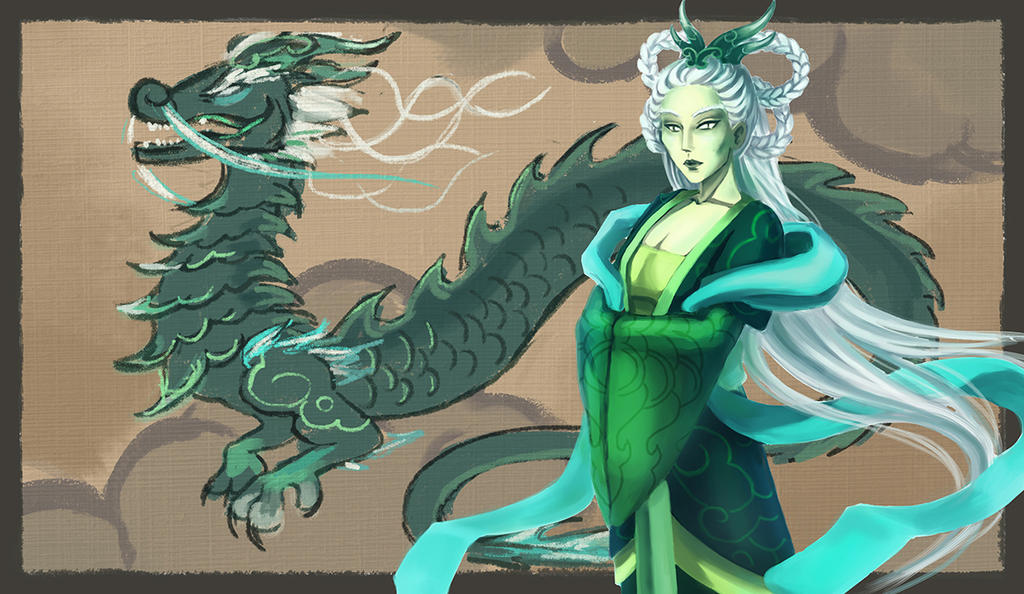
Yu'lon, the Jade Serpent, symbolizes the importance of wisdom.

Chi-Ji, the Red Crane, is the embodiment of hope.

Niuzao, the Black Ox, personifies fortitude.

 
While there were several races that dwelled in the lands of Pandaria (the mantid, the jinyu, the hozen, the mogu, and the pandaren), it was the pandaren to whom the August Celestials became especially close. This was largely due to the pandaren's peaceful nature. The pandaren were fascinated with the August Celestials and built a system of worship around them. In return for their interest and devotion, the August Celestials taught the pandaren more of philosophy, and sought to aid them in developing a culture that craved peace and harmony with the natural world.
 
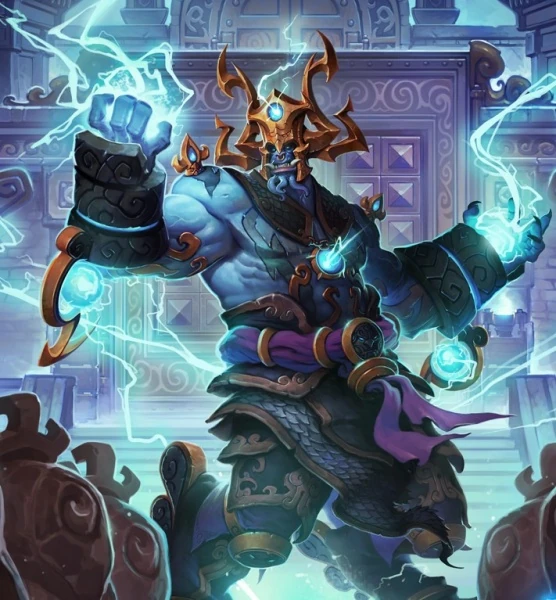
Unfortunately, not all of the races of Pandaria shared in the pandaren's desire for peace. The mogu in particular were an exceptionally violent species. Under the reign of a ruler named Lei Shen, the mogu would conquer and enslave the pandaren people. This tyrant mogu is known to history as “The Thunder King.”
 

Lei Shen's rise to power was unforeseen by even his own people, but when it came it was absolute. This was largely because Lei Shen had managed, through meticulous research and searching, to find one of the titans – ancient beings in part responsible for the creation of the mogu. In essence, Lei Shen found a being who was pretty much a god to his people. The being was so shocked by Lei Shen's onslaught that it was defeated, its power drained by the mogu. Lei Shen returned to his people more powerful than they could have imagined, and he rapidly brought them under his control. Still fueled by his stolen god-like power, Lei Shen then turned his attentions towards the other races in the land.

These races did their best to resist Lei Shen's attempts to enslave them, but the mogu was too powerful. Many of the pandaren ran to the August Celestials for help. Lei Shen pursued a group of them to the mountain of Kun-Lai, where Xuen the White Tiger made his home. Xuen, attempting to protecting the pandaren who had sought his aid, challenged Lei Shen to a duel.
 
 
The battle raged for many days and nights, but in the end Xuen was defeated. The mighty Celestial was shackled and imprisoned atop the heights of Kun-Lai Mountain. The other three Celestials attempted to aid the pandaren, but they too were defeated and imprisoned. Lei Shen stood victorious.  To further dishearten his slaves, he forbade worship of the August Celestials on pain of death.

Despite this, some small number of pandaren continued to practice their religion in secret, passing on knowledge of their gods to their descendants.

Lei Shen was eventually defeated during his quest to expand mogu territory into the lands outside of Pandaria. However, mogu supremacy continued without him through an ever-continuing span of emperors. The last in this long line of emperors was named Lao-Fe, and it was under his rule that a pandaren named Kang sparked a rebellion.

The pandaren had long ago been forbidden to learn to fight, and so Kang taught himself a graceful form of weaponless combat that could be disguised as a dance. This master of unarmed combat would become the first of the pandaren monks. He gathered students who also wished to end the mogu reign and trained them, always in secret far from the watching eyes of their masters.

In his efforts to hide his training from the mogu, Kang was forced to teach his pupils in hidden places. One day, his search for secret locales brought Kang to Kun-Lai Summit. It was near the top of this mighty mountain that he discovered something long since faded into the memories of his people – the prison of Xuen. The White Tiger was only too happy to offer his wisdom to Kang, and he tutored him often on the strength that lay within the pandaren's heart.

Eventually Kang was ready, and he led the pandaren in an uprising against the mogu empire. Though Kang fell in combat, he took Lao-Fe with him, ending the rule of the final emperor of the mogu. The pandaren drove the mogu back and reclaimed lands that had once been theirs. Worship of the August Celestials once more flourished as the powerful beings were freed from their prisons. A period of peace and prosperity began for the pandaren.


I want to talk about one last important part of the pandaren history and religion: the role of their final emperor. Shaohao was a good pandaren, one who came to power just in time to see the threat to his people and act to protect them.

As was customary, when he rose to the throne Shaohao consulted a seer of another race, a group of fish people called the jinyu. The future the seer told him was a frightening one indeed. It spoke of a demonic invasion, fires ravaging the lands of Azeroth, and a great rupturing of the earth itself.

What the seer saw would come to pass in the form of the Burning Legion, an invasion of demonic forces who sought to destroy Azeroth. The Burning Legion was stopped in other parts of Azeroth, thanks in large part to the efforts of the dragons and the night elves, but the cost was great. Countless beings perished at the hands of the demons. Lands burned, just as the jinyu had seen. Worse, the cost to close off the portal allowing the demons to invade Azeroth damaged the land almost as badly as the demons themselves had. Known as “The Sundering”, the event would rip apart the lands of Azeroth in a great calamity, tearing the massive land mass into smaller continents and killing untold numbers in the process.

(Azeroth before the Sundering)
(Azeroth after the Sundering)

Knowing that this was coming, Shaohao was able to take steps to protect his people. Under the tutelage of the August Celestials, the emperor made peace with himself. He meditated, and then removed all of his negative emotions from his heart – doubt, fear, violence, and many others. These emotions manifested into physical entities dubbed the “sha”, and one by one Shaohao battled them. Each was defeated in its turn, and imprisoned within the lands of Pandaria. At last freed from their corrupting influence, Shaohao began his final task under the guidance of Yu'lon, the Jade Dragon. He sacrificed himself, merging his very spirit and essence with the land of Pandaria. In doing so, Shaohao created a thick mist around the lands he called home. This mist was enough to shelter the land from the horrors of the Burning Legion, and the cataclysm of the Sundering. In fact, Shaohao's sacrifice kept Pandaria hidden from all outsiders for the next ten thousand years, until another Cataclysm disturbed the mists.


To this day, Pandaren honor the sacrifice of their last emperor. It is not uncommon to be greeted or bidden farewell by the phrase “May the mists protect you.” Despite the fading of the mists, the emperor's protection is still present in the lands of Pandaria – his legend continues to be told; his spirit occasionally offers advice; and, upon occasion, Shaohao can be seen communing with the August Celestials themselves.


What did you guys think of the pandaren? The August Celestials are some of my favorite characters in the game. I absolutely love the look of the models.  The artwork for them outside of the game is likewise gorgeous - I actually had a really hard time picking what images I wanted to use for this post!


I'll see you guys next week with a post about the night elves!

Monday, June 13, 2016

Orcs: Blood and Thunder

Hello readers!

With the Warcraft movie now out (and ohmydearsweetgoodness it was SO good.  I loved it, as an avid WoW player.  My two godfathers, neither of whom play Warcraft, also adored it.  The story was well written, the CGI was gorgeous, and all of the characters had a depth to them which made them compelling.  I'd definitely recommend checking it out.), I'm continuing my look at the religions of the two major cultures within the film. Last Monday I talked about the humans and the Light; this week I'm taking a look at the orcs and their shamanistic beliefs.


Orc culture is heavily focused on respecting one's elders and ancestors. A common farewell by an orc is to say “Ancestors watch over you,” or “Spirits guide you.”
Phrases in our world such as “By Odin's beard!” might be familiar to you. The orcish equivalent is exclamations along the lines of “By Hellscream's axe!”, referencing famous orcs as declarations of surprise.

Orcs follow a shamanic religion, focusing upon the earth and the elements. It is very animistic in nature – meaning that the orcs believe all things (including animals, plants, and the sun) have a spirit. Orc religion does not focus upon worshiping these spirits, as, say, the druids do. Instead, orcs honor and respect the spirits, striving to live in harmony with the natural world.

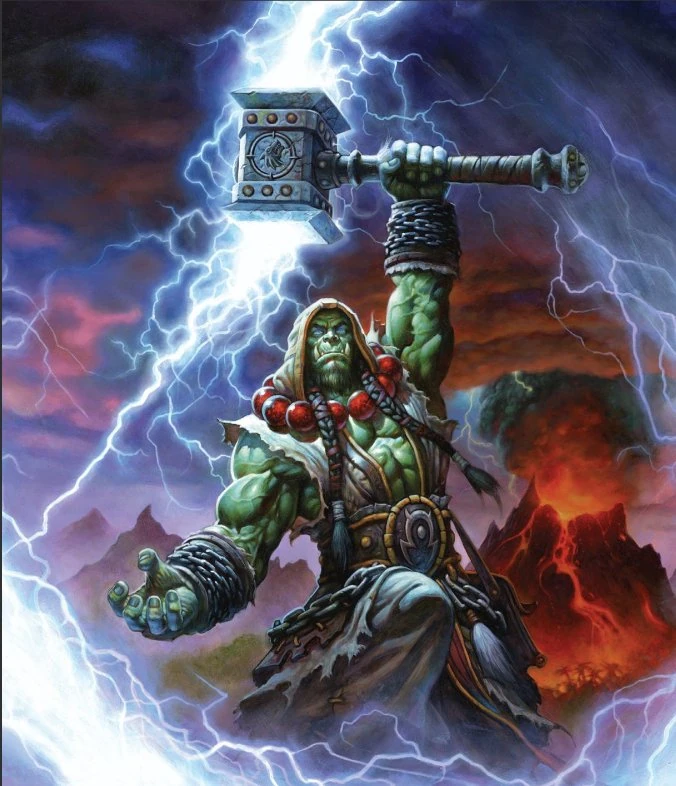
Some orcs are even able to tap into some of the powers of the spirits, becoming shaman. The most famous orc shaman is Thrall, who led the Horde as its Warchief for some time. Thrall ultimately resigned from his powerful position after the devastation known as the Cataclysm rocked Azeroth. He returned to his shamanistic roots and sought to restore the world.
 
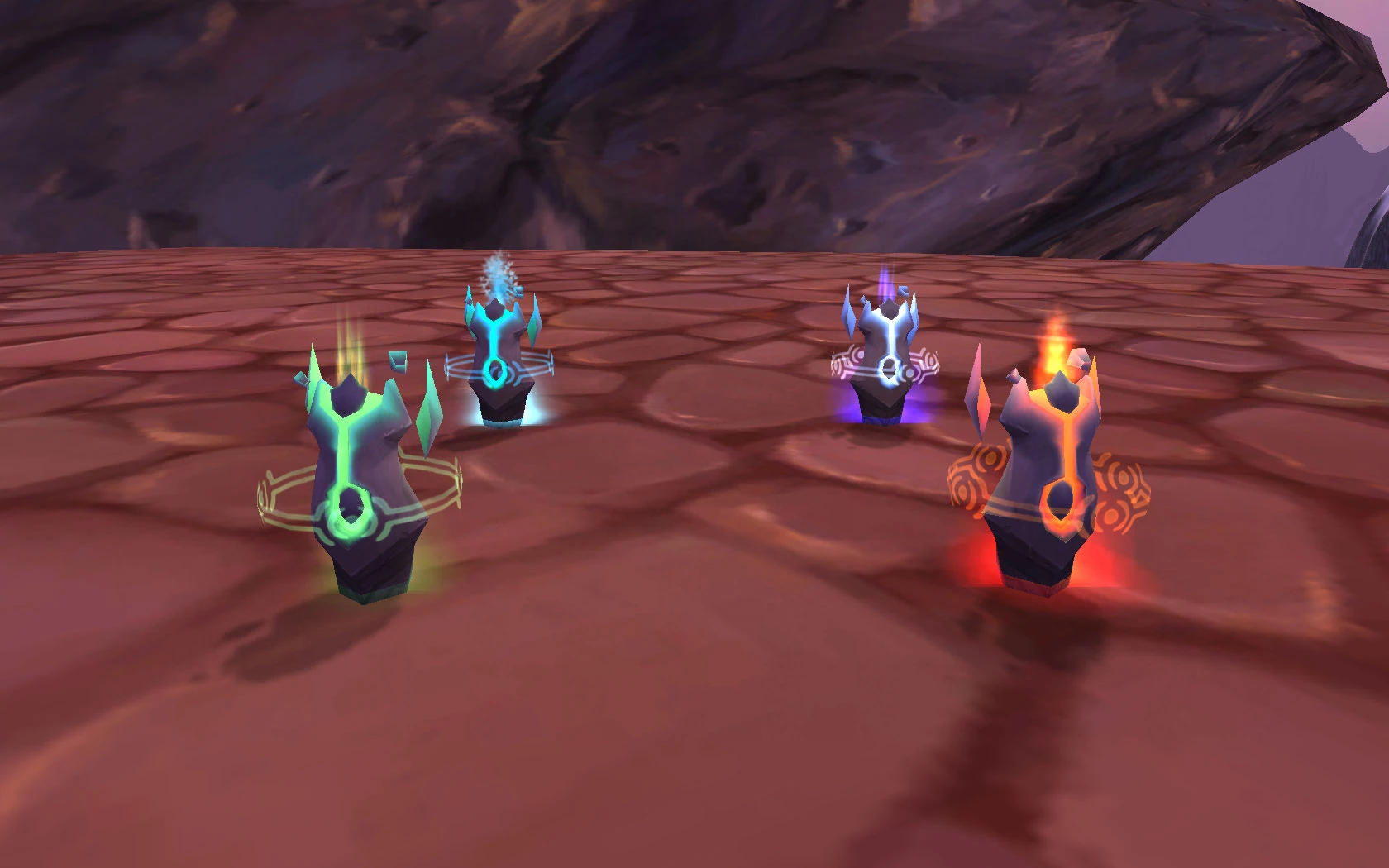
Interestingly, orc shaman do not themselves possess great power. Instead, they draw upon the power of the spirits and the elements, harnessing it to enact their will. This harnessing takes place in the form of carved totems, ceremonially decorated with spirits and animals specific to the purpose the shaman wishes it to serve. In World of Warcraft, several races are able to play shaman characters – not just the orcs. Each race has a different design for their totems, some of which I find quite beautiful.

(These particular totems are the pattern used by draenei shaman.)

Now, lets talk a little bit about the elements the shaman can call upon. An official blurb from WoW says that they “...have the power of nature in their fists, and earth, wind, and fire come to their call.” Water is also able to be harnessed by shaman. They can use the elements to heal themselves and allies, to shock and stun their enemies, to harden their skin with earth in defense, or to burn them with shooting flames. Wind can trap enemies in swirling cyclones, or knock them back. Water can cleanse poison. The way the game designers in WoW have used the elements in such a wide variety of ways really impresses me.

Sometimes, shaman interact directly with powerful spirits of the elements – called elementals. Each world has its own unique elementals. The orcs, like the draenei, lived on a planet called Draenor before traveling to Azeroth. Four of Draenor's most powerful elementals can be found in the area called the Throne of the Elements. They are Gordawg, Incineratus, Kalandrios, and Aborius.


These mighty elementals and their lesser kin can be quite wild and untamable at times. To try and keep the elements – and therefore the world – in balance, a group of shaman known as the Earthen Ring keep in communication with the greater of the elementals.

Matters are a little more complicated on the world of Azeroth. There are a large number of mighty elementals there, at times varying based on the locale. For instance, the Wandering Isle (a giant turtle roaming the sea with an entire colony of pandaren living on its back) has four elementals unlike those seen in other parts of the world: Dafeng, Wugou, Huo, and Shu. These elementals are a little mischievous, but work alongside the pandaren peacefully.


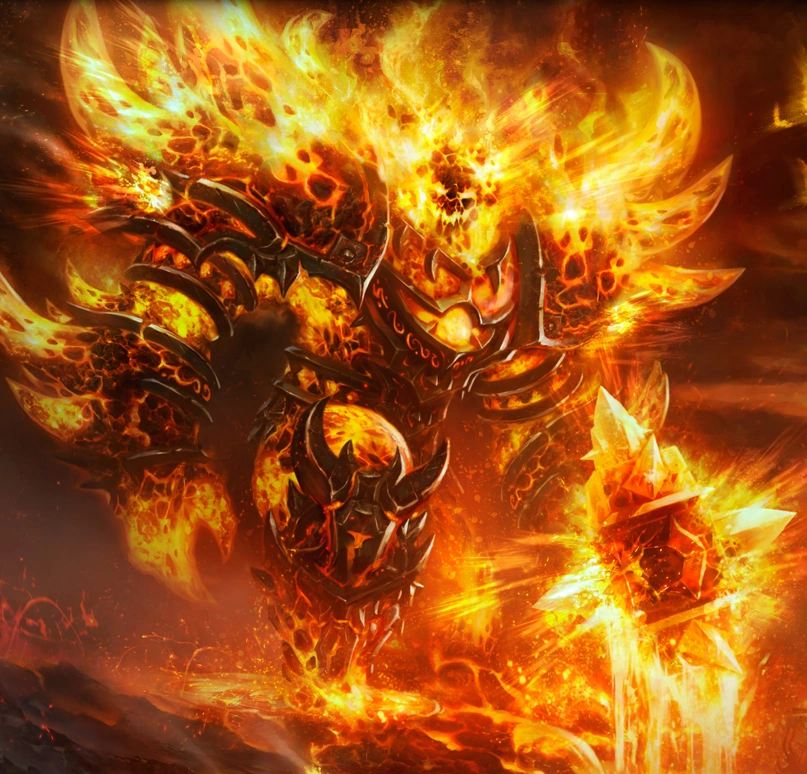
Other elementals in Azeroth are considerably more hostile towards fleshy beings. The four strongest, who have walked the earth since almost its very beginning, are Ragnaros, Neptulon, Al'Akir, and Therazane. Together, they are known as the Elemental Lords. Each of these Lords is an incredibly powerful force. Unfortunately for the denizens of Azeroth, only Neptulon and Therazane are willing to have non-violent dealings with mortals. Both Ragnaros and Al'Akir are boss monsters in WoW that were some of the more challenging enemies to defeat when they were released.


The reason for the wrath of Ragnaros and Al'Akir lies in their loyalties. All of the Elemental Lords originally served the Old Gods – Lovecraftian-esque beings of terror who seek the corruption or destruction of all living things. The Old Gods are servants of the Void, the immortal enemy of the Light. Long ago they allied with the Elemental Lords in an attempt to wipe out all other living things. The Elemental Lords were eventually defeated and imprisoned by the forces of the Light, but have since escaped. It's possible that Neptulon and Therazane are both still servants of the Old Gods, and have only worked with living creatures out of a sense of self-preservation.

(Neptulon always reminds me of the Nautolan race from Star Wars.)

I find the names of the Elemental Lords fascinating. Neptulon, whose element is water, is likely named after Neptune, the Roman god of the ocean. Ragnaros, the Fire Lord, sounds very similar to the Norse apocalypse called Ragnarok – an event that is said to end the world in fire. It makes me wonder where the names Therazane and Al'Akir come from.

If you'd like to learn more about the Elemental Lords, including their origins and loyalties, I'd highly suggest this article.

These mighty elementals are some of the beings whose power shaman tap into, and who the orcs revere. Respect of the elements in absolutely necessary...because if you anger them, you won't be able to stop their wrath. It's a hard, brutal religion, but it's what the orcs have. (I'd imagine the transition from the elementals of Draenor to the wrathful ones of Azeroth was interesting for the orcs!)

What do you guys think?

I'll be back next week with a look at one of my favorite races in WoW.  They're fuzzy, bouncy, and deeply spiritual.  They also just so happen to be giant pandas.  See you then!