Greetings readers! Today we're celebrating the third anniversary of this blog. Many thanks to all of my readers!
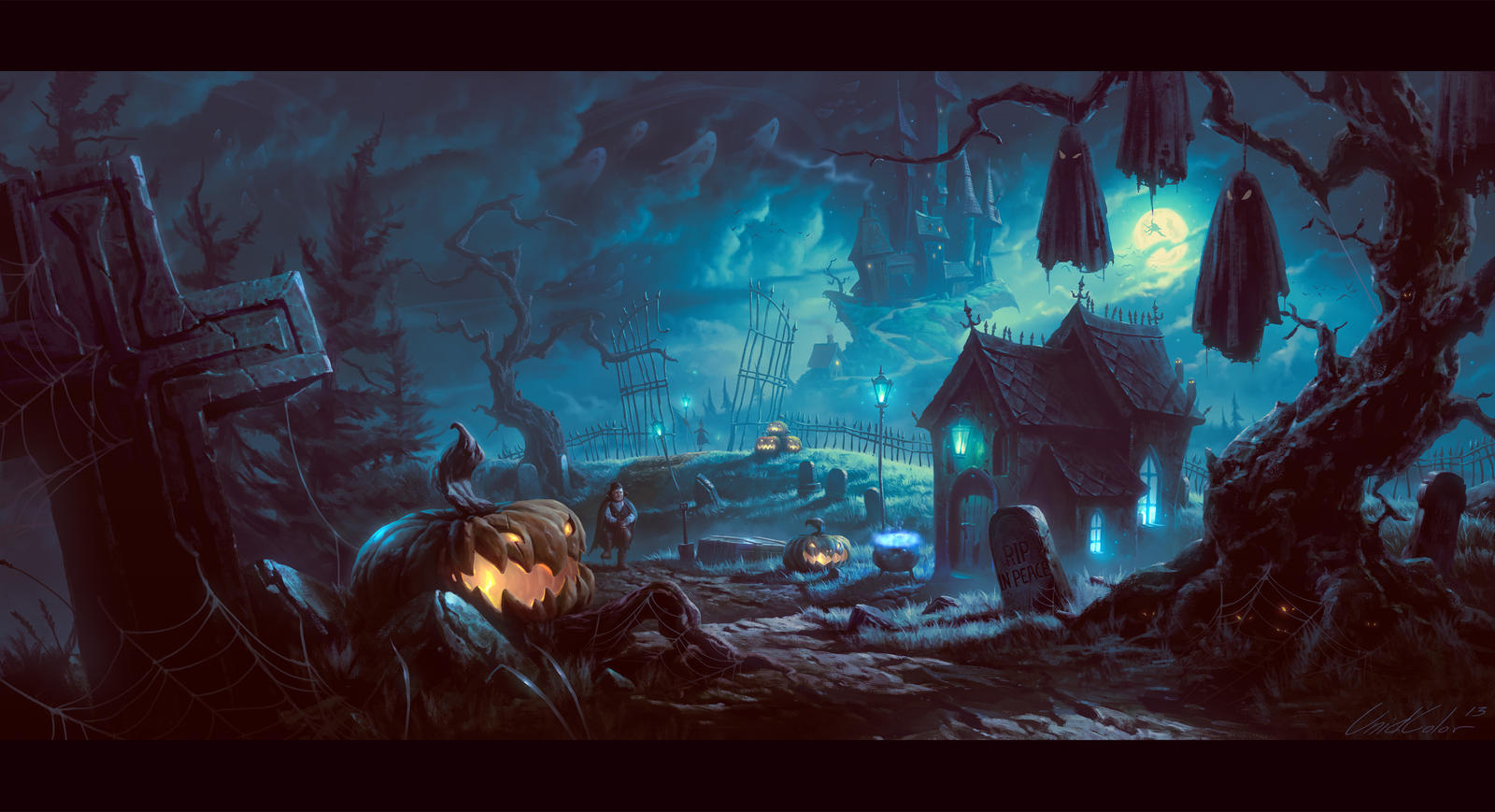
Tomorrow is Halloween, and since I've done seasonal posts for the past couple of years, I felt like carrying on the tradition. With that in mind, I want to take a look at part of what makes Halloween so spooky: Monsters.
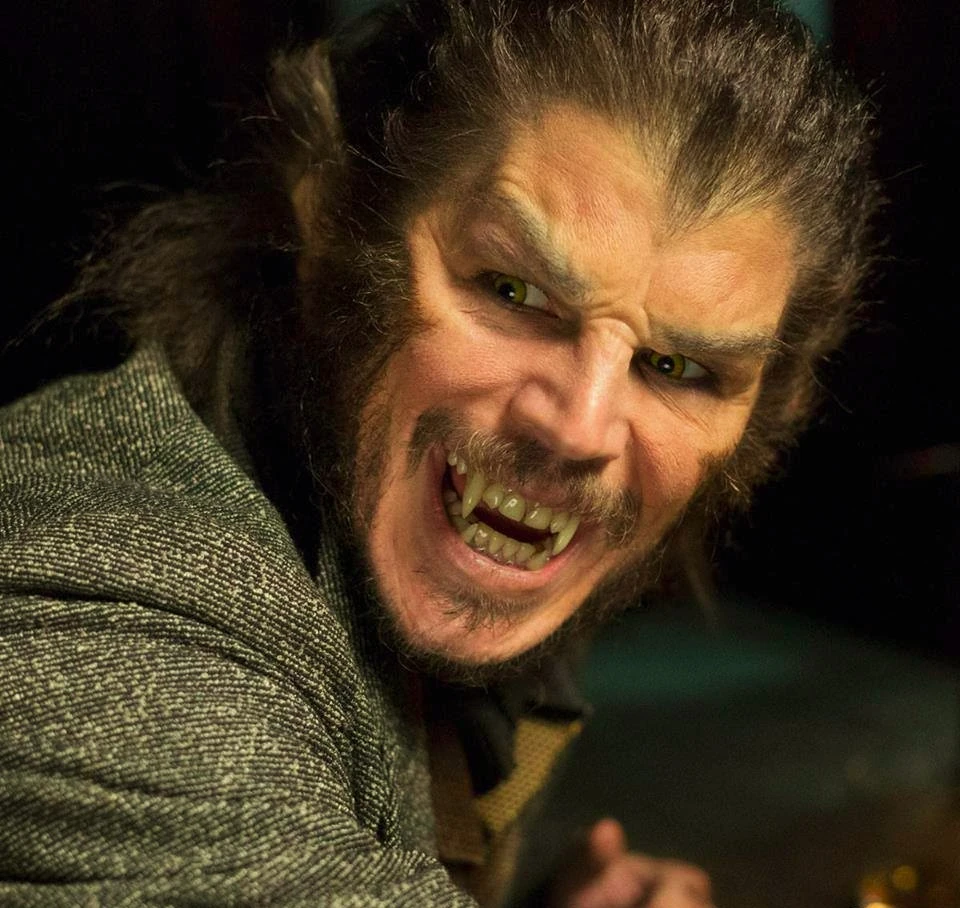
Monsters (and dressing up as them for Halloween) have gone hand in hand long before Universal began to create their monster movies. The fictional costumes people now don for fun were once believed to be very real, and very fearsome. Numerous folktales and legends from all around the world speak of these creatures. From ghosts and devils, to witches and werewolves, up to vampires and zombies, here's a look at some of the most popular monsters throughout the ages...along with the reasons they were so feared.
The origins of Halloween lie in the Celtic holiday of Samhain. During this festival, it was common practice to dress as one of the dead. Ghosts, ghouls, and spirits were some of the guises worn by celebrants. The vengeful, unquiet dead were said to roam free during Samhain, and humans could avoid their notice by dressing as undead as well.
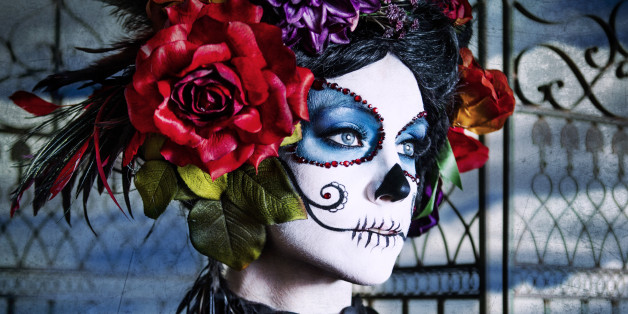
A more cheerful variation on this theme lies in the Latin American celebration of Dias de los Muertos, the Days of the Dead. Taken from the Catholic All Saints' Day and All Souls' Day, which themselves stem from Samhain, Dias de los Muertos is a time to honor the dead and celebrate their life. My own city does a parade every year for this holiday in which people paint their faces to look skeletal, and wear more traditional Mexican garb.
Witches and devils stem from Christianity's influence. In fact, throughout the years Halloween costumes have been heavily influenced by religion. A lot of the early horror writers were Christian authors. (Nowhere is this more obvious than in The Curious Case of Dr. Jekyll and Mr. Hyde, in which both the dangers of repression and the horrors of a life without morals are explored.) Because of this religious influence, most of the more popular costumes, those included, feature individuals either dead or damned.
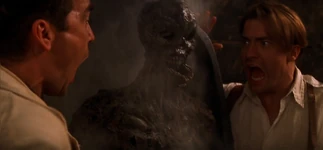
For the most part, these monsters share similar goals. They are deadly predators. As such, they are immensely dangerous and something to be feared. But it also means that they follow certain rules. They seek prey. They defend their territory. Occasionally, they look for a mate. Think of the Mummy seeking revenge on those who disturbed his tomb, or Dracula hunting for a bride.
It is when these monsters move outside of their territory, or attack for a reason other than food or revenge, that they are at their most terrifying. Frankenstein's monster sees parts of this, because he has no real goal when he is first born, and cannot be predictable. Dracula becomes infinitely more frightening when he leaves his territory and travels to another country - where his tactics are no longer known, and where most don't even know of his existence.
But there is one monster even more frightening than this, and it's one which has risen in popularity in just the last few decades. Originally, zombies were very different from the creatures which now dominate movies, TV shows, and video games. Raised by voodoo and witchcraft, a classical zombie was slow-moving, shackled to its creator's will, and had no brain function. They were more in keeping with what one might expect from a necromancer's slaves.
Over time, these zombies morphed into the rage-virus zombies we're now so familiar with. Many monsters owe their popularity to common fears at the time - fear of the occult, of the foreign stranger, of "heathen" religions, or of certain diseases transmitted by blood. Modern zombies are no different. They stem from fear of the viral outbreak, the disease with no cure which just keeps spreading.
In many ways, this is what makes the zombie so terrifying. It's certainly why I find them the scariest of the monsters. Unlike their other Universal brethren, the zombie apocalypse is not a traditional predator. It does not seek to feed, to defend, or to find others like itself. Its single goal is the extermination of all other life. Like the Borg, it seeks to assimilate everything else, until there is only the virus. This makes it difficult to defeat, and impossible to predict. It breaks the mold of monsters that have come before it, which I think is part of why the rage-virus has become so popular. It's something new and terrifying, and it holds audiences spellbound. (It's also a good platform from which to explore the darker side of humanity, and to see just how far someone desperate to survive will go; just look at The Walking Dead, where most of the conflict is between warring human factions, not humans versus zombies. That's another kind of horror all in itself.)
I'm very interested to see how the horror genre changes as society's fears change in the future.
What are some of your favorite monster movies? The Mummy remains one of mine!
Happy Halloween!
Showing posts with label Halloween. Show all posts
Monday, October 30, 2017
Sunday, October 25, 2015
Halloween: Tricks, Treats, and Pagan Rituals
I wrote this post a few months ago, and I've been so excited to put it up! That's why you're getting it today instead of tomorrow. Happy early Halloween - because that's the holiday we're talking about!
Before starting this post, I really have to thank the librarians at my community college. They have graciously put up with 4+ years of me asking for tons of books on a myriad of strange topics that have absolutely nothing to do with my degree. When I was researching for this post I checked out books about the origins of Halloween (for this), Santa Claus (a future post), Russian mythology (for a writing project), and gluten-free, allergy friendly cooking (a medical necessity). The librarians didn't even bat an eye at my strange mix of books, and were quite helpful in suggesting additional resources and ordering them for me. I love my librarians!
So...Halloween. It's one of my favorite holidays. For the past two years I've dressed in a different costume every day of the week leading up to Halloween. I love coming up with costumes! I also (still) love trick-or-treating, despite not being much of a candy eater. Halloween has been a much loved part of my life for longer than I can remember - yet, I never really knew what Halloween was about. I celebrated fun costumes, The Pumpkin Who Couldn't Smile, and pumpkin patches - but I didn't know the origins of the holiday.
Eventually I became aware that Halloween was somehow tied to Samhain (I believe Jim Butcher and the Dresden Files taught me that). Still, I didn't know much about Samhain until I started researching it for this post. When I looked into it I found out that Samhain is an old Celtic festival from which Halloween originates. However, Halloween is more than just a modern reflection of Samhain. The holiday we know and love has been shaped by many things. The ones I'll be talking about are Samhain, All Saints' Day, All Souls' Day, Guy Fawkes Day, and Dias de los Meurtos. Interested? Good! Let's get started.
Samhain
As far as I can tell, this is where Halloween started. Samhain was a Celtic festival that took place on November 1st. During this time the spirits of the dead were able to cross between our world and the world of the dead. Bonfires were lit to guide the dead on their way, and special food was made for the spirits of loved ones.
At least, that's one way fire and food was used.
You see, on Samhain spirits were able to roam freely - and not all spirits are good. Bonfires were used to keep the nastier spirits at bay, and food was offered to appease their wrath. People would dress as evil spirits, hoping that disguising themselves would fool the spirits and make them pass over those who were costumed.
Samhian was celebrated as the start of the Celtic year. It marked the end of the harvesting season and the beginning of winter. Its traditions were celebrated for centuries without really changing...until the church came along.
All Saints' Day/All Souls' Day
Saint Patrick converted the Irish to Christianity sometime around 300-400AD. It was around that time that the rituals of Samhain became modified by the church. Note that I say modified - not gotten rid of. The church was rather brilliant in its attempts to convert the Celtic people. Instead of forbidding a pagan practice, the church changed it to suit their own agenda.
It began with declaring November 1st to be All Saints' Day: a day in which all of the saints who did not have their own special day were honored. Upon realizing that this didn't really have anything to do with Samhain, the church made November 2nd All Souls' Day. On All Souls' Day those who died in the previous year are remembered and celebrated.
The church made sure that the Irish knew that worshipping the Celtic gods as they had done on Samhain was wrong. The restless spirits Samhain's rituals sought to keep at bay were changed to servants of the devil - demons, ghosts, and witches amongst them. All of these remain popular modern Halloween costumes.
It is from All Saints' Day that we get the name for Halloween. All Saints' Day is November 1st. It was also called The Eve of All Hallows (from Hallowed), which is shortened to Hallow-Even (from evening). This is sometimes shortened even further to Hallowe'en, or Halloween.
Guy Fawkes Day
Fast forward about a thousand years and look at Britain. On November 5th of 1605 a man named Guy Fawkes attempted to blow up Parliament. He was stopped, arrested, and killed quite graphically. The event was commemorated the following year as a celebration of his actions having failed. The holiday was named Guy Fawkes Day.
Sound familiar? The movie V for Vendetta recalls these events. "Remember, remember, the 5th of November, the gunpowder, treason and plot? I know of no reason why the gunpowder treason should ever be forgot."
Of course, it might sound familiar because you're from a place that celebrates Guy Fawkes Day. The holiday is still enormously popular in Britain and other parts of the world. I'm sorry, readers from across the pond, but Guy Fawkes Day isn't celebrated over here; at least, not in my town/state that I'm aware. Please let me know how your celebrations go!
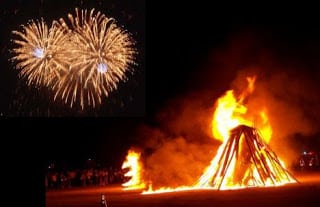
You might be wondering what Guy Fawkes Day has to do with Halloween. It is the traditions of Guy Fawkes Day that I want to look at. Fireworks and bonfires are both lit to celebrate Fawkes' failed plot.
The bonfires could be held over from the older celebration of Samhain, but an important new tradition arises here - that of begging.
Leading up to the day of the holiday children create a straw or rag effigy of Guy. They stand on a street corner with "him" and beg passerby for a penny for the Guy. Could this act of children begging adults for a "treat" be where our own trick or treating comes from?
Fast forward a little more, and we come to America.
A Melding of Cultures
America is many things, including a giant melting pot of cultures. The USA began as a British colony, so the tradition of Guy Fawkes Day was doubtless known to its denizens. America also had a heavy influx of Irish settlers in its early days. These settlers likely brought celebrations of Samhain, All Saints' Day, and All Souls' Day with them. These traditions combined in America, and eventually became the Halloween we know today. The transition was gradual, though...and aided by a little mischief.
Trick or Treat
The cry is familiar from my Halloweens, but I've never heard any trick-or-treater say it expecting to not get a treat. Despite this, when you look at the statement you'll see that it is an either/or declaration. There can be a trick, or there can be a treat - but not both. As such, it's a little bit of a threat.
In the 1800-1900s tricks were pretty common around Halloween from the teenage population. They were mostly harmless - gates temporarily being removed from fences, windows being dirtied, that sort of thing. Shopkeepers ingeniously got out of that last one by decorating their store's windows for the holiday in the hopes that the wild youths would like it and not deface the windows. Is this where Halloween window decals originated?
As time progressed, the tricks began to escalate. Part of this was due to rising social tensions. Unrest over the difference in living styles between the rich and the poor led to more tricks targeting the wealthy. The conflict between whites and African Americans was growing, and many saw Halloween as a time to work off a little stress. Things reached a head around the time of the World Wars, when fear and stress overflowed. Tricks were no longer mostly harmless, and some serious damage was caused.
It was around this time that housewives began to have a brilliant idea. On Halloween they would bake some sort of goody - donuts, brownies, hot cider, etc. - and keep an eye out for teenagers looking to trick their house. Upon seeing a group, the woman would invite them into the house for refreshments. It was hoped that the food would placate the tricksters and make them less likely to deface the house - and it worked!
News spread, and within a few years it became a common practice to offer treats on Halloween. Youths began to visit houses in their neighborhoods for the express purpose of getting treats, and would spend the evening socializing in the homes of their neighbors. Throughout all of this, the cry of trick or treat remained as a warning of what could happen if they weren't given some delicious goodies.
Over the years this practice has changed considerably. Fear of poisoned goodies or blades hidden in apples led to a switch to pre-wrapped candies. These were faster to eat, so more houses were visited in a night. Children were discouraged from entering the house of someone they didn't know well, so much of the social aspect of Halloween was lost as the threshold ceased to be crossed. Once again, that made the process faster, so children were able to expand the range of houses they visited.
That brings us up to today, when the cry of "Trick or treat!" still remains.
Dia de los Meurtos
I grew up in Southern Arizona, so it would be somewhat remiss of me to not mention Dia de los Meurtos. Dia de los Meurtos, or "Days of the Dead", is a Mexican holiday. It takes place from October 31st to November 2nd, and is a Mexican variation of All Souls' Day.
I'm not sure how much Dia de los Meurtos contributed to America's celebration of Halloween, but I can see some of its influence each October. On Dia de los Meurtos Mexican families celebrate their deceased loved ones. Small shrines are placed at their grave sites alongside food offerings, and a party is held in memory of the dead. It might sound sad to you, but it's actually a very festive time.
Skeletons are a mainstay of Dia de los Meurtos, and my local Halloween stores always feature bright, flowery skeleton costumes.
Sugar skulls, a treat on Day of the Dead, can be bought as both decorations and noms. I'm not sure if Tucson has these just because of our proximity to Mexico, or if they can be found all over the US during Halloween season.
You guys tell me - do you find Dia de los Meurtos items near you in October? Or is it just a local tradition? I'm especially curious to know if my readers from other countries are familiar with them. If nothing else, I know that World of Warcraft has worked the celebration into their Day of the Dead holiday from November 1st to 3rd.
(And, speaking of World of Warcraft: Halloween is celebrated in WoW as Hallow's End. Here are two pictures from that holiday that I just had to share.)
I hope you guys found this post interesting! I had a ton of fun researching Halloween and finding out about its origins; I hope you did too!
If you're interested in learning more, I highly recommend the book Halloween and Other Festivals of Death and Life. It is a fascinating collection of articles on the various subjects I've talked about here, as well as many others that I didn't have room to include. (I figured this post was long enough already!)
Lastly, because I love it so much, I have to recommend the movie The Book of Life to anyone curious about Dia de lost Meurtos. It is a gorgeous look at the Day of the Dead, and it has a fun story to boot. Those visuals! So pretty!
I hope you all have a wonderful week and a safe, fun Halloween! I'd love to see your costumes; feel free to send me pictures! Happy trick or treating!
Before starting this post, I really have to thank the librarians at my community college. They have graciously put up with 4+ years of me asking for tons of books on a myriad of strange topics that have absolutely nothing to do with my degree. When I was researching for this post I checked out books about the origins of Halloween (for this), Santa Claus (a future post), Russian mythology (for a writing project), and gluten-free, allergy friendly cooking (a medical necessity). The librarians didn't even bat an eye at my strange mix of books, and were quite helpful in suggesting additional resources and ordering them for me. I love my librarians!
So...Halloween. It's one of my favorite holidays. For the past two years I've dressed in a different costume every day of the week leading up to Halloween. I love coming up with costumes! I also (still) love trick-or-treating, despite not being much of a candy eater. Halloween has been a much loved part of my life for longer than I can remember - yet, I never really knew what Halloween was about. I celebrated fun costumes, The Pumpkin Who Couldn't Smile, and pumpkin patches - but I didn't know the origins of the holiday.
Eventually I became aware that Halloween was somehow tied to Samhain (I believe Jim Butcher and the Dresden Files taught me that). Still, I didn't know much about Samhain until I started researching it for this post. When I looked into it I found out that Samhain is an old Celtic festival from which Halloween originates. However, Halloween is more than just a modern reflection of Samhain. The holiday we know and love has been shaped by many things. The ones I'll be talking about are Samhain, All Saints' Day, All Souls' Day, Guy Fawkes Day, and Dias de los Meurtos. Interested? Good! Let's get started.
Samhain
As far as I can tell, this is where Halloween started. Samhain was a Celtic festival that took place on November 1st. During this time the spirits of the dead were able to cross between our world and the world of the dead. Bonfires were lit to guide the dead on their way, and special food was made for the spirits of loved ones.
At least, that's one way fire and food was used.
You see, on Samhain spirits were able to roam freely - and not all spirits are good. Bonfires were used to keep the nastier spirits at bay, and food was offered to appease their wrath. People would dress as evil spirits, hoping that disguising themselves would fool the spirits and make them pass over those who were costumed.
Samhian was celebrated as the start of the Celtic year. It marked the end of the harvesting season and the beginning of winter. Its traditions were celebrated for centuries without really changing...until the church came along.
All Saints' Day/All Souls' Day
Saint Patrick converted the Irish to Christianity sometime around 300-400AD. It was around that time that the rituals of Samhain became modified by the church. Note that I say modified - not gotten rid of. The church was rather brilliant in its attempts to convert the Celtic people. Instead of forbidding a pagan practice, the church changed it to suit their own agenda.
It began with declaring November 1st to be All Saints' Day: a day in which all of the saints who did not have their own special day were honored. Upon realizing that this didn't really have anything to do with Samhain, the church made November 2nd All Souls' Day. On All Souls' Day those who died in the previous year are remembered and celebrated.
The church made sure that the Irish knew that worshipping the Celtic gods as they had done on Samhain was wrong. The restless spirits Samhain's rituals sought to keep at bay were changed to servants of the devil - demons, ghosts, and witches amongst them. All of these remain popular modern Halloween costumes.
It is from All Saints' Day that we get the name for Halloween. All Saints' Day is November 1st. It was also called The Eve of All Hallows (from Hallowed), which is shortened to Hallow-Even (from evening). This is sometimes shortened even further to Hallowe'en, or Halloween.
Guy Fawkes Day
Fast forward about a thousand years and look at Britain. On November 5th of 1605 a man named Guy Fawkes attempted to blow up Parliament. He was stopped, arrested, and killed quite graphically. The event was commemorated the following year as a celebration of his actions having failed. The holiday was named Guy Fawkes Day.
Sound familiar? The movie V for Vendetta recalls these events. "Remember, remember, the 5th of November, the gunpowder, treason and plot? I know of no reason why the gunpowder treason should ever be forgot."
Of course, it might sound familiar because you're from a place that celebrates Guy Fawkes Day. The holiday is still enormously popular in Britain and other parts of the world. I'm sorry, readers from across the pond, but Guy Fawkes Day isn't celebrated over here; at least, not in my town/state that I'm aware. Please let me know how your celebrations go!
You might be wondering what Guy Fawkes Day has to do with Halloween. It is the traditions of Guy Fawkes Day that I want to look at. Fireworks and bonfires are both lit to celebrate Fawkes' failed plot.
The bonfires could be held over from the older celebration of Samhain, but an important new tradition arises here - that of begging.
Leading up to the day of the holiday children create a straw or rag effigy of Guy. They stand on a street corner with "him" and beg passerby for a penny for the Guy. Could this act of children begging adults for a "treat" be where our own trick or treating comes from?
Fast forward a little more, and we come to America.
A Melding of Cultures
America is many things, including a giant melting pot of cultures. The USA began as a British colony, so the tradition of Guy Fawkes Day was doubtless known to its denizens. America also had a heavy influx of Irish settlers in its early days. These settlers likely brought celebrations of Samhain, All Saints' Day, and All Souls' Day with them. These traditions combined in America, and eventually became the Halloween we know today. The transition was gradual, though...and aided by a little mischief.
Trick or Treat
The cry is familiar from my Halloweens, but I've never heard any trick-or-treater say it expecting to not get a treat. Despite this, when you look at the statement you'll see that it is an either/or declaration. There can be a trick, or there can be a treat - but not both. As such, it's a little bit of a threat.
In the 1800-1900s tricks were pretty common around Halloween from the teenage population. They were mostly harmless - gates temporarily being removed from fences, windows being dirtied, that sort of thing. Shopkeepers ingeniously got out of that last one by decorating their store's windows for the holiday in the hopes that the wild youths would like it and not deface the windows. Is this where Halloween window decals originated?
As time progressed, the tricks began to escalate. Part of this was due to rising social tensions. Unrest over the difference in living styles between the rich and the poor led to more tricks targeting the wealthy. The conflict between whites and African Americans was growing, and many saw Halloween as a time to work off a little stress. Things reached a head around the time of the World Wars, when fear and stress overflowed. Tricks were no longer mostly harmless, and some serious damage was caused.
It was around this time that housewives began to have a brilliant idea. On Halloween they would bake some sort of goody - donuts, brownies, hot cider, etc. - and keep an eye out for teenagers looking to trick their house. Upon seeing a group, the woman would invite them into the house for refreshments. It was hoped that the food would placate the tricksters and make them less likely to deface the house - and it worked!
News spread, and within a few years it became a common practice to offer treats on Halloween. Youths began to visit houses in their neighborhoods for the express purpose of getting treats, and would spend the evening socializing in the homes of their neighbors. Throughout all of this, the cry of trick or treat remained as a warning of what could happen if they weren't given some delicious goodies.
Over the years this practice has changed considerably. Fear of poisoned goodies or blades hidden in apples led to a switch to pre-wrapped candies. These were faster to eat, so more houses were visited in a night. Children were discouraged from entering the house of someone they didn't know well, so much of the social aspect of Halloween was lost as the threshold ceased to be crossed. Once again, that made the process faster, so children were able to expand the range of houses they visited.
That brings us up to today, when the cry of "Trick or treat!" still remains.
Dia de los Meurtos
I grew up in Southern Arizona, so it would be somewhat remiss of me to not mention Dia de los Meurtos. Dia de los Meurtos, or "Days of the Dead", is a Mexican holiday. It takes place from October 31st to November 2nd, and is a Mexican variation of All Souls' Day.
I'm not sure how much Dia de los Meurtos contributed to America's celebration of Halloween, but I can see some of its influence each October. On Dia de los Meurtos Mexican families celebrate their deceased loved ones. Small shrines are placed at their grave sites alongside food offerings, and a party is held in memory of the dead. It might sound sad to you, but it's actually a very festive time.
Skeletons are a mainstay of Dia de los Meurtos, and my local Halloween stores always feature bright, flowery skeleton costumes.
Sugar skulls, a treat on Day of the Dead, can be bought as both decorations and noms. I'm not sure if Tucson has these just because of our proximity to Mexico, or if they can be found all over the US during Halloween season.
You guys tell me - do you find Dia de los Meurtos items near you in October? Or is it just a local tradition? I'm especially curious to know if my readers from other countries are familiar with them. If nothing else, I know that World of Warcraft has worked the celebration into their Day of the Dead holiday from November 1st to 3rd.
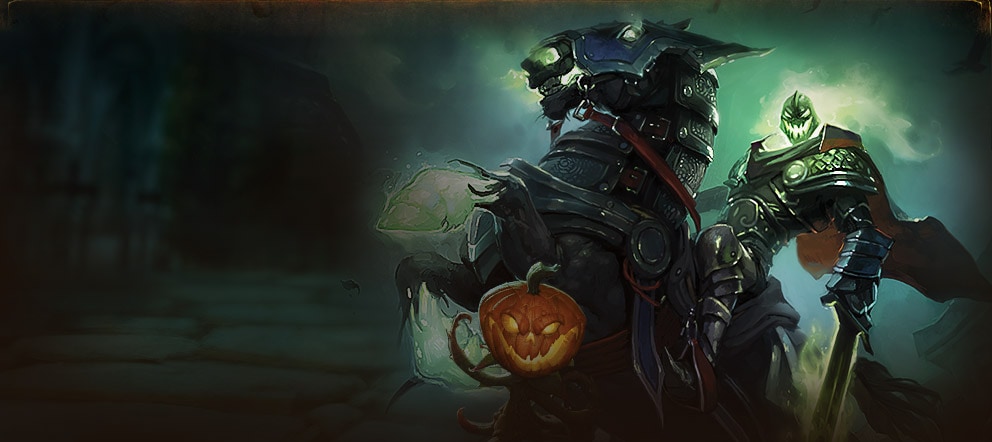
(And, speaking of World of Warcraft: Halloween is celebrated in WoW as Hallow's End. Here are two pictures from that holiday that I just had to share.)
(The Headless Horseman is a boss monster you can fight during Hallow's End. So cool!)
I hope you guys found this post interesting! I had a ton of fun researching Halloween and finding out about its origins; I hope you did too!
If you're interested in learning more, I highly recommend the book Halloween and Other Festivals of Death and Life. It is a fascinating collection of articles on the various subjects I've talked about here, as well as many others that I didn't have room to include. (I figured this post was long enough already!)
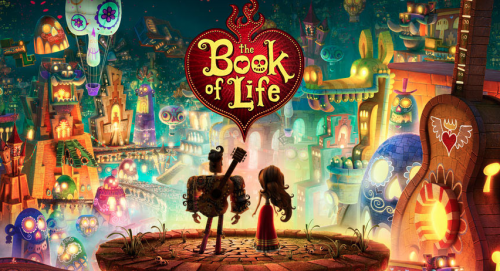
Lastly, because I love it so much, I have to recommend the movie The Book of Life to anyone curious about Dia de lost Meurtos. It is a gorgeous look at the Day of the Dead, and it has a fun story to boot. Those visuals! So pretty!
I hope you all have a wonderful week and a safe, fun Halloween! I'd love to see your costumes; feel free to send me pictures! Happy trick or treating!
Subscribe to:
Posts (Atom)