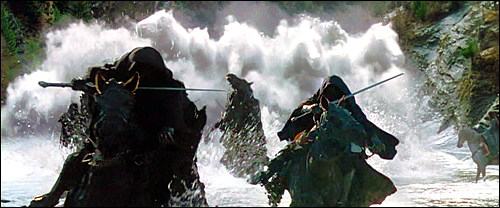
Hello readers! Today we're taking a look at a creature out of Russian legend and folklore. Though their first appearances were as relatively peaceful beings, in later centuries they evolved into haunting presences which lure men to their deaths. Without further ado, let's dive into the tale of the rusalki!
A rusalka is a water spirit, usually associated with lakes and ponds, but occasionally with rivers and streams. Rusalki are described as incredibly beautiful women. Most accounts credit them with long hair, sometimes green.
Originally, rusalki were somewhat associated with fertility. They were beneficial to nature and minded their own business. They could be mischievous, luring men to the water and then tickling and sexually teasing them until the man was exhausted. However, rusalki in the early legends were not deadly.
There's a few Russian folktales about a rusalka who fell in love with a human man. He was so entranced by her beauty when he saw her bathing that he proposed to her on the spot. She lived with him in mortal lands for a time, but missed the water greatly. Her husband, noticing her sorrow, asked her what was wrong. The rusalka explained everything, and begged him to return to the lake with her. She took him under the surface, where they lived for long years in the kingdom of the rusalki. Eventually, however, he began to long for the mortal world. The man made the sign of the Cross - something pagan creatures in Russia were powerless against - and opened his eyes to find himself back in his village.
Later iterations of the rusalki completely changed the creatures. Instead of being spirits of water, they became literal spirits of water - unquiet dead, haunting lakes. These female ghosts are said to be the victims of violent drownings, or the souls of women who committed suicide. The lore paints men as the reason behind their deaths; in the first case, it was a man who murdered them; in the second, it was because of a man that they killed themselves.
This gives a reason to the viciousness of the rusalki, who lure men to their watery graves. Akin to a Greek siren, a rusalka will call out to men with an alluring voice. Sometimes her whispers target a man, luring him to her with her knowledge of him. In other stories, the rusalka calls out men's names, until at last she stumbles upon the name of a wanderer near her pond. Upon hearing his name, he is drawn inexorably to the waiting rusalka. The man is then lured into the water, where the rusalka tangles him in her hair and drowns him - or, in a perverse twist on the original stories, tickles him until his lungs give out.
I find the differences in these two iterations of the rusalki fascinating. The first seems more reminiscent of a naiad or mermaid, a water maiden not dangerous, merely beautiful. The stories of men descending to the underwater kingdom and living parts of their lives there echoes tales around the world. One such is the Chinese story of the Dragon King's Daughter. The idea of an inhuman woman being seen naked in a body of water, and taken for a man's bride, also appears across multiple cultures. Selkies and kelpies, crane maidens, and buffalo women are some examples.
However, the second version of the rusalki also has parallels in other cultures. The Latin American legend of La Llorona is one of the most famous, having been featured in the TV show Grimm. There's also a more recent Egyptian legend called El Naddaha (which may or may not have originated on Creepy Pasta). Both of these examples, along with many other creatures from all over the world, are females who died by drowning, and whose spirits lure and drown others.
It makes me wonder if the two different descriptions of the rusalki are actually describing two different creatures. What do you guys think?
I'll be back next week with another post! See you then.
Showing posts with label Folktale. Show all posts
Monday, December 11, 2017
Monday, December 4, 2017
The Kama-itachi
Greetings, reader!
The legendary creatures I've spoken about so far have been spread across a wide array of time. Some, like El Chupacabra, have only appeared in recent history. Others, such as the vampire, have appeared in lore for centuries. The Wendigo, while an ancient creature, mostly disappeared from lore a hundred years ago.
For today's post, I'd like to focus on a creature who first appeared in Japanese literature several centuries ago, during the Edo period. It also has a long oral tradition. Though belief in this legend has largely faded away, there are still rural areas, particularly in northeastern Japan, which believe in them. Let's take a look at the Kama-itachi!
Also sometimes spelled Kamaitachi, these creatures are sickle weasels. Yep, that's right - sickle weasels. I know I pranked people with the Drop Bear last week, so let me hasten to assure you: These are a real legend, and have long been believed to exist. For those who don't know, a sickle is not just a silver coin in Harry Potter. It's also a small, curved blade used for harvesting grains - think of it as a miniature scythe. The "kama" part of the name stems from a Japanese variation of a sickle, which has also commonly seen use as a weapon.
And itachi...well, itachi means weasel. Japanese folklore lumps spirits, demons, and monsters under the term yokai, referring to things mysterious, otherworldly, and inhuman. While not all weasels are yokai, there is a long tradition of weasel spirits. Some legends make them out to be mischief makers, like the gods Hermes or Susano. They enjoy pranks, but are usually harmless. Others paint the itachi as a more grim creature. They are harbingers of doom, ill omens that bring death and devastation in their wake.
So what do you get when you combine the two? The Kama-itachi is a weasel creature whose long claws resemble sickles. Its fur is said to be dense and prickly, like that of a hedgehog. Their barking cries echo through the night. They travel upon the wind, and in some cases can even control it. In fact, in some regions of Japan they are known as Kamakaze, meaning "sickle wind" (not to be confused with "kamikaze", the "divine wind" immortalized by suicide bombers).
Depending on the region of Japan, Kama-itachi are said to travel alone or in groups of three. They attack in three strikes. The first knocks its victim to the ground; the second makes a series of slices into the victim's flesh, using its razor sharp claws; the third applies a healing salve, keeping the wounds from bleeding. This is all done in the blink of an eye. It happens so fast that the victim is unable to see the Kama-itachi.
Why do they do this? No one knows. They don't drink the blood, don't steal anything from the victim. Perhaps they merely enjoy knocking people on their butts and laughing at them. I don't know the answer, so here: Have a cute picture to distract you!
There are numerous theories as to what causes the phenomenon associated with Kama-itachi. The two I've seen most often explain that the legends stem largely from areas with strong winds and intense cold. The strange cuts inflicted by the Kama-itachi, which do not bleed, but sting and take days to heal, are said to be caused by the weather. One explanation says that the skin cracks open due to the cold, but does not bleed. Another says that it is caused by small but powerful whirlwinds. Someone out for a walk could be bowled over by a whirlwind; leaves and debris caught in the wind would cause slices similar to papercuts, which don't bleed very much, but do sting.
While this seems like a more logical explanation than the Kama-itachi, I find that I rather prefer the mischievous sickle weasels.
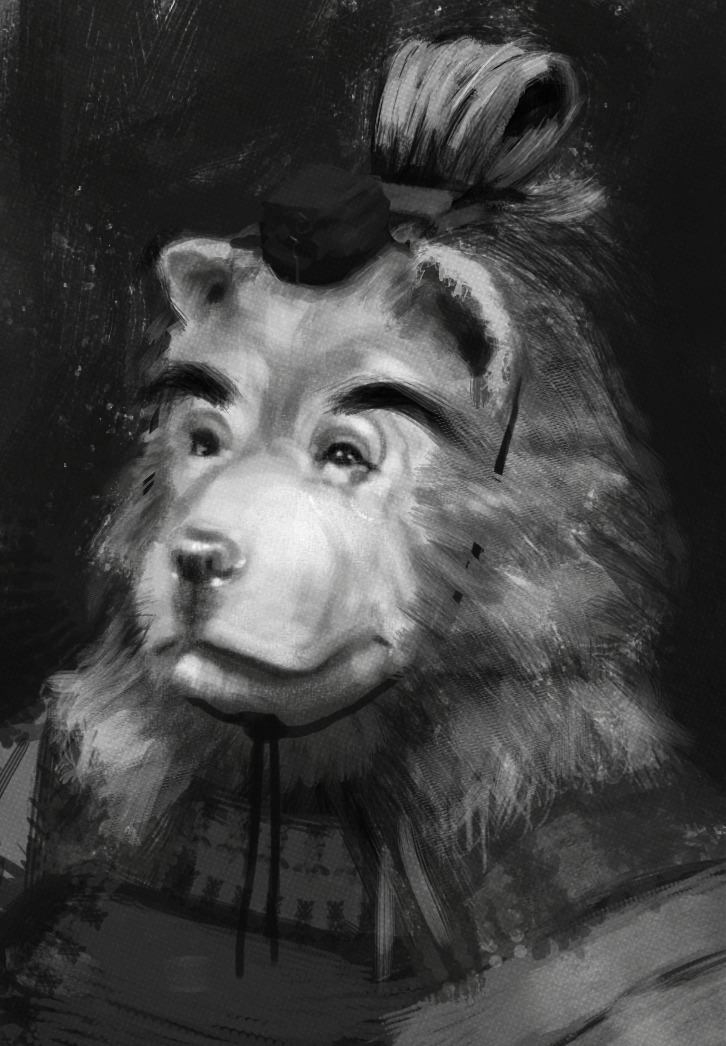
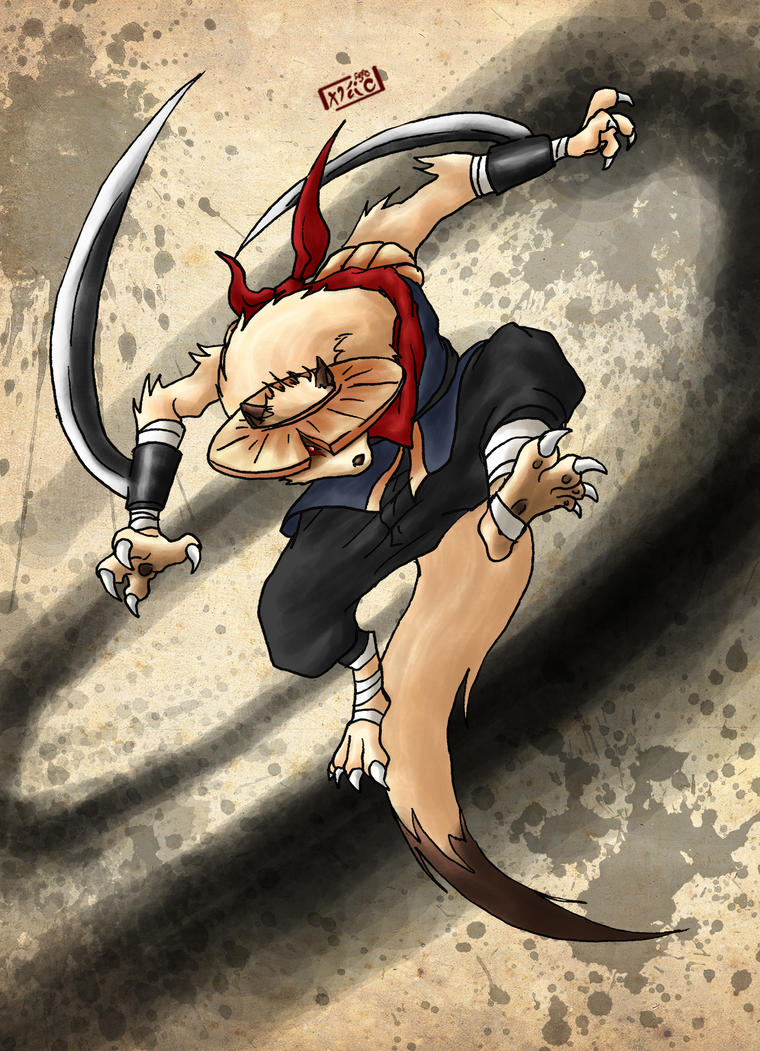
Though they are mostly relegated to the past, the Kama-itachi have made their mark on modern pop culture. They have inspired songs, been the name for bands, and have found their way into modern anime and manga. If you're alright with lots of blood and decapitations, here's a terrifying look at what can happen when a Kama-itachi turns evil. A lot of artwork and stories also anthropomorphize Kama-itachi, giving them clothing and making their sickle claws blades instead. As someone who grew up reading the Redwall series, I very much enjoy this trend.
I hope you've enjoyed this look at the Kama-itachi! See you next week.
The legendary creatures I've spoken about so far have been spread across a wide array of time. Some, like El Chupacabra, have only appeared in recent history. Others, such as the vampire, have appeared in lore for centuries. The Wendigo, while an ancient creature, mostly disappeared from lore a hundred years ago.
For today's post, I'd like to focus on a creature who first appeared in Japanese literature several centuries ago, during the Edo period. It also has a long oral tradition. Though belief in this legend has largely faded away, there are still rural areas, particularly in northeastern Japan, which believe in them. Let's take a look at the Kama-itachi!
Also sometimes spelled Kamaitachi, these creatures are sickle weasels. Yep, that's right - sickle weasels. I know I pranked people with the Drop Bear last week, so let me hasten to assure you: These are a real legend, and have long been believed to exist. For those who don't know, a sickle is not just a silver coin in Harry Potter. It's also a small, curved blade used for harvesting grains - think of it as a miniature scythe. The "kama" part of the name stems from a Japanese variation of a sickle, which has also commonly seen use as a weapon.
And itachi...well, itachi means weasel. Japanese folklore lumps spirits, demons, and monsters under the term yokai, referring to things mysterious, otherworldly, and inhuman. While not all weasels are yokai, there is a long tradition of weasel spirits. Some legends make them out to be mischief makers, like the gods Hermes or Susano. They enjoy pranks, but are usually harmless. Others paint the itachi as a more grim creature. They are harbingers of doom, ill omens that bring death and devastation in their wake.
So what do you get when you combine the two? The Kama-itachi is a weasel creature whose long claws resemble sickles. Its fur is said to be dense and prickly, like that of a hedgehog. Their barking cries echo through the night. They travel upon the wind, and in some cases can even control it. In fact, in some regions of Japan they are known as Kamakaze, meaning "sickle wind" (not to be confused with "kamikaze", the "divine wind" immortalized by suicide bombers).
Depending on the region of Japan, Kama-itachi are said to travel alone or in groups of three. They attack in three strikes. The first knocks its victim to the ground; the second makes a series of slices into the victim's flesh, using its razor sharp claws; the third applies a healing salve, keeping the wounds from bleeding. This is all done in the blink of an eye. It happens so fast that the victim is unable to see the Kama-itachi.
Why do they do this? No one knows. They don't drink the blood, don't steal anything from the victim. Perhaps they merely enjoy knocking people on their butts and laughing at them. I don't know the answer, so here: Have a cute picture to distract you!
There are numerous theories as to what causes the phenomenon associated with Kama-itachi. The two I've seen most often explain that the legends stem largely from areas with strong winds and intense cold. The strange cuts inflicted by the Kama-itachi, which do not bleed, but sting and take days to heal, are said to be caused by the weather. One explanation says that the skin cracks open due to the cold, but does not bleed. Another says that it is caused by small but powerful whirlwinds. Someone out for a walk could be bowled over by a whirlwind; leaves and debris caught in the wind would cause slices similar to papercuts, which don't bleed very much, but do sting.
While this seems like a more logical explanation than the Kama-itachi, I find that I rather prefer the mischievous sickle weasels.
Though they are mostly relegated to the past, the Kama-itachi have made their mark on modern pop culture. They have inspired songs, been the name for bands, and have found their way into modern anime and manga. If you're alright with lots of blood and decapitations, here's a terrifying look at what can happen when a Kama-itachi turns evil. A lot of artwork and stories also anthropomorphize Kama-itachi, giving them clothing and making their sickle claws blades instead. As someone who grew up reading the Redwall series, I very much enjoy this trend.
I hope you've enjoyed this look at the Kama-itachi! See you next week.
Labels:
Folktale,
Japanese,
Kama-itachi,
Legend,
Monster
Monday, November 20, 2017
El Chupacabra
Hello readers!
Today I'm continuing my series of posts about monsters. While some can be found in nearly all cultures, such as the vampire, others are more regionally specific. Growing up in southern Arizona, I've heard the tale of the Chupacabra very often - but I know some friends from northern states and other countries have not. With that in mind, let's dive into the lore of this goat-sucking terror!
The name Chupacabra translates to "goat sucker". This strange etymology stems from the fact that most stories about el Chupacabra involve dead livestock, drained of their blood. While cattle, sheep, and all manner of livestock and domesticated animals have been reported as victims of the Chupacabra, goats were the most prevalent during its first appearances. Strange puncture marks to the neck, coupled with the complete absence of blood in the dead animal, led to the name "el Chupacabra": the goat sucker.
El Chupacabra has been sighted in numerous parts of the world, but is predominantly found in Latin America and the far south of the United States. Its first sightings were in Puerto Rico in March of 1995. (Given that I was born in March of '95, the Chupacabra holds a special place in my heart.) Reports soon spread across Latin America, from countries including Brazil, Nicaragua, Mexico, and Chile. In each case, animals had been found drained of their blood - and sometimes, a strange creature had been sighted near them.
So just what does a Chupacabra look like? This is where it gets really interesting. El Chupacabra has been described in two drastically different forms. The first, beginning in 1995, is considerably more reptilian in appearance. Think of it as sort of a scaly kangaroo, bipedal, a sickly green in colour, with long spines protruding from its back. Sounds pretty scary, right?
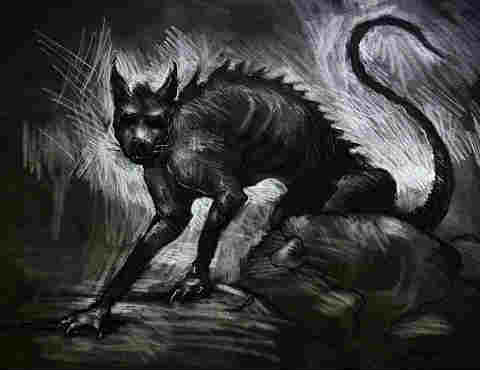
Though this description was popular for some time, another soon overtook it. The second version of the Chupacabra is described as more dog-like in appearance. This creature's skin is taut against its bones, leading to pronounced eye sockets and a prominent spine ridge. Terrifying teeth and claws complete the horrific visage.
How did two appearances so different from on another come to be used for the same creature? Well, zoologists have been researching el Chupacabra for years, and believe that they have the answer.
The second description of the Chupacabra, its canine form, has actually been documented through photos and videos. Numerous corpses of the Chupacabra have been found and inspected by scientists. Their conclusion? El Chupacabra is usually a canine of some sort, dog, coyote, or wolf, which has been infected with mange. In animals mange will cause hair loss and itchiness. A canine afflicted by this disease would tear its own skin trying to scratch the itch away, and would look like some sort of otherworldly monster without its fur. Hunger, brought on by weakness caused by the disease, could lead to an emaciated appearance - which would account for the pronounced bone ridges.
But what of the first description of el Chupacabra, the scaly monster with a spiky back? For that answer, investigators have turned to science fiction.
A movie called Species was released in 1995. One of its primary characters was an alien played by Natasha Henstridge, whose design was created by the same man who designed the Alien xenomorphs. Its appearance? A scaly green-grey creature with spine-like appendages protruding from her back.
Parts of Species were filmed in Puerto Rico, where the first report of a Chupacabra originated. The woman who first described el Chupacabra even admitted in her description that it looked similar to the monster from Species.
However, there is a flaw in this theory. The first report occurred in March of '95 - but Species did not release until July of that year. Could the woman have seen previews or stills of the creature in the movie, colouring her description? Or does el Chupacabra truly exist, and merely bear an eerie resemblance to the fictional monster?
Chupacabra sightings continue to this day, and have spread past Latin America to other parts of the world. The Philippines have a similar creature in their legends, and Russia has reported Chupacabra appearances. Though numerous attempts have been made to disprove the creature's existence, el Chupacabra's legend continues to grow.
I'll see you guys next week!
Today I'm continuing my series of posts about monsters. While some can be found in nearly all cultures, such as the vampire, others are more regionally specific. Growing up in southern Arizona, I've heard the tale of the Chupacabra very often - but I know some friends from northern states and other countries have not. With that in mind, let's dive into the lore of this goat-sucking terror!
The name Chupacabra translates to "goat sucker". This strange etymology stems from the fact that most stories about el Chupacabra involve dead livestock, drained of their blood. While cattle, sheep, and all manner of livestock and domesticated animals have been reported as victims of the Chupacabra, goats were the most prevalent during its first appearances. Strange puncture marks to the neck, coupled with the complete absence of blood in the dead animal, led to the name "el Chupacabra": the goat sucker.
El Chupacabra has been sighted in numerous parts of the world, but is predominantly found in Latin America and the far south of the United States. Its first sightings were in Puerto Rico in March of 1995. (Given that I was born in March of '95, the Chupacabra holds a special place in my heart.) Reports soon spread across Latin America, from countries including Brazil, Nicaragua, Mexico, and Chile. In each case, animals had been found drained of their blood - and sometimes, a strange creature had been sighted near them.
So just what does a Chupacabra look like? This is where it gets really interesting. El Chupacabra has been described in two drastically different forms. The first, beginning in 1995, is considerably more reptilian in appearance. Think of it as sort of a scaly kangaroo, bipedal, a sickly green in colour, with long spines protruding from its back. Sounds pretty scary, right?
Though this description was popular for some time, another soon overtook it. The second version of the Chupacabra is described as more dog-like in appearance. This creature's skin is taut against its bones, leading to pronounced eye sockets and a prominent spine ridge. Terrifying teeth and claws complete the horrific visage.
How did two appearances so different from on another come to be used for the same creature? Well, zoologists have been researching el Chupacabra for years, and believe that they have the answer.
The second description of the Chupacabra, its canine form, has actually been documented through photos and videos. Numerous corpses of the Chupacabra have been found and inspected by scientists. Their conclusion? El Chupacabra is usually a canine of some sort, dog, coyote, or wolf, which has been infected with mange. In animals mange will cause hair loss and itchiness. A canine afflicted by this disease would tear its own skin trying to scratch the itch away, and would look like some sort of otherworldly monster without its fur. Hunger, brought on by weakness caused by the disease, could lead to an emaciated appearance - which would account for the pronounced bone ridges.
(A dog afflicted with mange.)
But what of the first description of el Chupacabra, the scaly monster with a spiky back? For that answer, investigators have turned to science fiction.
A movie called Species was released in 1995. One of its primary characters was an alien played by Natasha Henstridge, whose design was created by the same man who designed the Alien xenomorphs. Its appearance? A scaly green-grey creature with spine-like appendages protruding from her back.
Parts of Species were filmed in Puerto Rico, where the first report of a Chupacabra originated. The woman who first described el Chupacabra even admitted in her description that it looked similar to the monster from Species.
However, there is a flaw in this theory. The first report occurred in March of '95 - but Species did not release until July of that year. Could the woman have seen previews or stills of the creature in the movie, colouring her description? Or does el Chupacabra truly exist, and merely bear an eerie resemblance to the fictional monster?
Chupacabra sightings continue to this day, and have spread past Latin America to other parts of the world. The Philippines have a similar creature in their legends, and Russia has reported Chupacabra appearances. Though numerous attempts have been made to disprove the creature's existence, el Chupacabra's legend continues to grow.
I'll see you guys next week!
Monday, November 13, 2017
The Wendigo
Greetings all! I hope you're having an awesome Monday.
Today I'd like to take a look at a monster from North America. Stories of the Wendigo can be found in the legends of many Native American tribes across Canada and the northeastern part of the United States. Wendigo are popular in modern urban fantasy, featuring in television shows such as Supernatural and Grimm, and book series such as The Dresden Files and the Pax Arcana. Portrayals of the creature, as well as the reasons behind its existence, vary from story to story. Let's take a look at some of the original lore about the creature!
First things first: The Wendigo is a monster. It is a malevolent spirit that twists and warps someone who was once human. It has been described as possessing a soul, or as a disease which infects someone. Once taken, there is no way to restore the person to their former humanity. Killing the Wendigo is the only option.
Some Native American tribes performed mercy killings on individuals who had begun to turn into a Wendigo, killing them before they had a chance to consume a human and turn completely. These killings occurred as recently as the early 1900's, when a shaman named Jack Fiddler and his brother Joseph were arrested and tried for the murder of a woman. They claimed that she had begun to turn into a Wendigo, and that killing her was the only way to save her and to protect those around her. The brothers also confessed to having killed thirteen other Wendigo.
But where does this monster come from? It is created by a lust for human flesh. Cannibalism will turn a person into a Wendigo. In many legends Wendigo have strong ties to cold weather and to winter. During these times, food was incredibly hard to come by. If someone was trapped with no other source of food, cannibalism became the only option. Even eating someone who had already frozen to death would be enough to turn the consumer into a Wendigo.
A Wendigo is incredibly strong and fast, with enhanced vision and hearing. Some stories even say that it can control the weather. However, there is a price to pay for this power - an eternal Sisyphean struggle against starvation. The Wendigo is consumed by its hunger for human flesh. It will consume anyone it comes across; and yet, no matter how much it eats, it is never sated.
As to its appearance: In some stories the Wendigo is said to grow with every mortal meal it consumes. Because of this, Wendigo are said to be incredibly tall, around fourteen feet. However, its battle against starvation also takes its toll on the Wendigo. They are extremely thin, their skin stretched like butter over too much bread (couldn't resist the Bilbo quote, sorry!). Emaciated in the extreme, their bones are visible, their bodies hunched with hunger.
Today I'd like to take a look at a monster from North America. Stories of the Wendigo can be found in the legends of many Native American tribes across Canada and the northeastern part of the United States. Wendigo are popular in modern urban fantasy, featuring in television shows such as Supernatural and Grimm, and book series such as The Dresden Files and the Pax Arcana. Portrayals of the creature, as well as the reasons behind its existence, vary from story to story. Let's take a look at some of the original lore about the creature!
First things first: The Wendigo is a monster. It is a malevolent spirit that twists and warps someone who was once human. It has been described as possessing a soul, or as a disease which infects someone. Once taken, there is no way to restore the person to their former humanity. Killing the Wendigo is the only option.
Some Native American tribes performed mercy killings on individuals who had begun to turn into a Wendigo, killing them before they had a chance to consume a human and turn completely. These killings occurred as recently as the early 1900's, when a shaman named Jack Fiddler and his brother Joseph were arrested and tried for the murder of a woman. They claimed that she had begun to turn into a Wendigo, and that killing her was the only way to save her and to protect those around her. The brothers also confessed to having killed thirteen other Wendigo.
But where does this monster come from? It is created by a lust for human flesh. Cannibalism will turn a person into a Wendigo. In many legends Wendigo have strong ties to cold weather and to winter. During these times, food was incredibly hard to come by. If someone was trapped with no other source of food, cannibalism became the only option. Even eating someone who had already frozen to death would be enough to turn the consumer into a Wendigo.
A Wendigo is incredibly strong and fast, with enhanced vision and hearing. Some stories even say that it can control the weather. However, there is a price to pay for this power - an eternal Sisyphean struggle against starvation. The Wendigo is consumed by its hunger for human flesh. It will consume anyone it comes across; and yet, no matter how much it eats, it is never sated.
As to its appearance: In some stories the Wendigo is said to grow with every mortal meal it consumes. Because of this, Wendigo are said to be incredibly tall, around fourteen feet. However, its battle against starvation also takes its toll on the Wendigo. They are extremely thin, their skin stretched like butter over too much bread (couldn't resist the Bilbo quote, sorry!). Emaciated in the extreme, their bones are visible, their bodies hunched with hunger.
"The Wendigo was gaunt to the point of emaciation, its desiccated skin pulled tautly over its bones. With its bones pushing against its skin, its complexion the ash gray of death, and its eyes pushed back deep into their sockets, the Wendigo looked like a gaunt skeleton recently disinterred from the grave. What lips it had were tattered and bloody. Its body was unclean and suffering from suppurations of the flesh, giving off a strange and eerie odor of decay and decomposition, of death and corruption."
Sounds lovely, right? Let's take a look at another description.
"It was a large creature, as tall as a tree, with a lipless mouth and jagged teeth. Its breath was a strange hiss, its footprints full of blood, and it ate any man, woman, or child who ventured into its territory. And those were the lucky ones. Sometimes, the Wendigo chose to possess a person instead, and then the luckless individual became a Wendigo himself, hunting down those he had once loved and feasting upon their flesh."
I've mentioned that some Native American cultures believed the Wendigo to be an evil spirit which possessed humans and filled them with a hunger for flesh, rather than a human who became evil through cannibalism. Government and church documents from several centuries ago document this idea under the term of "Wendigo psychosis". Native American tribes told their guests about the legends of the Wendigo, leading to the adoption of the term for men who turned to cannibalism. Individuals who snapped for no apparent reason and ate their friends and loved ones are documented as suffering from this break in the mind.
How Wendigo are portrayed in modern pop culture varies drastically. Some are gaunt and lean. Some are covered in fur, and seem more similar to Bigfoot. Weather control is rarely mentioned, but books and shows do tend to show Wendigo in places which are cold. Several versions have Wendigo being former shaman who turned to a dark path and devoured a family member in order to gain their power. Cannibalism is consistent in most adaptations of Wendigo, as is the fact that they were once human. In fact, in Grimm the Wendigo appear to be normal humans...until they invite their prey over for dinner.
Though native to North America, the story of the Wendigo has spread throughout the world thanks to its portrayal in modern media. Sightings are still reported, especially around certain areas of Canada. This legend is alive and well. The Wendigo is here to stay.
I'll be back next week!
Monday, November 6, 2017
The Vampire
Hola all!
Last week's post got me thinking about a genre I haven't really touched upon in my posts: monsters. At a reader's suggestion, I've decided to delve a little deeper into some of the rich history of legends and folklore surrounding some of the monsters with which I'm most familiar. To kick things off, let's take a look at the vampire!
At its most basic definition, a vampire is a dead being who consumes life force to survive. Creatures matching this description appear in the mythologies of various cultures from all over the world, including Mesopotamia, Greece, and China. It is most common for these predecessors of the modern vampire to consume blood; however, some preferred alternative sources of food. Youth, beauty, innocence - one way or another, these monsters would drain the life essence from their victim.
Speaking of the victims, they varied across cultures depending on the type of creature. Some only preyed upon the innocent, preferring the life of virgins. Others targeted family members, or neighbors they had known in life. There's even a vampire-esque creature from South African mythology who preyed solely upon those with noble blood.
There are numerous takes on vampires across cultures, and they vary drastically, each deserving their own post. Since most of modern vampire lore stems from Western lore, I'd like to focus on the European vampire.
Vampire lore began to grow in Europe during the medieval ages. It was a time marked by plagues, fear of witchcraft and devilry, and high mortality rates - particularly among children. Many legends sprung out of this time period. Just as early civilizations had used the gods to explain phenomenon they could not understand (like Zeus being responsible for lightning), monsters and witches were blamed for what man could not solve. The dead were said to rise from their graves and attack the living. They were said to be angry spirits, or possessed by demons: revenants.
Last week's post got me thinking about a genre I haven't really touched upon in my posts: monsters. At a reader's suggestion, I've decided to delve a little deeper into some of the rich history of legends and folklore surrounding some of the monsters with which I'm most familiar. To kick things off, let's take a look at the vampire!
At its most basic definition, a vampire is a dead being who consumes life force to survive. Creatures matching this description appear in the mythologies of various cultures from all over the world, including Mesopotamia, Greece, and China. It is most common for these predecessors of the modern vampire to consume blood; however, some preferred alternative sources of food. Youth, beauty, innocence - one way or another, these monsters would drain the life essence from their victim.
Speaking of the victims, they varied across cultures depending on the type of creature. Some only preyed upon the innocent, preferring the life of virgins. Others targeted family members, or neighbors they had known in life. There's even a vampire-esque creature from South African mythology who preyed solely upon those with noble blood.
There are numerous takes on vampires across cultures, and they vary drastically, each deserving their own post. Since most of modern vampire lore stems from Western lore, I'd like to focus on the European vampire.
Vampire lore began to grow in Europe during the medieval ages. It was a time marked by plagues, fear of witchcraft and devilry, and high mortality rates - particularly among children. Many legends sprung out of this time period. Just as early civilizations had used the gods to explain phenomenon they could not understand (like Zeus being responsible for lightning), monsters and witches were blamed for what man could not solve. The dead were said to rise from their graves and attack the living. They were said to be angry spirits, or possessed by demons: revenants.
"The vampire is a revenant, a being from beyond the grave, which destroys life in order to continue its own unholy and unnatural existence."
But it was between the sixteen and eighteen hundreds that vampire lore truly exploded across Eastern Europe. The term vampire appeared in a massive number of works, from scholars, theologians, and church officials. For example, a French botanist named Tournefort made a journey to Greece. He documented an incident in a village on Mykonos, where the villagers suspected a consumption-type disease of being caused by someone who had died recently. It was determined that the man was not so dead as they had thought. Vampirism! The body was produced and dealt with. First the heart was cut out and burned - then, the body followed it into the fire.
Methods for detecting vampires - and for bringing an end to their reign of terror - became widely known. Disturbed soil above a grave could mean that the corpse was actually a vampire. Walking a horse through the church graveyard was another means of detection - it would balk at the grave of a vampire. When the grave was dug up, the appearance of the corpse would be a dead giveaway. Where modern vampires are pale, youthful, and have suspiciously sharp teeth, these vampires were instead bloated, discolored, and yet shockingly fresh.
Killing methods varied depending on the region. Sometimes staking the heart would suffice. Other areas required that the heart be cut out and burned. (One region in Germany solved their vampire problem by putting a wedge of lemon into the dead person's mouth. Perhaps vampires have a citrus allergy?) The most popular method seems to have been beheading - usually accompanied by staking, cutting out the heart, and/or burning. It pays to be thorough when dealing with vampires!
Certain precautions could be taken with corpses to ensure that they would not rise again as vampires. These too varied depending on location. Some areas would bury their dead upside down to keep them from finding their way out of their grave. Others severed the tendons at the back of the knee. Try stalking now, vampire! My personal favorite are the groups who buried their dead with a large number of seeds scattered across the grave. For some reason, vampires are attributed as being rather OCD about counting - a condition called arithmomania. If they see a large number of some item, they have to stop and count it. The theory behind the seeds was that the vampire would be occupied all night trying to figure out how many seeds there were, so they would be unable to attack.
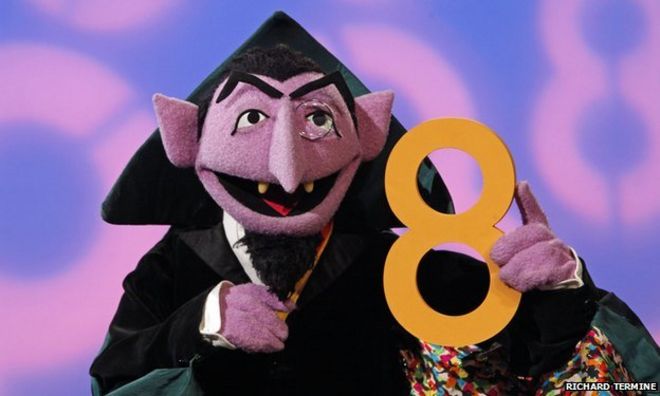
(A vampire obsessed with counting. Now why does that sound familiar?)
How one became a vampire, and who was likely to do so, was different depending on region and time. Some believed that suicide victims rose from their graves as vampires. Others thought that the creatures were brought about by witchcraft and a pact with the devil. Victims of especially violent deaths, or children who died, were also deemed especially likely to rise from the dead.
Now so far, none of this really sounds like the modern vampire. How do bloated corpses and copious quantities of beheading lead to the seductive, mysterious stranger who lurks in the windows of maidens?
The answer lies in authors and poets of the 18th and 19th centuries. Though Polidori's The Vampyre was one of the first, it was the serialized penny dreadful Varney the Vampire that really got the ball rolling. All of this literature eventually culminated in one of the greatest horror masterpieces to ever grace a bookshelf: Bram Stoker's Dracula.
Within the space of about a century, these authors laid the foundation for the modern vampire. They were ingenious in how they went about it. Lore and legends from numerous countries were collected, writings examined, and all woven together to create something new and terrifying. There was enough of the old vampire left in the stories to give them a foundation in history, to make them more believable to the masses. But the new vampire was much more terrifying than the old, especially by the time Stoker's Dracula made his debut.
Vampires could now control the weather. They could shapeshift. They cast no shadow and had no reflection. They were charming and sophisticated, and looked almost like everyone else in the world. They were strong, powerful, and hypnotic. Difficult to hunt, nigh impossible to kill. It was during this time that vampires became known for their sharp teeth, and were solidified as draining blood from their victims.
They were also highly romanticized. Sexual undertones ran rampant in vampire stories, and continue to do so. Entering a maiden's chamber uninvited, watching her sleep, corrupting her innocence and taking her life force as the vampire's own...It was creepy, provocative, and highly effective in captivating readers.
The writers of the time also wove strong Christian tones throughout the vampire stories. Holy water and the cross held some power over vampires. The monster was said to be a damned soul. One of my favorite quotes from Dracula is this:
"That like soul who has wrought all this misery is the saddest case of all...you must be pitiful to him too, though it may not hold your hands from his destruction."
All of these are traits that can be seen in modern vampires, to certain extents. Vampires now are usually only seen to shapeshift into a bat, though earlier fiction also showed them as wolves and rats. The inability to be seen in mirrors has been extended by some to cameras and film as well, updating for the modern world. Though the 1922 Nosferatu portrayed a hideous creature as a vampire, later movies showed a handsome count with a sharp hairline and two prominent fangs.
The sexualization of vampires has been perhaps the most played upon trait in modern portrayals. Ranging from creepy yet mostly innocent romances between teenage girls and guys a hundred years their senior (I'm looking at you, Twilight) to heavy levels of BDSM and domination (Google at your own risk), vampires are all about sex appeal. They are the romantic leads, like in True Blood. One of my favorite episodes of Supernatural has a vampire covering himself in glitter and seducing a girl who really, really likes Twilight and wants to be a vampire herself. (In real life, live action roleplay games such as Vampire: The Masquerade are extremely popular, and have been for years.) Even when vampires are portrayed as the villain, as in the Gary Oldman Dracula, they are still romanticized and pitied.
(One of my favorite book series, The Dresden Files, has three separate courts of vampires. Drawing from the modern vampire, the traditional vampire, and the vampire's origin story, Butcher made each court different from the others. The Black Court features desiccated, hideous undead creatures who drain their victims of life. The Red Court is the more Dracula-esque set of vampires, who throw balls, enthrall others, and drain their blood. Lastly, the White Court feeds upon emotion - either fear or sexual energy. They are the seducers, the well-dressed party goers - though they stop just shy of sparkling.)
Vampires have changed a lot across the centuries, and have been portrayed in any number of settings. From retellings of the Dracula myth, such as Dracula Untold, to vampires in space, like Dracula 3000; from soap opera romances like The Vampire Diaries, to erotic literature like that of Anne Rice. There have been conflicts between vampires and werewolves in Van Helsing and the Underworld franchise. Vampires have dominated the world in Daybreakers, and have been superheroes in Blade.
Starting in early civilizations around the world, vampires seduced their way into our stories. They've been with us for the better part of a millennia, and show no times of departing any time soon. We've invited them in - and they are here to stay.
What's your favorite vampire story, readers? Hit me up in the comments below!
I'll see you next week.
Monday, May 1, 2017
Happy Beltane!
Hey guys!
Today we're going to be taking a look at a Gaelic festival called Beltane. Beltane is an ancient holiday celebrating the coming of summer. You might be more familiar with the name May Day. Taking place on May 1st, Beltane falls between the spring equinox and the summer solstice. Where Samhain marks the beginning of winter and the arrival of the cold spell, Beltane celebrates the start of summer and the arrival of the heat wave. It's a time for fertility and the hope for renewal.
There are a number of characters involved in the rituals celebrating Beltane. There's a neutral party called the Blue Men who watch over everything. They don't take sides, but they defend the other players from outside forces. The central figure is the May Queen, whose job is to awaken the earth from winter by harnessing the four elements.
The May Queen is guarded by the White Warrior Women, who represent order. The May Queen is courted by the Winter King and takes him as her consort. However, the Winter King attempts to overpower the May Queen, aided by the Red Men, who represent chaos. The Red Men and the White Warrior Women counter one another, and are opponents.
(In behavior, the Red Men are very similar to the satyrs of Greek mythology, or to some of the earlier celebrations of Lupercalia. They eat, drink, make merry, seduce, bed, and act in excess on the night of Beltane...and they attempt to encourage everyone at the festival to do the same thing. A friend who has seen the Beltane festival described their behavior to me as "lewdness and lascivious.")
In the conflict which ensues, the Winter King is slain. The May Queen takes pity on her consort, and brings him back to life...but he is changed. He becomes the Green Man, a representation of the frozen winter earth being renewed for summer. The corpse of the Winter King is then thrown onto the Beltane bonfire, and traditional blessings are spoken.
I mentioned that I had a friend attend the Beltane festival. This festival occurs every year. In the darkness, bonfires are lit, and an enormous ceremony takes place. People dress as the May Queen, the Winter King, and all of the other characters. There are enormous amounts of red and white paint used. And then...they dance, and they perform the story. I have never been lucky enough to see it in person, though I hope to one day.
However, my friend is a professional photographer, and she takes pictures of Beltane. You can see her pictures from last year's celebration here, and this year's here. (Some of the pictures are not quite safe for work, as a warning.)
I hope you guys enjoyed the look at Beltane! My words do not do it justice. I highly recommend checking out pictures or video footage of the celebration; the images are absolutely stunning, and tell a breathtaking story.
See you guys next week!
Today we're going to be taking a look at a Gaelic festival called Beltane. Beltane is an ancient holiday celebrating the coming of summer. You might be more familiar with the name May Day. Taking place on May 1st, Beltane falls between the spring equinox and the summer solstice. Where Samhain marks the beginning of winter and the arrival of the cold spell, Beltane celebrates the start of summer and the arrival of the heat wave. It's a time for fertility and the hope for renewal.
There are a number of characters involved in the rituals celebrating Beltane. There's a neutral party called the Blue Men who watch over everything. They don't take sides, but they defend the other players from outside forces. The central figure is the May Queen, whose job is to awaken the earth from winter by harnessing the four elements.
The May Queen is guarded by the White Warrior Women, who represent order. The May Queen is courted by the Winter King and takes him as her consort. However, the Winter King attempts to overpower the May Queen, aided by the Red Men, who represent chaos. The Red Men and the White Warrior Women counter one another, and are opponents.
(In behavior, the Red Men are very similar to the satyrs of Greek mythology, or to some of the earlier celebrations of Lupercalia. They eat, drink, make merry, seduce, bed, and act in excess on the night of Beltane...and they attempt to encourage everyone at the festival to do the same thing. A friend who has seen the Beltane festival described their behavior to me as "lewdness and lascivious.")
In the conflict which ensues, the Winter King is slain. The May Queen takes pity on her consort, and brings him back to life...but he is changed. He becomes the Green Man, a representation of the frozen winter earth being renewed for summer. The corpse of the Winter King is then thrown onto the Beltane bonfire, and traditional blessings are spoken.
I mentioned that I had a friend attend the Beltane festival. This festival occurs every year. In the darkness, bonfires are lit, and an enormous ceremony takes place. People dress as the May Queen, the Winter King, and all of the other characters. There are enormous amounts of red and white paint used. And then...they dance, and they perform the story. I have never been lucky enough to see it in person, though I hope to one day.
However, my friend is a professional photographer, and she takes pictures of Beltane. You can see her pictures from last year's celebration here, and this year's here. (Some of the pictures are not quite safe for work, as a warning.)
I hope you guys enjoyed the look at Beltane! My words do not do it justice. I highly recommend checking out pictures or video footage of the celebration; the images are absolutely stunning, and tell a breathtaking story.
See you guys next week!
Monday, April 10, 2017
The Haunted Pavilion
(Pictures to follow later - sorry everyone, I'm swamped with school.)
Hey guys! I hope you had a great week!
Unfortunately, there was one pavilion in which no one wanted to sleep. It was...haunted.
Anyone who slept within that pavilion was found dead the next morning, an expression of terrible agony contorting their face. Because of this, travelers sensibly began to avoid the pavilion.
Until one day, when a traveling scholar happened along. He was warned by the couple who managed the pavilion that it was haunted. The tales were told to him, and the scholar was pressed to move on, to find somewhere else to sleep.
Instead of being afraid, the scholar was intrigued. He decided to stay in the pavilion overnight to see if he could solve the mystery. The pavilion's managers tried to talk him out of it, but his mind was made up.
So they brought him food and then hastily retreated back to the safety of their own home. The scholar ate his meal and then settled down with a book. Darkness fell.
Quite a while after night had fallen, the scholar's reading was interrupted by footsteps outside. He could just barely see someone garbed all in black approaching the front of the pavilion. They stopped, and called out a greeting to the master of the pavilion. From inside, a voice returned the greeting. The mysterious guest asked who it was staying inside the pavilion, and the pavilion master responded that it was a scholar...but, unfortunately, he was reading and still awake. The strange guest let out a sigh of disappointment and left.
The scholar, now more cautious than he had been, returned to his book.
Some time later another figure, this one wearing a red hat, approached the pavilion. It too greeted the pavilion master, and inquired as to the man within. Like the first, it let out a sigh of disappointment and left when it heard that the scholar was still awake.
Once the second figure had gone, the scholar crept outside of the pavilion. He approached the front and called out a greeting to the master of the pavilion. Like the others had done, the scholar inquired as to who was “inside” the pavilion, and was told that it was a scholar who was reading and, unfortunately, still awake.
The scholar sighed like the others, but then he changed the dialogue. He asked who the figure in black had been, and the pavilion master replied that it had been the black sow who lived in a house nearby. When asked who the figure in the red hat was, the pavilion master responded that it was the rooster from yet another house. The scholar then asked who the pavilion master himself was, and was told that it was the old scorpion who lived within the pavilion.
The scholar snuck back to his spot in the pavilion, and was very careful to not fall asleep for the remainder of the night.
When the humans who ran the pavilion approached in the morning, they were shocked to find the scholar still alive. Their surprise grew when he asked for a sword, saying that he could solve all of their problems. He had figured out who was haunting the pavilion.
The sword was brought, and the scholar got down to business. He went first to one corner of the pavilion, where the manager's voice had seemed to emanate from. Inside a crack in the wall was a massive, angry scorpion, who was swiftly killed by the scholar. Next he went to two houses in the village. At one he killed a black sow, and at another he butchered a red-crested rooster.
The scholar explained his actions to the villagers, telling them how the demons had identified themselves. From that day on, the pavilion was no longer haunted. No more travelers died there, and it was once again a safe haven for those on the road.
And that's the story!
There are a lot of tales in Chinese mythology in which humans (or demons) are not what they seem to be – but rather are animals in disguise. We've already talked about the Heavenly Maidens, who can take the form of a crane or of a human. Unlike some other stories, these women are wed by men who know exactly what they are. There are stories of beautiful girls who are wooed and married, only for their husbands to later find out that they're foxes in disguise. Though the foxes often love their mortal husbands, these tales often end in tragedy. Then there are stories where a creature – a massive snake, for instance – takes human form and seduces a mortal to achieve her own ends.
Hey guys! I hope you had a great week!
This will be my last post dealing with Chinese mythology for a while.
For this post, I wanted to look at one of the stories from Chinese
folktales in which not all is as it seems to be. Let's look at the
story first, and then I'll talk about it afterward.
China is a huge country, and in olden days travelers would have to
walk for days or more to get between towns. Because of this,
pavilions were built alongside roads – think of them as a sort of
motel. Whoever owned the pavilion would provide a meal for a weary
traveler, and they could sleep inside it before continuing on their
journey the next day. Sounds nice, right?
Unfortunately, there was one pavilion in which no one wanted to sleep. It was...haunted.
Anyone who slept within that pavilion was found dead the next morning, an expression of terrible agony contorting their face. Because of this, travelers sensibly began to avoid the pavilion.
Until one day, when a traveling scholar happened along. He was warned by the couple who managed the pavilion that it was haunted. The tales were told to him, and the scholar was pressed to move on, to find somewhere else to sleep.
Instead of being afraid, the scholar was intrigued. He decided to stay in the pavilion overnight to see if he could solve the mystery. The pavilion's managers tried to talk him out of it, but his mind was made up.
So they brought him food and then hastily retreated back to the safety of their own home. The scholar ate his meal and then settled down with a book. Darkness fell.
Quite a while after night had fallen, the scholar's reading was interrupted by footsteps outside. He could just barely see someone garbed all in black approaching the front of the pavilion. They stopped, and called out a greeting to the master of the pavilion. From inside, a voice returned the greeting. The mysterious guest asked who it was staying inside the pavilion, and the pavilion master responded that it was a scholar...but, unfortunately, he was reading and still awake. The strange guest let out a sigh of disappointment and left.
The scholar, now more cautious than he had been, returned to his book.
Some time later another figure, this one wearing a red hat, approached the pavilion. It too greeted the pavilion master, and inquired as to the man within. Like the first, it let out a sigh of disappointment and left when it heard that the scholar was still awake.
Once the second figure had gone, the scholar crept outside of the pavilion. He approached the front and called out a greeting to the master of the pavilion. Like the others had done, the scholar inquired as to who was “inside” the pavilion, and was told that it was a scholar who was reading and, unfortunately, still awake.
The scholar sighed like the others, but then he changed the dialogue. He asked who the figure in black had been, and the pavilion master replied that it had been the black sow who lived in a house nearby. When asked who the figure in the red hat was, the pavilion master responded that it was the rooster from yet another house. The scholar then asked who the pavilion master himself was, and was told that it was the old scorpion who lived within the pavilion.
The scholar snuck back to his spot in the pavilion, and was very careful to not fall asleep for the remainder of the night.
When the humans who ran the pavilion approached in the morning, they were shocked to find the scholar still alive. Their surprise grew when he asked for a sword, saying that he could solve all of their problems. He had figured out who was haunting the pavilion.
The sword was brought, and the scholar got down to business. He went first to one corner of the pavilion, where the manager's voice had seemed to emanate from. Inside a crack in the wall was a massive, angry scorpion, who was swiftly killed by the scholar. Next he went to two houses in the village. At one he killed a black sow, and at another he butchered a red-crested rooster.
The scholar explained his actions to the villagers, telling them how the demons had identified themselves. From that day on, the pavilion was no longer haunted. No more travelers died there, and it was once again a safe haven for those on the road.
And that's the story!
There are a lot of tales in Chinese mythology in which humans (or demons) are not what they seem to be – but rather are animals in disguise. We've already talked about the Heavenly Maidens, who can take the form of a crane or of a human. Unlike some other stories, these women are wed by men who know exactly what they are. There are stories of beautiful girls who are wooed and married, only for their husbands to later find out that they're foxes in disguise. Though the foxes often love their mortal husbands, these tales often end in tragedy. Then there are stories where a creature – a massive snake, for instance – takes human form and seduces a mortal to achieve her own ends.
I hope you guys enjoyed this look at Chinese mythology! I know I
did. I'll see you next week!
Monday, March 6, 2017
Pan Hu: The Princess and the Dog
Hey guys! Today's post is a relatively short story, in part because
I've been wanting to tell it and in part because midterms are here.
I'll have a special treat for you next week – the first of my posts
about the Monkey King!
Once there was a mighty king in China. There came a time when his
queen developed a most dreadful earache. The king sent for
physicians and wizards, until at last one was able to solve his
wife's ailment. The man extracted a small golden worm from the
queen's ear, and the pain immediately went away.
(Not all versions of the story tell of how Pan Hu defeated the enemy
king. One which I have gives an explanation I quite enjoy, however –
one similar to the Greek Trojan horse. Pan Hu went straight to the
enemy king's castle. Upon seeing him, the king declared that his
opponent's favorite dog had deserted him, and that it was obviously a
good omen of his impending victory. A celebration was held. Pan Hu
waited until the whole castle was drunk, then beheaded the king and
went on his way.)
A great feast was held in celebration, with the best cuts of meat reserved for Pan Hu. Despite this honor, the dog refused to partake in the feast, and instead sulked in the corner. The king abruptly remembered his promise to marry his daughter to whoever defeated his opponent. He went before Pan Hu and tried to explain. Surely the dog did not expect to marry the princess? After all, she was a human, and he was a...well, a dog!
Today's story is about a dog named Panhu. The character plays an
important role in the King Pan Festival. Some cultures in China
trace their lineage back to Pan Hu's ancestry. Let's dive into the
myth!
Instead of killing it, the queen was intrigued by the worm. She put
it on a plate and covered it in a small jar, leaving some food and
drink out for the creature. Several days passed. When next the
queen checked on the worm, she discovered that a small dog rested
upon the plate – the worm had transformed!
The dog was named after the plate and the jar, resulting in the name
of Pan Hu. He grew rapidly, until he was soon nearly the size of a
man on his back legs. The king was quite fond of Pan Hu and kept him
always by his side.
Because of this, Pan Hu learned of some of the king's problems. A
neighboring kingdom was at war with him, and it didn't look as if the
king could win. He had put out a bounty on the enemy king, promising
to reward the hand of his daughter in marriage to whoever killed the
other king and brought his head as proof. Unfortunately, due to the
enemy king's military prowess, no one was willing to try.
Well...no human, any way.
Upon hearing of the bounty, Pan Hu disappeared for several days. The
king was very worried, for no one knew where he had gone. Imagine
his surprise when, several days later, Pan Hu reappeared – carrying
the head of the king's worst enemy!
A great feast was held in celebration, with the best cuts of meat reserved for Pan Hu. Despite this honor, the dog refused to partake in the feast, and instead sulked in the corner. The king abruptly remembered his promise to marry his daughter to whoever defeated his opponent. He went before Pan Hu and tried to explain. Surely the dog did not expect to marry the princess? After all, she was a human, and he was a...well, a dog!
Much to the king's surprise, Pan Hu spoke to answer him! The dog
explained that if it was only his animal form which was preventing
the marriage, it could be easily fixed. If Pan Hu was placed beneath
a golden bell and left there for seven days, without anyone looking
at him, he would become a man.
The king agreed to this, and the dog was placed beneath a golden
bell. Six days passed without incident, but partway through the
seventh the princess herself grew worried about Pan Hu. No food or
drink had been left with him, and she did not want the dog to waste
away. She lifted the bell ever so slightly to slip a drink
underneath –
– and the spell was broken.
The transformation had mostly finished, leaving Pan Hu with the body
of a man. However, his head remained that of a dog. Despite this,
the king honored his agreement and married his daughter to Pan Hu.
The princess and Pan Hu went on to have many children, whose
descendants are the Yao of China.
I hope you guys enjoyed the story! I love that a dog succeeded where
no mortal man could.
See you next week!
Labels:
Chinese,
Folktale,
mythology,
Pan Hu,
Shapeshift
Monday, October 24, 2016
Three Travelers and a Dream for Bread
Hello all! I hope your Monday is going
well so far.
A common trend in folktales is that the underdog is frequently the victor. The idiot often trumps the wise men. The beggar marries a princess. The youngest son bests his brothers and becomes king. In almost all of these stories, it is either the kindness or the intelligence of the underdog which causes them to win the day.
The same is true in this folktale.
There were once three men traveling together. One was poorer than the others, and they looked down on him somewhat. Their journey took some time, and one night they found that they were almost out of food. Between the three of them they only had enough flour to bake one loaf of bread.
However, the poorer man was cunning. He guessed that his traveling companions were trying to trick him so that they would get the loaf of bread. Rather than falling asleep, he waited until the other two had drifted into slumber. Then he arose, ate the loaf of bread, and returned to bed.
When the morning came one of the travelers sat bolt upright. He woke the other up and exclaimed that he had had the most amazing dream. The man claimed that in his sleep two angels had come to him, and had raised him up to the gates of heaven. Surely his was the most marvelous dream – and therefore deserving of the bread!
His companion disagreed. He claimed that he too had been approached by two angels in his sleep...but they had split open the earth and taken him to the bowels of hell. Obvious it was his dream which deserved the bread!
Little did the two know that their poor traveling companion had been listening to both of their stories – he was still laying as if asleep. Eager to claim the bread, the duo awoke him.
The poor man opened his eyes and exclaimed in shock that the two had returned. They were confused, and informed him that they hadn't gone anywhere. But the cunning man shook his head and told them that they had both been taken in the night. One had risen to heaven with two angels; the other had descended into hell with two others.
Seeing that they were both gone, and thinking it unlikely that either would return, the poor man had eaten the bread and gone back to bed.
And so it was that his traveling companions were outsmarted by their own “dreams”!
What did you guys think? I love the humor in the tale. There are many variations of this story. If you'd like to read some of them, you can find more here.
I'll see you next week with a special holiday post!
Today we're taking a quick look at a
folk tale. A friend of mine sent it to me – thanks for the idea,
Katie! I hadn't read this particular story before, but I've heard
several similar ones.
A common trend in folktales is that the underdog is frequently the victor. The idiot often trumps the wise men. The beggar marries a princess. The youngest son bests his brothers and becomes king. In almost all of these stories, it is either the kindness or the intelligence of the underdog which causes them to win the day.
The same is true in this folktale.
There were once three men traveling together. One was poorer than the others, and they looked down on him somewhat. Their journey took some time, and one night they found that they were almost out of food. Between the three of them they only had enough flour to bake one loaf of bread.
Now, a single loaf of bread would not
be enough food if it was split between three people. After setting
the bread to bake, one of the richer fellows came up with an idea.
He declared that they would go to bed, and whoever had the best dream
could eat the bread in the morning.
These terms were agreed to by all
three, and they went to sleep.
However, the poorer man was cunning. He guessed that his traveling companions were trying to trick him so that they would get the loaf of bread. Rather than falling asleep, he waited until the other two had drifted into slumber. Then he arose, ate the loaf of bread, and returned to bed.
When the morning came one of the travelers sat bolt upright. He woke the other up and exclaimed that he had had the most amazing dream. The man claimed that in his sleep two angels had come to him, and had raised him up to the gates of heaven. Surely his was the most marvelous dream – and therefore deserving of the bread!
His companion disagreed. He claimed that he too had been approached by two angels in his sleep...but they had split open the earth and taken him to the bowels of hell. Obvious it was his dream which deserved the bread!
Little did the two know that their poor traveling companion had been listening to both of their stories – he was still laying as if asleep. Eager to claim the bread, the duo awoke him.
The poor man opened his eyes and exclaimed in shock that the two had returned. They were confused, and informed him that they hadn't gone anywhere. But the cunning man shook his head and told them that they had both been taken in the night. One had risen to heaven with two angels; the other had descended into hell with two others.
Seeing that they were both gone, and thinking it unlikely that either would return, the poor man had eaten the bread and gone back to bed.
And so it was that his traveling companions were outsmarted by their own “dreams”!
What did you guys think? I love the humor in the tale. There are many variations of this story. If you'd like to read some of them, you can find more here.
I'll see you next week with a special holiday post!
Monday, September 26, 2016
Ibeji: Divinity in Twins
Hey guys!
I wanted to discuss a few things before I get started with the post. First off, we passed 20,000 pageviews over the weekend! This is a milestone I've been looking forward to, so it was very exciting. Thank you so much to all of my readers! When I started this blog almost two years ago, I never expected it to reach so wide of an audience. It's amazing to see how many people remain interested in mythology. Thank you, and I look forward to another 20,000!
Next: Today is going to be my last post about African folktales for the time being. Next week I'll have a special announcement post. After that, I plan to spend the month of October hopping between various mythologies and/or fairy tales. Beginning in November I'll begin a series of posts about Polynesian mythology, which I am very excited to look into. I hope you guys enjoy!
For today's post, let's take a look at an interesting practice in the Yoruba culture of Africa involving twins.
"Ibeji" is the name for the Yoruba god of twins. It is also the Yoruba word for twins. Because twins are so uncommon, they are seen as having a little bit of the divine within them. The spirits of twins are said by the Yoruba to occupy both the mortal world and the realm of the animals. Twins are said to share one spirit.
The rarity of twins is reflected in the attitude of the Yoruba towards them. Childbirth is said to be twice as difficult for twins, but the fortunes of the family increase by twice as much as they would if only one child were born. Because the Ibeji are considered semi-divine, great care is taken to not anger them. Ibeji are doted upon and their whims are appeased by their parents. If the twins are displeased, the god Ibeji might take note and cause the parents to become unlucky.
The most fascinating thing about Yoruba twins is the practice of ere ibeji. An ere ibeji is a small statuette carved when a twin dies. Should only one twin pass on, the living twin claims responsibility of the statue. It is their job to care for the ere ibeji as if their counterpart were still living. The statue is bathed once a day, and food is offered to its mouth with each meal. Essentially, the surviving Ibeji lives the lives of both.
If both twins should die, two statues are carved, and it becomes the mother's duty to care for both of them as if her children were still living.
This entire concept fascinated me as soon as I read about it. I lucked out and found a number of articles about the Ibeji in my college's online database. There the matter became even more interesting. You might have noticed that I've been using the present tense when talking about the Ibeji - this is deliberate. The Yoruba culture still regards twins as having control over a family's fortunes. When an Ibeji dies, an ere ibeji is still created. However, the Yoruba have begun using photographs in place of carvings in some cases. The surviving twin is photographed twice, once as themself and once, mirrored, as the deceased Ibeji. The photographs are then blended together to make it appear as though both twins are pictured.
What do you guys think of the Ibeji? The thought of twins sharing one spirit (and of one having to live out the life of the deceased) made me think of the Weasley twins from Harry Potter.
I'll see you next week!
I wanted to discuss a few things before I get started with the post. First off, we passed 20,000 pageviews over the weekend! This is a milestone I've been looking forward to, so it was very exciting. Thank you so much to all of my readers! When I started this blog almost two years ago, I never expected it to reach so wide of an audience. It's amazing to see how many people remain interested in mythology. Thank you, and I look forward to another 20,000!
Next: Today is going to be my last post about African folktales for the time being. Next week I'll have a special announcement post. After that, I plan to spend the month of October hopping between various mythologies and/or fairy tales. Beginning in November I'll begin a series of posts about Polynesian mythology, which I am very excited to look into. I hope you guys enjoy!
For today's post, let's take a look at an interesting practice in the Yoruba culture of Africa involving twins.
"Ibeji" is the name for the Yoruba god of twins. It is also the Yoruba word for twins. Because twins are so uncommon, they are seen as having a little bit of the divine within them. The spirits of twins are said by the Yoruba to occupy both the mortal world and the realm of the animals. Twins are said to share one spirit.
The rarity of twins is reflected in the attitude of the Yoruba towards them. Childbirth is said to be twice as difficult for twins, but the fortunes of the family increase by twice as much as they would if only one child were born. Because the Ibeji are considered semi-divine, great care is taken to not anger them. Ibeji are doted upon and their whims are appeased by their parents. If the twins are displeased, the god Ibeji might take note and cause the parents to become unlucky.
The most fascinating thing about Yoruba twins is the practice of ere ibeji. An ere ibeji is a small statuette carved when a twin dies. Should only one twin pass on, the living twin claims responsibility of the statue. It is their job to care for the ere ibeji as if their counterpart were still living. The statue is bathed once a day, and food is offered to its mouth with each meal. Essentially, the surviving Ibeji lives the lives of both.
(The surviving twin, pictured with the ere ibeji of their deceased sibling.)
If both twins should die, two statues are carved, and it becomes the mother's duty to care for both of them as if her children were still living.
(Some museums keep old ere ibeji on display.)
This entire concept fascinated me as soon as I read about it. I lucked out and found a number of articles about the Ibeji in my college's online database. There the matter became even more interesting. You might have noticed that I've been using the present tense when talking about the Ibeji - this is deliberate. The Yoruba culture still regards twins as having control over a family's fortunes. When an Ibeji dies, an ere ibeji is still created. However, the Yoruba have begun using photographs in place of carvings in some cases. The surviving twin is photographed twice, once as themself and once, mirrored, as the deceased Ibeji. The photographs are then blended together to make it appear as though both twins are pictured.
What do you guys think of the Ibeji? The thought of twins sharing one spirit (and of one having to live out the life of the deceased) made me think of the Weasley twins from Harry Potter.
I'll see you next week!
Monday, September 19, 2016
Anansi: Tricking His Way to Stories
There was a time before Anansi was the
keeper of the stories. In fact, he had to undergo a series of trials
in order to earn the role of storyteller. Let me tell you the tale:
The next challenge was the python. Anansi greeted the enormous snake and struck up a conversation with him. The spider claimed that he and his wife had gotten into a debate – was the python larger or smaller than a pole which lay nearby? The snake obligingly offered to lay near the pole so that Anansi could measure him against it and see which was longer. The spider asked if he could tie the python to the pole, to make sure that both lay straight.
In the end, of course, the python was strapped to a pole. It was all too easy for Anansi to carry him off to Nyame.
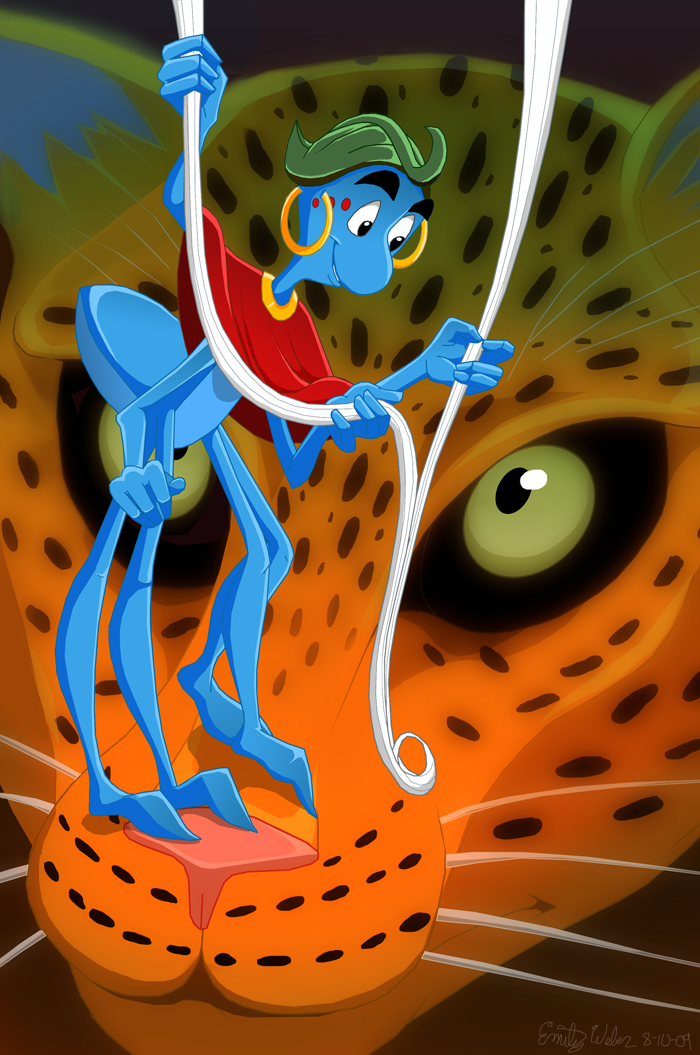
The last animal needed was the leopard. Anansi dug a deep pit in the ground, then covered it with branches and leaves so that it was invisible. When the leopard walked over it, the branches gave way and he fell. Anansi “just so happened” to be walking along, and offered to help rescue the leopard.
The spider bent a tree over so that its top touched the ground, and tied it off. He tied another rope around the tree and dropped the other end into the hole with the leopard. The cat, thinking it would lead to his freedom, followed Anansi's instructions and tied the rope around his tail.
Alright, I promised you guys I'd take a look at some of the appearances of Anansi in pop culture. He appears in some of the works by author Neil Gaiman (who's absolutely brilliant and you should totally check out if you haven't!). The books American Gods and Anansi Boys both deal with the spider trickster.
It's been years since I've seen it, but the Gargoyles animated television show had a few episodes where a spider named Anansi appeared. I hadn't realized when I watched it, but Gargoyles actually draws a lot from various mythologies and folktales. Avalon and the character of Oberon (most well-known for his Shakespeare character) both make appearances in the show. I'll have to go back and watch it again to see what else does!
The last set I'll mention in this post is comics. Both DC and Marvel have incarnations of Anansi. The DC version interacts with the character of Vixen, and his actions are pretty fitting for a (mostly) benevolent trickster. The Marvel version appears a few more times, and his appearances are frequently tied into the Spider Man stories. Though I haven't read it myself, I'm told Anansi was actually the first Spider Man.
Thanks for reading, guys! And, since I neglected to mention it elsewhere in my post...Arrr, maties! Happy Talk Like a Pirate day! I hopes ye're havin' a good time, and doin' somethin' piratical and awesome! Avast!
I'll see you next week!
In the beginning all of the stories of
the world were kept by Nyame, the sky god. Anansi wanted to be able
to tell stories, so he went to Nyame and asked to buy the stories
from him. Nyame warned him that the price was steep, but Anansi
still pushed for them. The sky god agreed that the stories would
belong to Anansi if the spider could bring him a nest of hornets, a
giant python, and a mighty leopard.
Anansi set out on his quest, confident
in his abilities. He began with the hornets. First the spider found
a hollow gourd and cut a small hole in it. He went to where the
hornets lived and poured water all over the nearby trees and himself.
Thoroughly soaked, Anansi incredulously asked the hornets why they
were staying in the rain. He held up the gourd and offered it to
them as shelter from the storm. The grateful hornets flew in one by
one. When they had all filed in, Anansi plugged up the hole. He
delivered the hornets to Nyame.
The next challenge was the python. Anansi greeted the enormous snake and struck up a conversation with him. The spider claimed that he and his wife had gotten into a debate – was the python larger or smaller than a pole which lay nearby? The snake obligingly offered to lay near the pole so that Anansi could measure him against it and see which was longer. The spider asked if he could tie the python to the pole, to make sure that both lay straight.
In the end, of course, the python was strapped to a pole. It was all too easy for Anansi to carry him off to Nyame.
The last animal needed was the leopard. Anansi dug a deep pit in the ground, then covered it with branches and leaves so that it was invisible. When the leopard walked over it, the branches gave way and he fell. Anansi “just so happened” to be walking along, and offered to help rescue the leopard.
The spider bent a tree over so that its top touched the ground, and tied it off. He tied another rope around the tree and dropped the other end into the hole with the leopard. The cat, thinking it would lead to his freedom, followed Anansi's instructions and tied the rope around his tail.
As soon as he had, Anansi cut the rope
holding the tree to the ground. It sprang back into the air – and
it took the leopard with it!
Anansi found the cat dangling from the
tree by his tail. It was a simple matter then to capture him.
When he returned to Nyame with the
leopard, the sky god could not deny that Anansi had met all of his
terms. He gave all of his stories to Anansi.
That is the story of how the spider got
his tales.
Alright, I promised you guys I'd take a look at some of the appearances of Anansi in pop culture. He appears in some of the works by author Neil Gaiman (who's absolutely brilliant and you should totally check out if you haven't!). The books American Gods and Anansi Boys both deal with the spider trickster.
It's been years since I've seen it, but the Gargoyles animated television show had a few episodes where a spider named Anansi appeared. I hadn't realized when I watched it, but Gargoyles actually draws a lot from various mythologies and folktales. Avalon and the character of Oberon (most well-known for his Shakespeare character) both make appearances in the show. I'll have to go back and watch it again to see what else does!
The last set I'll mention in this post is comics. Both DC and Marvel have incarnations of Anansi. The DC version interacts with the character of Vixen, and his actions are pretty fitting for a (mostly) benevolent trickster. The Marvel version appears a few more times, and his appearances are frequently tied into the Spider Man stories. Though I haven't read it myself, I'm told Anansi was actually the first Spider Man.
Thanks for reading, guys! And, since I neglected to mention it elsewhere in my post...Arrr, maties! Happy Talk Like a Pirate day! I hopes ye're havin' a good time, and doin' somethin' piratical and awesome! Avast!
I'll see you next week!
Monday, September 12, 2016
The Buffalo Hide
Hey guys.
Today's post is shorter than usual, and I'm sorry, but it isn't about Anansi. I had my wisdom teeth out a few days ago, and I appear to have misplaced my reference book that talks about the story I wanted to cover today. Looking for it hurt, so I eventually settled on this story instead. I'll do my best to find the book and have it prepared for next week.
I hope you all are doing well!
Today's story is a short folktale that has similarities to tales told in cultures all over the world. Let me tell you the story, and then I'll look at some others like it.
Once there was a hunter who liked to lurk by a river, knowing that doing so would make the animals come to him. One day he approached his usual territory and hid in the grasses. To the hunter's surprise, he found a large number of people bathing in the water, with not an animal in sight. These people looked a little bit different to him, though - they were big and burly, with dark brown skin. The hunter knew of no such people in any village nearby, and wondered where they had come from.
Then the hunter noticed something. On the banks of the river lay piles of buffalo hides, and very fine ones at that. There were so many that the hunter thought he could take one without being noticed. He snuck down to the river and grabbed a hide - judging from its size, it had come from a female buffalo.
Just then the bathers began to emerge from the river. The hunter darted back into cover.
What he saw next left the hunter flabbergasted. One by one, the bathers left the river and approached the pile of hides. Each picked up a buffalo hide and shrugged it over their shoulders. As they did so, a change occurred. Each human transformed into a buffalo!
The hunter could only stare as a herd of buffalo marched away from him.
But one hide was missing, and so one human was left. It was a female whose skin he had taken. The young woman looked up and down the riverbank, crying when she could not find her skin anywhere.
The hunter fell in love with the buffalo woman. He approached her and soothed her, then asked if she would be his wife. He built her a house, and together they had a son. He was big and brown, like his mother's people.
One day, the buffalo woman found her skin, kept carefully by the hunter for all of their years together. That night she told him that she wanted to return to her people, and that she wanted him to come with her.
The woman put on her buffalo skin and led her husband to her family. When they heard how kindly he had treated her, they accepted him as one of their own. A buffalo skin was sewed for the hunter, and he became a buffalo himself.
The hunter and the buffalo woman had many other children, but all of them were buffalos. Only their first son remained a human. The story goes that he married into a chieftain's family, and that all of his descendants were strong and stubborn...just like the buffalo. To this day, that tribe will not eat buffalo meat.
What do you guys think?
There are a number of stories I can think of in which similar occurrences happen. A female animal sheds its skin and becomes human to bathe. That skin is found by a mortal man, who the woman marries. Eventually, she reclaims her skin and returns to her people. This one is different in that I haven't read many versions where the husband and wife stay together.
What interests me is the disparity between cultures which have this story. This African version has a buffalo. The Scottish Selkie is a seal version. There's a Japanese version involving a crane which I'm very fond of. Several Eastern European countries have variations on the tale with the animal involved being a swan or a dove. It's fascinating to me to see how many cultures have a tale so similar.
I hope you guys were interested too. I'll see you next week!
Today's post is shorter than usual, and I'm sorry, but it isn't about Anansi. I had my wisdom teeth out a few days ago, and I appear to have misplaced my reference book that talks about the story I wanted to cover today. Looking for it hurt, so I eventually settled on this story instead. I'll do my best to find the book and have it prepared for next week.
I hope you all are doing well!
Today's story is a short folktale that has similarities to tales told in cultures all over the world. Let me tell you the story, and then I'll look at some others like it.
Once there was a hunter who liked to lurk by a river, knowing that doing so would make the animals come to him. One day he approached his usual territory and hid in the grasses. To the hunter's surprise, he found a large number of people bathing in the water, with not an animal in sight. These people looked a little bit different to him, though - they were big and burly, with dark brown skin. The hunter knew of no such people in any village nearby, and wondered where they had come from.
Then the hunter noticed something. On the banks of the river lay piles of buffalo hides, and very fine ones at that. There were so many that the hunter thought he could take one without being noticed. He snuck down to the river and grabbed a hide - judging from its size, it had come from a female buffalo.
Just then the bathers began to emerge from the river. The hunter darted back into cover.
What he saw next left the hunter flabbergasted. One by one, the bathers left the river and approached the pile of hides. Each picked up a buffalo hide and shrugged it over their shoulders. As they did so, a change occurred. Each human transformed into a buffalo!
The hunter could only stare as a herd of buffalo marched away from him.
But one hide was missing, and so one human was left. It was a female whose skin he had taken. The young woman looked up and down the riverbank, crying when she could not find her skin anywhere.
The hunter fell in love with the buffalo woman. He approached her and soothed her, then asked if she would be his wife. He built her a house, and together they had a son. He was big and brown, like his mother's people.
One day, the buffalo woman found her skin, kept carefully by the hunter for all of their years together. That night she told him that she wanted to return to her people, and that she wanted him to come with her.
(I had a very hard time finding pictures for this story. There's a Native American tale with a similar name, and all the images I could find were for it. Still, this was one of the first pictures to pop up when I searched for "Buffalo Bride". It was too cute to not include!)
The hunter and the buffalo woman had many other children, but all of them were buffalos. Only their first son remained a human. The story goes that he married into a chieftain's family, and that all of his descendants were strong and stubborn...just like the buffalo. To this day, that tribe will not eat buffalo meat.
What do you guys think?
There are a number of stories I can think of in which similar occurrences happen. A female animal sheds its skin and becomes human to bathe. That skin is found by a mortal man, who the woman marries. Eventually, she reclaims her skin and returns to her people. This one is different in that I haven't read many versions where the husband and wife stay together.
What interests me is the disparity between cultures which have this story. This African version has a buffalo. The Scottish Selkie is a seal version. There's a Japanese version involving a crane which I'm very fond of. Several Eastern European countries have variations on the tale with the animal involved being a swan or a dove. It's fascinating to me to see how many cultures have a tale so similar.
I hope you guys were interested too. I'll see you next week!
Sunday, August 28, 2016
Anansi: Corn is Worth 100 Servants
Anansi is one of
the most popular characters in African folktales. He appears
throughout quite a few African cultures, and while the stories may
differ, his personality remains the same. Anansi is a very wise and
witty spider. He is the trickster of African mythology.
We've looked at several tricksters from other mythologies in previous posts. The Norse Loki is unquestionably evil, given his desire to bring about the end of world. The Japanese Susano can be nefarious, but he also has a lighter side. Out of all the tricksters I've talked about, Anansi is most similar to the Greek Hermes. Both are messengers, with Anansi frequently serving as a go-between for mankind and the gods. Their pranks tend to be light hearted in nature, instead of villainous.
Given the number of myths about Anansi, there are a lot of stories for me to cover – too many for just one post! I'm going to spend several weeks talking about Anansi, including one post taking a look at his portrayals in modern pop culture.
Nyame possessed an ear of corn. Looking at it, Anansi asked to be gifted the corn. He boasted that he would trade that corn for 100 servants. Nyame was intrigued, but doubted that the clever spider could do as he said. Still, he gave Anansi the ear of corn.
Anansi then went to earth. He found a human village, where he was made welcome as an honored guest. The spider warned the humans that the corn he had with him was sacred – it belonged to Nyame himself! The villagers were all very awed and respectful.
That night, Anansi crept out while everyone was sleeping. He fed all of the corn to the chickens in the village. When the humans awoke the next day, Anansi flew into a rage. He accused them of letting their fowl eat the sacred corn!
The humans were completely apalled. Fearing the wrath of Nyame, they offered Anansi an entire bushel of corn to make up for the single ear he had lost. Anansi accepted their offering and set off down the road.
As he was traveling Anansi met a man with a chicken. He purchase the chicken for the bushel of corn. When he came to the next village, Anansi was again welcomed as a guest. He repeated his story, but this time it was the chicken who was sacred to Nyame.
Again, Anansi had a trick up his sleeve. That night he slaughtered the chicken and rubbed its blood and feathers all over the village. He railed against the villagers when they awoke – how dare they kill Nyame's sacred chicken!
The villagers gave Anansi ten sheep to placate him, and the spider set off on his way.
The sheep were exchanged for a corpse – Anansi's biggest trick yet. (I'd imagine the corpse-seller was quite happy with that bargain!)
Anansi carried the corpse into the final village, larger than all the others he had stayed in. He claimed that the body was the sleeping son of Nyame himself. He set the body in a hut, claiming that he was exhausted and needed his rest. Anansi enjoyed dinner, and then returned to the hut to "sleep".
The villagers were horrified, and greatly feared the wrath of Nyame. They desperately offered to send 100 of their finest young men to the god, hoping that their servititude would make up for the death of the god's son. Anansi gravely accepted their offer.
Nyame was very much surprised when Anansi marched into his court with 100 servants behind him. When the spider recounted his tale the god was amused.
And so it was that 100 servants were purchased for a single ear of corn.
What do you guys think? It always reminds me of that game where you start with something small – say, a paperclip – and see what you can trade it for.
I'll be back next week with a very special post, and then we'll return to African folktales the following week.
And, to all my fellow WoW players...have fun with Legion!!
We've looked at several tricksters from other mythologies in previous posts. The Norse Loki is unquestionably evil, given his desire to bring about the end of world. The Japanese Susano can be nefarious, but he also has a lighter side. Out of all the tricksters I've talked about, Anansi is most similar to the Greek Hermes. Both are messengers, with Anansi frequently serving as a go-between for mankind and the gods. Their pranks tend to be light hearted in nature, instead of villainous.
Given the number of myths about Anansi, there are a lot of stories for me to cover – too many for just one post! I'm going to spend several weeks talking about Anansi, including one post taking a look at his portrayals in modern pop culture.
Today's story is
one of my favorites, even though Anansi is pretty mean to the poor
humans. It begins with a bet between Anansi and Nyame, one of the
more powerful African gods.
Nyame possessed an ear of corn. Looking at it, Anansi asked to be gifted the corn. He boasted that he would trade that corn for 100 servants. Nyame was intrigued, but doubted that the clever spider could do as he said. Still, he gave Anansi the ear of corn.
Anansi then went to earth. He found a human village, where he was made welcome as an honored guest. The spider warned the humans that the corn he had with him was sacred – it belonged to Nyame himself! The villagers were all very awed and respectful.
That night, Anansi crept out while everyone was sleeping. He fed all of the corn to the chickens in the village. When the humans awoke the next day, Anansi flew into a rage. He accused them of letting their fowl eat the sacred corn!
The humans were completely apalled. Fearing the wrath of Nyame, they offered Anansi an entire bushel of corn to make up for the single ear he had lost. Anansi accepted their offering and set off down the road.
As he was traveling Anansi met a man with a chicken. He purchase the chicken for the bushel of corn. When he came to the next village, Anansi was again welcomed as a guest. He repeated his story, but this time it was the chicken who was sacred to Nyame.
Again, Anansi had a trick up his sleeve. That night he slaughtered the chicken and rubbed its blood and feathers all over the village. He railed against the villagers when they awoke – how dare they kill Nyame's sacred chicken!
The villagers gave Anansi ten sheep to placate him, and the spider set off on his way.
The sheep were exchanged for a corpse – Anansi's biggest trick yet. (I'd imagine the corpse-seller was quite happy with that bargain!)
Anansi carried the corpse into the final village, larger than all the others he had stayed in. He claimed that the body was the sleeping son of Nyame himself. He set the body in a hut, claiming that he was exhausted and needed his rest. Anansi enjoyed dinner, and then returned to the hut to "sleep".
The next
morning, Anansi called some villagers into the hut to help him wake
the son of the god. Given that the "son" was dead, they
were unable to do so. Anansi cried out that the man had been
murdered! Who in the village would dare to kill the son of their
god?!
The villagers were horrified, and greatly feared the wrath of Nyame. They desperately offered to send 100 of their finest young men to the god, hoping that their servititude would make up for the death of the god's son. Anansi gravely accepted their offer.
Nyame was very much surprised when Anansi marched into his court with 100 servants behind him. When the spider recounted his tale the god was amused.
And so it was that 100 servants were purchased for a single ear of corn.
What do you guys think? It always reminds me of that game where you start with something small – say, a paperclip – and see what you can trade it for.
I'll be back next week with a very special post, and then we'll return to African folktales the following week.
And, to all my fellow WoW players...have fun with Legion!!
Sunday, August 21, 2016
Go Fish: Chipfalamfula, the River God
Today's story comes from the people of
Mozambique, a country in southern Africa. It tells of a river deity
who helps out two young girls. I love the similarities to Cinderella
(the river god could be compared to the fairy godmother) and to the
Judeo-Christian story of Joseph and his brothers.
The chief was overjoyed at his favorite daughter's return. A party was thrown, and he showered gifts upon both Chichinguane and her sister.
Of course, this only made the other wives and daughters even more jealous.
With no way down, they waited there. Night fell, and their situation worsened: a group of ogres arrived.
They were married, and lived the rest of their lives in the king's kingdom.
The rivers of southern Mozambique were
said to be the home of Chipfalamfula, an enormous fish who was a
river god. Chipfalamfula was a kind being who often helped those in
need.
There was a tribe whose chief had many
wives. His favorite wife had two daughters – Chichinguane and her
younger sister. Though the chief had many other daughters, these two
were his favorites because of their mother. He showered them with
gifts and doted upon them.
The other wives and daughters of the
chief were immensely jealous of Chichinguane's family. They were
cruel and took every opportunity to bully them.
One day, all of the girls had been sent
out to collect clay by the riverbank. The other daughters of the
chief forced Chichinguane to climb down the bank and fill their
baskets for them. One by one she passed up baskets filled with clay.
When she had finished, Chichinguane waited for the other girls to
pull her up...but they did not. Instead, the girls turned and left.
The clay was slick and slippery. Try
as she might, Chichinguane could not climb out. Eventually it began
to rain, and it was then that Chichinguane grew scared. The water
was rapidly rising, and the girl feared that she would drown.
She cried out for help – and help
came.
A giant fish appeared behind her.
Chichinguane was frightened at first, but then remembered the tales
of Chipfalamfula, who was a helpful god. The fish introduced himself
and then opened his mouth wide. He invited her to climb inside his
belly, where she would be safe and happy.
Chichinguane climbed into the fish's
mouth and down into his stomach.
It was bigger on the inside (like a
TARDIS!).
There were many people living there, growing plants and
catching small fish. Chichinguane was happy.
However, her little sister was not.
The other girls had returned to the village and claimed that
Chichinguane had run away. With Chichinguane gone, the young girl
was sent to take her sister's place doing the chores.
The little girl was too small for this.
Sent to gather water, she found herself unable to pick up the filled
pot. The other daughters of the chief laughed at her and left her
behind, crying.
Chichinguane heard the sobs of her
sister and asked Chipfalamfula to let her go to her. The fish opened
his mouth and Chichinguane popped out, running to meet her sister on
the riverbank. The young girl was overjoyed to see her, but
Chichinguane made her promise not to tell anyone. The older sister
picked up the water jug and put it on the girl's head, where she
carefully balanced it. Chichinguane climbed back into
Chipfalamfula's mouth. The young girl was able to return to the
village with her water jar.
Every day Chichinguane helped her
sister, and every day she returned to the fish god's stomach. Then,
one night Chichinguane's younger sister was asked to carry a jar of
beer to the chief. Try as she might, the girl could not lift the
jar. Her mother was flabbergasted; the girl carried the jar on her
head every day when she returned with water!
At length the younger sister was forced
to explain that Chichinguane helped her every day. Her mother was
overjoyed to hear that her eldest daughter was still alive. The next
morning she went with her daughter to the riverbank. When
Chichinguane appeared to help lift the water jar, her mother raced
out to hug her. She begged her eldest daughter to come home, but
Chichinguane refused. Her time spent in the water had turned her
into a fish; she now had scales of pure silver.
Chichinguane returned to the belly of
Chipfalamfula, and her mother and sister returned to the village.
The sight of her mother had filled
Chichinguane with homesickness. After a few days she spoke to
Chipfalamfula and told him that she missed her family. She begged to
be allowed to return to them and to a life on land.
Chipfalamfula agreed, wanting her to be
happy. He gave her a magic wand and opened his mouth, letting her
loose into the world.
Chichinguane ran back to her village.
The chief's other wives and daughters stared at her in disbelief as
she headed for her mother's hut. When she arrived she touched the
magic wand to her skin. Before her mother and sister's eyes
Chichinguane's scales dropped off of her. As they hit the ground
they turned into silver coins, making Chichinguane's mother rich
beyond dreams.
The chief was overjoyed at his favorite daughter's return. A party was thrown, and he showered gifts upon both Chichinguane and her sister.
Of course, this only made the other wives and daughters even more jealous.
Some
time passed, and all of the girls were sent to gather firewood. The
older girls bullied Chichinguane and her sister into climbing the
tallest tree. They were ordered to cut off all of the branches and
toss them down to the other girls.
Chichinguane
and her little sister did as they were told. When they were
finished, the girls left – and Chichinguane and her sister were
stranded in the top of the tree.
With no way down, they waited there. Night fell, and their situation worsened: a group of ogres arrived.
Ogres
were monstrous creatures who loved shiny jewelry – which the girls
were wearing – and the taste of human flesh. Young girls were a
particular delicacy. Catching sight of Chichinguane and her sister,
the ogres began to try and cut down the tree.
The
younger girl panicked and began to cry, but Chichinguane shushed her
and told her not to worry. When the tree was about to topple she
touched it with the magic wand from Chipfalamfula. The tree
immediately was whole again – it was as if the ogres' axes had
never touched it.
The
ogres were furious and continued to hack and chop. Chichinguane
kept healing the tree. Eventually the ogres grew weary. They fell
asleep, knowing that their prey was trapped.
Seeing
no other choice, Chichinguane pushed her sister out of the tree and
jumped after her. The landing was rough, but they both stood and
began to run. The noise awakened the ogres, who chased them through
the forest. Chichinguane headed for the river.
They
got there with the ogres hot on their heels. Chichinguane touched
her magic wand to the riverside and begged Chipfalamfula to halt the
water. Immediately the river was dry, and she and her sister were
able to cross. Once on the other side she used her wand again,
asking Chipfalamfula to restart the river.
The
ogres, running across the dry riverbank, were swept away by the wave
of water.
(I totally thought of this scene.)
They
were safe, but Chichinguane and her sister realized that they were
lost. They wandered for some time before coming to a cave. Within
it was much fine jewelry...but also human skeletons. They had
stumbled across the ogres' lair!
Chichinguane
and her sister put on as much of the jewelry as they could. Fearing
that an ogre would return to the cave and find them, they left
quickly.
It was
dark, and they still didn't know where they were. Chichinguane asked
Chipfalamfula to help them. Her magic wand began to glow, and she
held it above her head as a light.
Little
did Chichinguane know that another had also been praying to
Chipfalamfula. There was a rich king who had two sons. He had
prayed to the river deity that two beautiful, wealthy wives might be
found for the princes.
The
river god led Chichinguane's footsteps to the wall surrounding the
king's home. The guards who stood there were astounded by the beauty
of the women before them, who stood bedecked in jewels and lit by a
magic light. Knowing that they had been sent by Chipfalamfula as an
answer to the king's prayers, the girls were led inside and
introduced to the princes.
They were married, and lived the rest of their lives in the king's kingdom.
What
did you guys think?
Subscribe to:
Posts (Atom)


:origin()/pre00/6fdb/th/pre/i/2010/123/2/0/dark_kamaitachi_by_luketheripper.jpg)