Hello! I hope you had a lovely week! Today's post takes us back to wrap up Arthurian legend. Beginning next week I'm going to be taking a look at Jewish folklore. Before I begin this post, there's a couple of things I'd like to talk about.
First off, I totally forgot about this blog's anniversary, so we missed it! My first post, an Intro to Norse Mythology, was published on October 28th, 2014. That's right - mythdancer has been around for over a year now! During that time you guys have been amazingly friendly and supportive, and I've loved seeing your enthusiasm for mythology, fairy tales, and folklore. So, whether you've been reading since the start (thanks Mom!) or have only recently found this blog, thank you for your support. You're the reason I keep writing these posts.
Next, we are very nearly to 4000 pageviews! I can't believe it! Thank you, thank you, thank you!
Last thing before I get into the post: This coming Saturday I will be at the Bookmans on Speedway and Wilmot for their last Local Author's Fair of the year. I'll have copies of both Hammerfall and Lovesick, along with a massive number of lightsaber earrings (Come to the dark side! We have fashionable jewelry!). If you're in the neighborhood, you should swing by and see me! You never know who might be there...
Now, on with the post!
Arthurian legend is full of honor, chivalry, and strict ties between knights and their lords. Unfortunately, it is also fraught with convoluted familial relationships and romances that at times tear the court apart. One such situation leads to the fall of King Arthur's court, and his disappearance from this world.
I mentioned in my post about Uther that Igraine, the mother of Arthur, had several daughters with her first husband (before Uther killed him). These girls were married off by Uther to various vassals and lords that he wanted brought under his control. One of the daughters, Elaine, doesn't really figure into Arthurian legend after this. Unfortunately, she is the only girl who disappears from the stories. Her sisters Morgan le Fay and Morgause appear quite prominently.
Now, when I see the name Morgan le Fay I tend to go "Boo! Hiss! Evil!" This reaction is because Morgan is portrayed as a villain in so many parts of popular culture nowadays. She has been the evil responsible for Arthur's downfall in books, television shows, movies, and videogames.
This is very interesting, because in the original legends Morgan le Fay actually wasn't that bad of a person. She was depicted in the beginning as a healer who often aided King Arthur and his court. Later the myths changed to make her an opponent of Queen Guinevere (largely because Morgan loved Lancelot, Guinevere's lover), and by extension King Arthur - but she eventually exiles herself to the land called Avalon to study magic and ceases to plague the court. She even shows up in the end to escort a mortally wounded Arthur to his rest in Avalon.
So how did the Morgan le Fay from the legends become the one now featured so evilly in pop culture? The answer lies in her other sister, Morgause. The two women are often combined into one, with Morgan's name and magical prowess merged with the story of Morgause. It is to Morgause that we now turn.
Morgause, like her two sisters, was married off to a vassal of King Uther. When the king died she was unaware that he had sired her half-brother, Arthur. Arthur, being raised away from the court and his heritage, was unaware that he had any half-sisters. Upon his coronation a dramatic turn of events saw he and Morgause share an incestuous night together - a night that resulted in the birth of a son, Mordred.
In truth, that is about the extent of Morgause's importance to the story. She bears several sons to her husband, and they and Mordred (raised without knowing his heritage) go on to become knights in King Arthur's court. Morgause pretty much disappears from Arthurian Legend at this point.
It is to Mordred that we now must turn. He became a seemingly noble knight for King Arthur, but in reality he often sought to undermine the king's power. Mordred is often depicted as trying to alert Arthur to the adultery of Guinevere and Lancelot, hoping to plunge the knights into a civil war. This usually fails, luckily for the court!
Unfortunately, Mordred gets his chance to overturn the order of things when Arthur leaves him in charge while the King wages war far away (sometimes this war is upon Lancelot and his army, since Arthur finally discovered the betrayal of his knight). Left with no one to stop him, Mordred crowns himself king and seizes Arthur's throne for himself. He also tries to marry Guinevere - depending on which story you read, she sometimes willingly marries him and sometimes flees to a convent rather than wed him. In any case, Mordred takes the power of Camelot and has no intention of giving it back.
This is problematic, because when Arthur hears of his young knight's betrayal he marches his army straight back to Camelot to reclaim his throne. The battle that ensues is known as the Battle of Camlann. Many died during this battle, which culminated in a confrontation between Mordred and Arthur. Arthur managed in the end to kill Mordred, but he was struck a mortal blow in the process.
Lying on the battlefield dying, Arthur sends one of his knights to return Excalibur to the Lady of the Lake. The knight tries several times to keep the blade for himself, but Arthur sees through his lies each time. He eventually gives in to his King's orders and throws the sword into the Lake, where it is reclaimed by the hand of the Lady rising from the deeps.
What happens next is one of the more interesting parts of Arthurian legend (at least to me). Arthur is taken by a group of women - their identities vary, but they generally include at least one Lady of the Lake and Arthur's half-sister Morgan le Fay.
These women carry the dying king to a boat and escort him to the isle of Avalon, a mystical land of healing. According to legend, the great king does not actually die. Instead, he lies on Avalon, regaining his strength until the day of his return.
(Which sounds an awful lot like the story of Fionn, doesn't it?)
With that, I'll end my posts about Arthurian legend for now. What did you guys think?
As I said at the beginning of the post, next week I'll be starting to take a look at Jewish folklore. Until then, you guys have a great week! Happy Thanksgiving!
Showing posts with label Lady of the Lake. Show all posts
Sunday, November 22, 2015
Sunday, November 1, 2015
The Ladies of the Lake
Hey there! How are you? I hope you
all had a wonderful Halloween!
I mentioned in an earlier post that there was more than one Lady of the Lake in Arthurian legend. In this post I'm going to take a closer look at them.
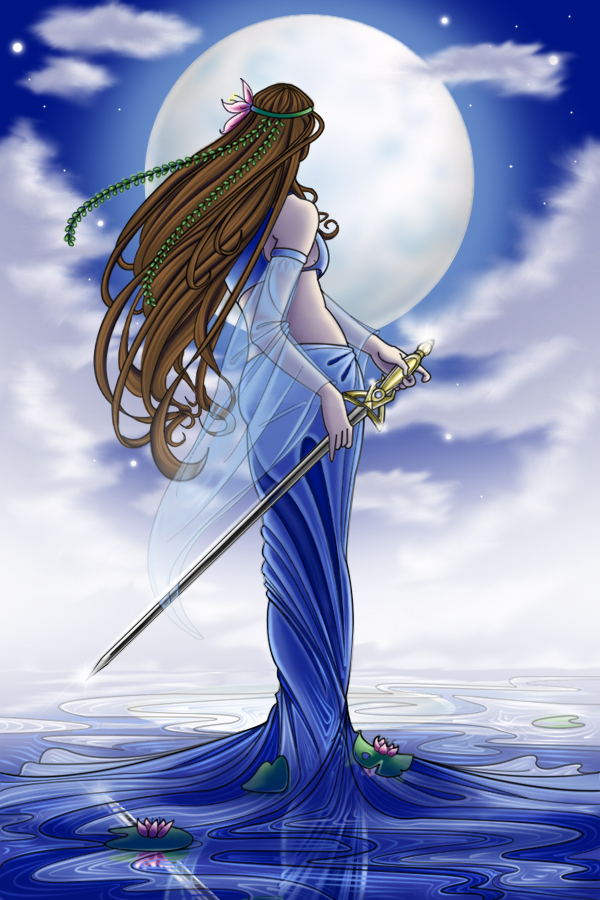
The Lady of the Lake is a figure who shows up quite often in Arthurian Legend. The Lady is almost always a helpful figure to King Arthur. It was a Lady of the Lake who gave Arthur the magic sword Excalibur, which helped grant him the right to rule. (Of course, to quote Monty Python and the Quest for the Holy Grail: "strange women lying in ponds distributing swords is no basis for a system of government".) Upon King Arthur's death, Excalibur is returned to a Lady of the Lake by one of his knights. A Lady of the Lake is also responsible for helping Lancelot rise to such prominence in King Arthur's court – although, given his eventual betrayal of King Arthur, that might not be such a good thing. King Arthur's body is escorted to the mystical land of Avalon by several women, one of whom is a Lady of the Lake.
Interestingly, women with the title of the Lady of the Lake are also sometimes quite nefarious and evil. I mentioned in my post about Merlin that a Lady of the Lake named Nimue used Merlin to learn magic and then trapped him in a tree, leaving him to die. Not something you'd think an ally of Arthur would do, right? Before that happens, another figure called the Lady of the Lake shows up at King Arthur's court and is beheaded by a knight named Balin. According to Balin (whose tale is backed up by Merlin), the Lady of the Lake had killed his mother. According the the Lady of the Lake (before she was killed), Balin had killed her brother. The best part? The Lady who gets decapitated is the same Lady who gave Arthur Excalibur! So who, exactly, is the sword returned to after Arthur's death?
As you can see, the Lady of the Lake is a figure who seems to have multiple aspects. Shortly after one dies, another woman with the same title appears. To me, the simplest explanation of the many Ladies is that there's more than one lake in Britain; ergo, there might be many Ladies of the Lake. These ladies go by quite a few names as authors attempt to differentiate them from one another. The names I've heard most often are Nimue, Nineve, Vivianne, and Elaine.
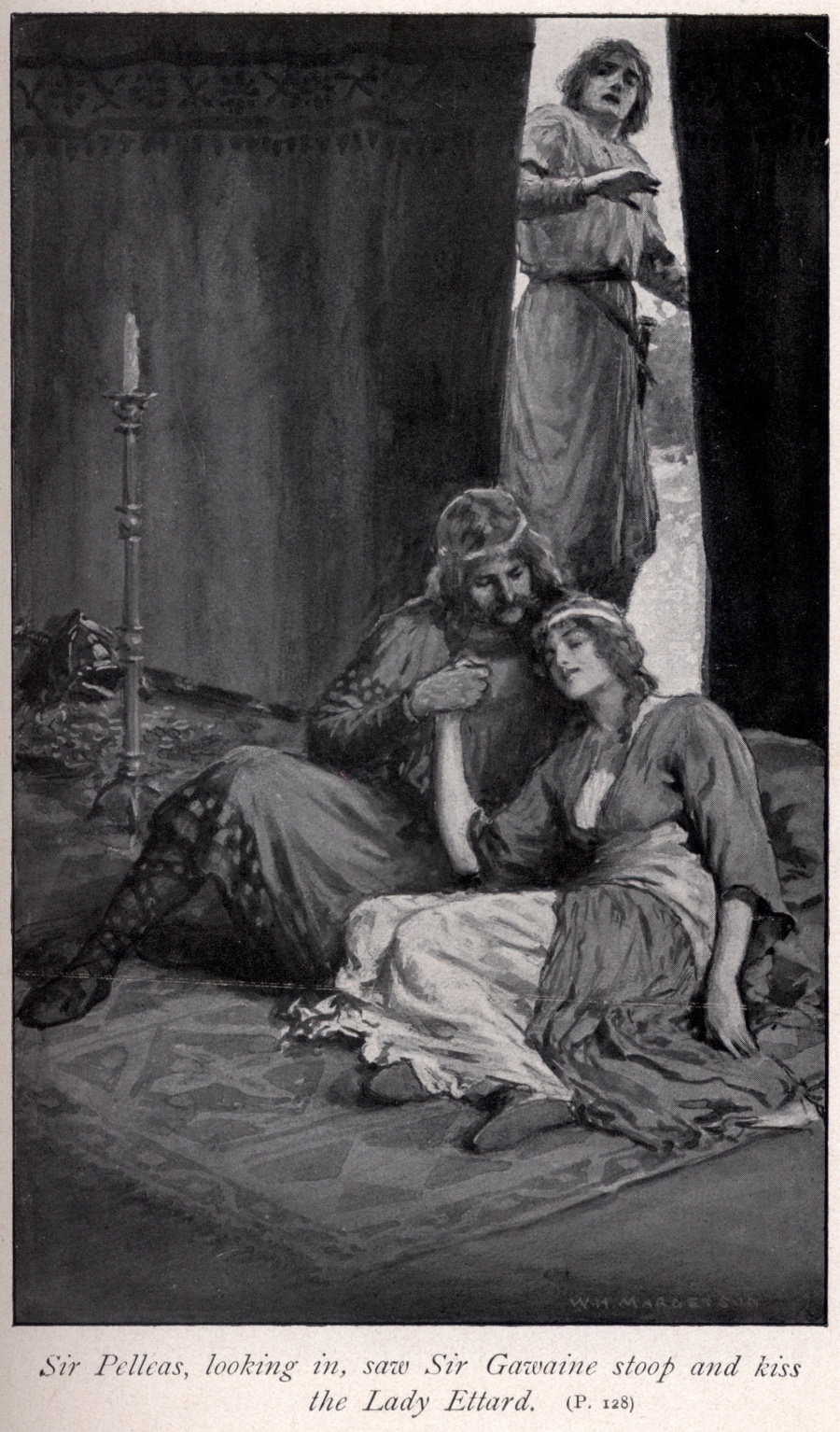
One of my favorite stories about a Lady of the Lake is about a knight named Pelleas. Pelleas had fallen in love with a woman of noble blood named Ettard, but she spurned him and wanted nothing to do with him. The knight was so in love that he allowed himself to be taken captive by Ettard's guards every day. They took him back to her castle and beat him, but Pelleas thought the pain was worth it because each day he got to see Ettard for a few minutes.
It happened that a knight named Gawain, one of King Arthur's knights, came upon Pelleas as Ettard's guards were capturing him. Gawain fought them off and asked Pelleas why he was allowing himself to be so beaten. Upon hearing Pelleas' story, Gawain was moved and promised to go and woo Ettard for the other knight. Gawain swore that he would win Ettard's favor and her hand in marriage, and then give her to Pelleas to marry.
Well, the first part of Gawain's plan worked out alright. He won Ettard's favor. Unfortunately for Pelleas, Gawain fell in love with Ettard and completely forgot about his oath. He wooed the woman for himself, not for Pelleas.
When Ettard and Gawain woke up, she immediately recognized Pelleas' sword. Both were ashamed by their betrayal of the knight.
As it happened, one of Pelleas' servants happened across Nineve, a Lady of the Lake. She asked where he was going, and the servant explained everything that had happened to his master. Nineve was enraged and demanded that the servant take her to Pelleas. Upon seeing his sorrow, she cast him into an enchanted sleep. Nineve then went and fetched Ettard, and shamed her for having broken Pelleas' heart.
But Nineve was not done. She cast a spell on Ettard that made her love Pelleas as much as he had loved her. Ettard flung herself to her knees beside Pelleas, crying for the pain she had inflicted upon her beloved. This woke up Pelleas, who opened his eyes and found that he quite hated Ettard for her treatment of him.
The story ends with Ettard dying of a broken heart. Pelleas leaves the country along with Nineve. He falls in love with the Lady of the Lake, and the two marry. They have a son together, and live happily ever after.
I'm not sure why I like the story so much. I think it might be because Nineve was so furious at the way Ettard had been messing with Pelleas' heart. It just makes me happy!
I'm sorry to post and run, but NaNoWriMo has begun and between that and school I am crazy busy. (Don't know what NaNoWriMo is? It's short for National Novel Writing Month. During the month of November writers are challenged to write 50,000 words. I've done it for four years now - both of my books were written during NaNoWriMo.) I've got posts planned for the rest of the month, but I'm not sure how many more will be about Arthurian legend. I'll keep you posted as I learn more!
I'll see you next week!
I mentioned in an earlier post that there was more than one Lady of the Lake in Arthurian legend. In this post I'm going to take a closer look at them.
The Lady of the Lake is a figure who shows up quite often in Arthurian Legend. The Lady is almost always a helpful figure to King Arthur. It was a Lady of the Lake who gave Arthur the magic sword Excalibur, which helped grant him the right to rule. (Of course, to quote Monty Python and the Quest for the Holy Grail: "strange women lying in ponds distributing swords is no basis for a system of government".) Upon King Arthur's death, Excalibur is returned to a Lady of the Lake by one of his knights. A Lady of the Lake is also responsible for helping Lancelot rise to such prominence in King Arthur's court – although, given his eventual betrayal of King Arthur, that might not be such a good thing. King Arthur's body is escorted to the mystical land of Avalon by several women, one of whom is a Lady of the Lake.
Interestingly, women with the title of the Lady of the Lake are also sometimes quite nefarious and evil. I mentioned in my post about Merlin that a Lady of the Lake named Nimue used Merlin to learn magic and then trapped him in a tree, leaving him to die. Not something you'd think an ally of Arthur would do, right? Before that happens, another figure called the Lady of the Lake shows up at King Arthur's court and is beheaded by a knight named Balin. According to Balin (whose tale is backed up by Merlin), the Lady of the Lake had killed his mother. According the the Lady of the Lake (before she was killed), Balin had killed her brother. The best part? The Lady who gets decapitated is the same Lady who gave Arthur Excalibur! So who, exactly, is the sword returned to after Arthur's death?
As you can see, the Lady of the Lake is a figure who seems to have multiple aspects. Shortly after one dies, another woman with the same title appears. To me, the simplest explanation of the many Ladies is that there's more than one lake in Britain; ergo, there might be many Ladies of the Lake. These ladies go by quite a few names as authors attempt to differentiate them from one another. The names I've heard most often are Nimue, Nineve, Vivianne, and Elaine.
One of my favorite stories about a Lady of the Lake is about a knight named Pelleas. Pelleas had fallen in love with a woman of noble blood named Ettard, but she spurned him and wanted nothing to do with him. The knight was so in love that he allowed himself to be taken captive by Ettard's guards every day. They took him back to her castle and beat him, but Pelleas thought the pain was worth it because each day he got to see Ettard for a few minutes.
It happened that a knight named Gawain, one of King Arthur's knights, came upon Pelleas as Ettard's guards were capturing him. Gawain fought them off and asked Pelleas why he was allowing himself to be so beaten. Upon hearing Pelleas' story, Gawain was moved and promised to go and woo Ettard for the other knight. Gawain swore that he would win Ettard's favor and her hand in marriage, and then give her to Pelleas to marry.
Well, the first part of Gawain's plan worked out alright. He won Ettard's favor. Unfortunately for Pelleas, Gawain fell in love with Ettard and completely forgot about his oath. He wooed the woman for himself, not for Pelleas.
After a few days had
passed without word from Gawain, Pelleas went to find out what was
going on.
He walked in to find Gawain and Ettard asleep in one another's arms. Filled with rage at the betrayal, Pelleas drew his sword and prepared to kill the duo – but he couldn't bring himself to do it. His love for Ettard was too great. Instead, the knight left his sword beside them and went home. He dismissed his servants and resolved that he would starve himself to death.
When Ettard and Gawain woke up, she immediately recognized Pelleas' sword. Both were ashamed by their betrayal of the knight.
As it happened, one of Pelleas' servants happened across Nineve, a Lady of the Lake. She asked where he was going, and the servant explained everything that had happened to his master. Nineve was enraged and demanded that the servant take her to Pelleas. Upon seeing his sorrow, she cast him into an enchanted sleep. Nineve then went and fetched Ettard, and shamed her for having broken Pelleas' heart.
(This version calls her Nimue, for some reason.)
But Nineve was not done. She cast a spell on Ettard that made her love Pelleas as much as he had loved her. Ettard flung herself to her knees beside Pelleas, crying for the pain she had inflicted upon her beloved. This woke up Pelleas, who opened his eyes and found that he quite hated Ettard for her treatment of him.
The story ends with Ettard dying of a broken heart. Pelleas leaves the country along with Nineve. He falls in love with the Lady of the Lake, and the two marry. They have a son together, and live happily ever after.
I'm not sure why I like the story so much. I think it might be because Nineve was so furious at the way Ettard had been messing with Pelleas' heart. It just makes me happy!
What did you guys think?
I'm sorry to post and run, but NaNoWriMo has begun and between that and school I am crazy busy. (Don't know what NaNoWriMo is? It's short for National Novel Writing Month. During the month of November writers are challenged to write 50,000 words. I've done it for four years now - both of my books were written during NaNoWriMo.) I've got posts planned for the rest of the month, but I'm not sure how many more will be about Arthurian legend. I'll keep you posted as I learn more!
I'll see you next week!
Subscribe to:
Posts (Atom)