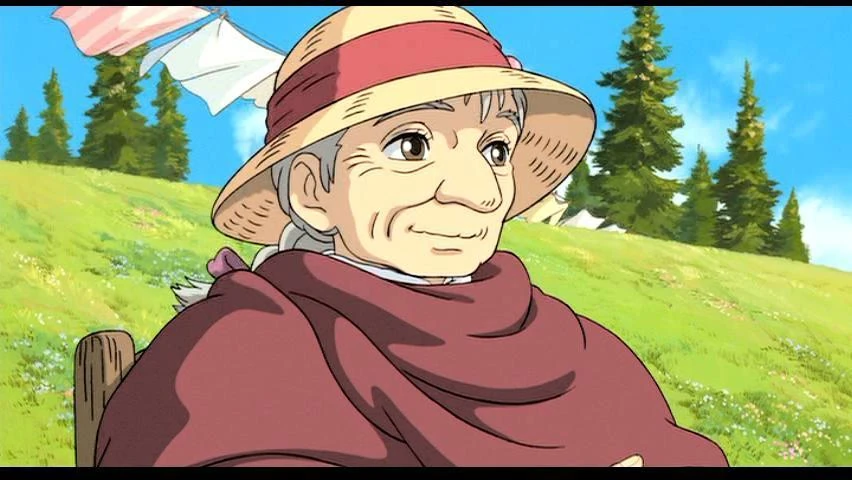
Fairy tales are full of helpers such as these. Sometimes it's a talking animal. In other stories, it's the fairy godmother. But another archetype appears time and time again: The Helpful Hag.
Rarely named in any stories, the Helpful Hag is most often a little old lady by the side of the road. I've also referred to her as the Kind Crone, or the Wizened Wise Woman. She fits into the category of the Donor, an individual who provides the protagonist with aid. Joseph Campbell recognized the Crone when encountering the first stages of a hero's journey, when they meet with someone who provides them with help of some sort.

There are several fairy tales in which three sons all set out on the same quest. They each, along the way, encounter an old crone begging on the side of the road. This woman is described as wizened, ugly, a poor beggar with nothing to offer. The first two brothers refuse to share their bread with her. The youngest, considerably kinder than his kin, splits his meal with the hag.
This is where the hag shows her true nature. Her begging is a test; for those who show her kindness, she provides aid. Sometimes this is a magical item. More frequently, her aid comes in the form of advice.
But for those who spurn her request for help...well, let's take a look at one of the more famous fairy tales to see how that turns out.
The opening scene of Disney's Beauty and the Beast shows how the prince spurned the offer of a rose from a wizened old woman. Irked by his lack of manners, she revealed that it had been a test. In fact, the old hag was actually a beautiful, powerful enchantress. For his rudeness, the prince was transformed into a Beast.

So the Helpful Hag is not only a benefactor towards do-gooders in fairy tales - she is also a test, to see if a character is worthy of her help.
There are a lot of myths that could serve as the origin of the Helpful Hag character. Let us look first at Greek mythology. Demeter spent some time wandering the earth disguised as a mortal, while she was searching for her missing daughter. During that time she became a nursemaid for a young boy. Seeing that the boy and his family were good, she attempted to make the boy immortal. Unfortunately, this involved holding him in a fire - something his parents didn't take too kindly to when they burst into the room. Demeter is one example of a Helpful Hag.
Another can be found in the Fates - or the Norns, the Moirai, or any other name you care to call them by. Appearing in Celtic, Norse, Greek, Roman, and many other mythologies, the Fates are three women. One is the Maiden; one is the Mother; one is the Crone.
But another example of a Helpful Hag is not actually a wizened old woman at all...but, instead, an old man. He frequently traveled the earth under the name of High. While there, he would offer his aid to great heroes on quests. This man was the Norse god Odin.
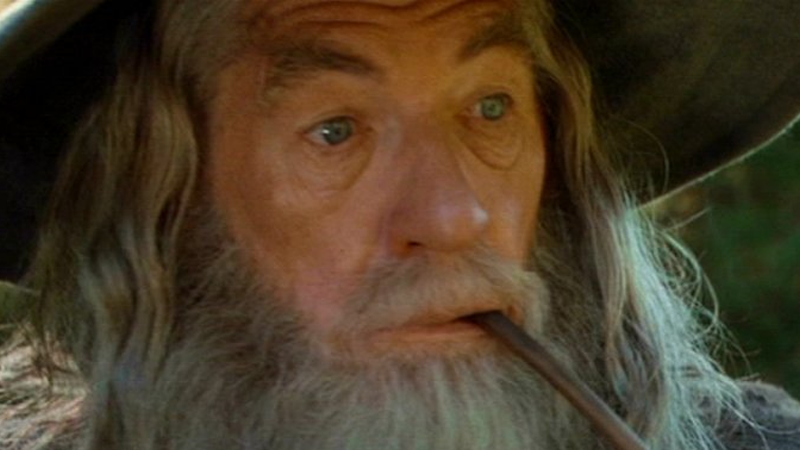
Now, Norse mythology has been the basis of inspiration for a number of authors (myself included). One such author created a character based heavily upon Odin in his mortal disguise - someone who could aid the protagonist, but never be the main character himself.
This is all a very roundabout way to confess that yes, I am comparing Gandalf to a Helpful Hag.
Can you guys think of any story examples of the Kind Crone? Little old women offering aid abound in stories of all sorts. One of my absolute favorite examples is from Diana Wynn Jones' Howl's Moving Castle. Jones recognized the archetype of the Helpful Hag and turned it onto its head. The main character spends most of the book convinced that she can't be the main character, because she's too old to go off and have adventures - so instead, she must be the helper to everyone else. What a surprise for her when she discovers the truth!