Showing posts with label Odin. Show all posts

Sunday, October 8, 2017

The Helpful Hag

Heroes need help.  It's one of the great truths found in stories across all genres and media types.  No one can go through life alone, whether it's ordinary mundane life...or the sort of life that involves an epic quest with armies opposing you.  That help can come in many forms: a sidekick, like Batman and Robin; a raid group taking on a difficult boss in a video game; a group of friends supporting one another, like in Friends; an adorable animal companion.

Fairy tales are full of helpers such as these.  Sometimes it's a talking animal.  In other stories, it's the fairy godmother.  But another archetype appears time and time again: The Helpful Hag.

Rarely named in any stories, the Helpful Hag is most often a little old lady by the side of the road.  I've also referred to her as the Kind Crone, or the Wizened Wise Woman.  She fits into the category of the Donor, an individual who provides the protagonist with aid.  Joseph Campbell recognized the Crone when encountering the first stages of a hero's journey, when they meet with someone who provides them with help of some sort.


There are several fairy tales in which three sons all set out on the same quest.  They each, along the way, encounter an old crone begging on the side of the road.  This woman is described as wizened, ugly, a poor beggar with nothing to offer.  The first two brothers refuse to share their bread with her.  The youngest, considerably kinder than his kin, splits his meal with the hag.

This is where the hag shows her true nature.  Her begging is a test; for those who show her kindness, she provides aid.  Sometimes this is a magical item.  More frequently, her aid comes in the form of advice.

But for those who spurn her request for help...well, let's take a look at one of the more famous fairy tales to see how that turns out.

The opening scene of Disney's Beauty and the Beast shows how the prince spurned the offer of a rose from a wizened old woman.  Irked by his lack of manners, she revealed that it had been a test.  In fact, the old hag was actually a beautiful, powerful enchantress.  For his rudeness, the prince was transformed into a Beast.


So the Helpful Hag is not only a benefactor towards do-gooders in fairy tales - she is also a test, to see if a character is worthy of her help.

There are a lot of myths that could serve as the origin of the Helpful Hag character.  Let us look first at Greek mythology.  Demeter spent some time wandering the earth disguised as a mortal, while she was searching for her missing daughter.  During that time she became a nursemaid for a young boy.  Seeing that the boy and his family were good, she attempted to make the boy immortal.  Unfortunately, this involved holding him in a fire - something his parents didn't take too kindly to when they burst into the room.  Demeter is one example of a Helpful Hag.

Another can be found in the Fates - or the Norns, the Moirai, or any other name you care to call them by.  Appearing in Celtic, Norse, Greek, Roman, and many other mythologies, the Fates are three women.  One is the Maiden; one is the Mother; one is the Crone.

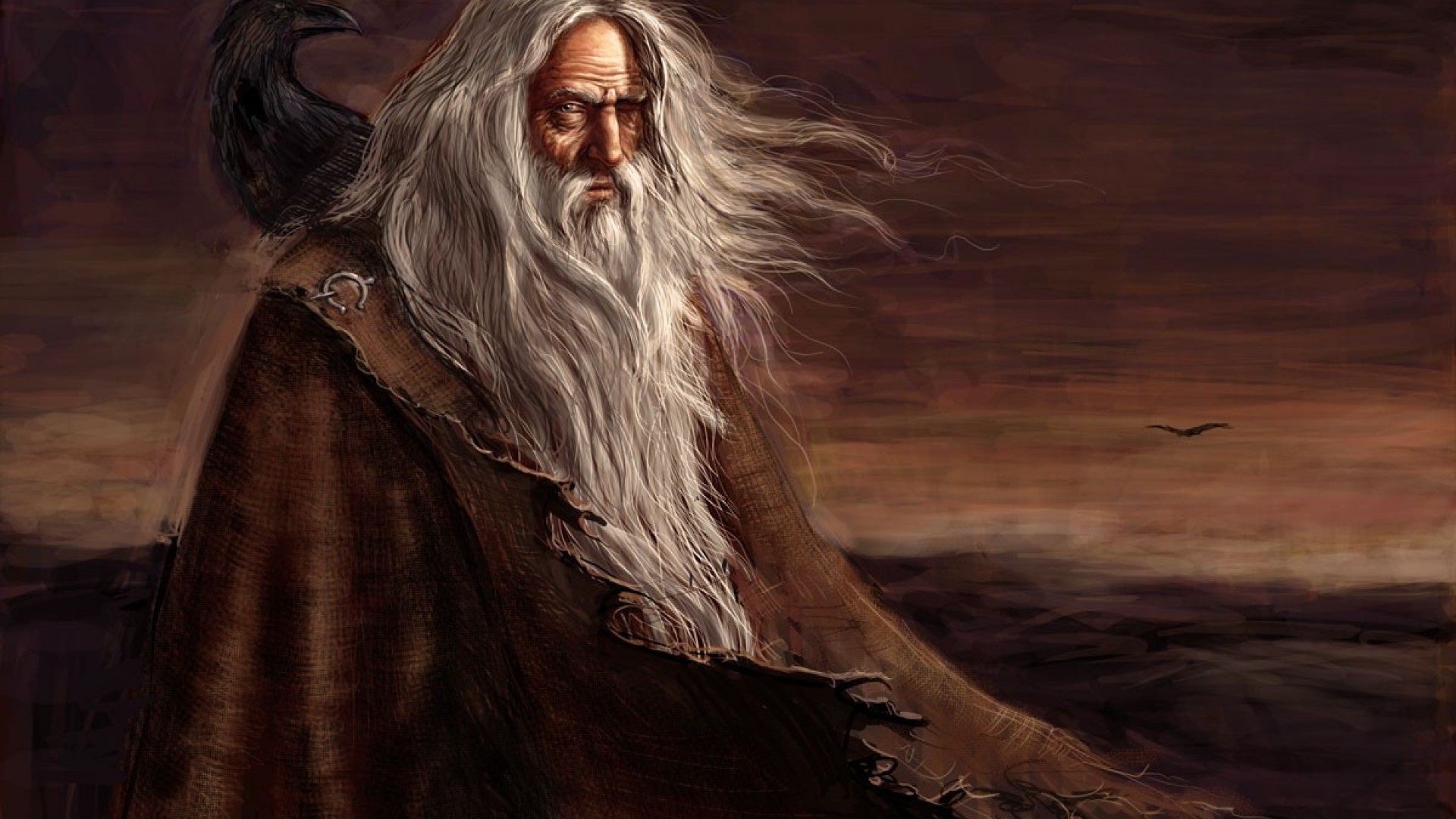
But another example of a Helpful Hag is not actually a wizened old woman at all...but, instead, an old man.  He frequently traveled the earth under the name of High.  While there, he would offer his aid to great heroes on quests.  This man was the Norse god Odin.

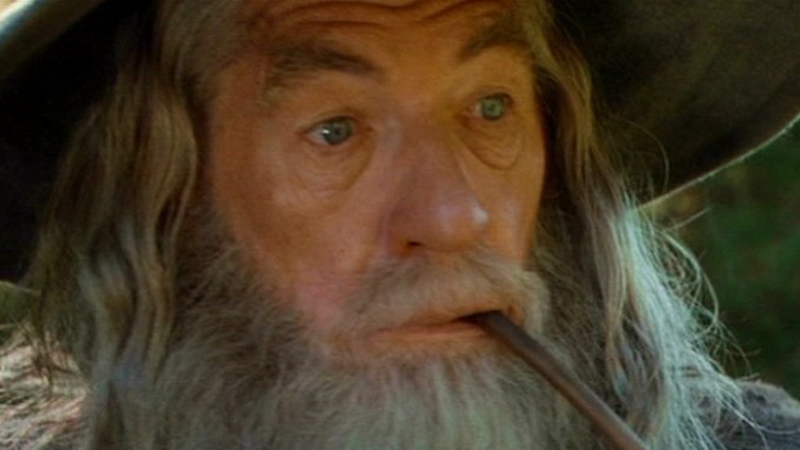
Now, Norse mythology has been the basis of inspiration for a number of authors (myself included).  One such author created a character based heavily upon Odin in his mortal disguise - someone who could aid the protagonist, but never be the main character himself.

This is all a very roundabout way to confess that yes, I am comparing Gandalf to a Helpful Hag.

Can you guys think of any story examples of the Kind Crone?  Little old women offering aid abound in stories of all sorts.  One of my absolute favorite examples is from Diana Wynn Jones' Howl's Moving Castle.  Jones recognized the archetype of the Helpful Hag and turned it onto its head.  The main character spends most of the book convinced that she can't be the main character, because she's too old to go off and have adventures - so instead, she must be the helper to everyone else.  What a surprise for her when she discovers the truth!

I'll be back next week!

Monday, December 19, 2016

Odin is Santa Claus

Hey guys! How are you doing? Did you see Rogue One yet? (I confess, I've already been twice and I'm going again on Thursday. Such a great Star Wars movie!!)

It's December, and a ton of holidays are about to kick off. Because of this, today's post and those of the next two weeks will each be taking a look at a different holiday.

Since Christmas Eve (and Santa's trip around the world) are less than a week away, let's take a look at the origins of the world's favorite fat, jolly man.


Except...Has he always been so fat and jolly? Could Santa Claus, good ol' Saint Nick, have his origins not in a Christian saint, but in a pagan deity?

The concept of Santa being Odin was first introduced to me in Jim Butcher's Dresden Files series, and the idea has stuck with me ever since. After a bunch of research, I finally decided to write up a post about the idea. Let's jump into it!

About this time last year I did a post about Yule, a Norse holiday which celebrates the end of the cold season and the returning of the sun. A large part of Yule revolves around worshiping Odin, who is sometimes called the Yule Father.

Part of Odin's role in Yule-time was the leading of the Wild Hunt. There are so many myths tied to this hunt that it unfortunately is somewhat difficult to explain. A common belief among many cultures is that the lands of the dead and the living are much closer together during times of equinox or solstice. Yule traditionally falls around the winter solstice. Some tales say that the Wild Hunt is a hunting party of monsters – such as witches and devils – who cross the barrier between worlds for this one night. Other stories say that the Wild Hunt is comprised of the souls of those who have died during the year, and that Odin is leading them into the next life. There are many variations in between those two extremes.


One near-constant amongst the Norse was the presence of Odin at the head of the Wild Hunt. Some old folk customs around Yule are tied to the god's presence.

Being American, a yearly tradition for my family is to leave out milk and cookies for Santa Claus. When I wake up on Christmas morning, the cookies have been eaten – and the stockings have been filled with presents. However, I have some friends whose family is Germanic, and they grew up leaving shoes stuffed with straw and carrots for Saint Nicholas' reindeer. The reindeer food disappears overnight, and when they wake up in the morning oranges and small toys are in their shoes instead.

Apparently this tradition stretches back beyond Christianity's influence on the Nordic folk. It was customary for small children to leave their shoes filled with hay and carrots around Yule – not for the reindeer or Santa, but for Odin and his horse, Sleipnir. Sleipnir would eat the goodies, and Odin would leave small presents in the shoes.  That's right - Odin and Santa are both known for distributing gifts to small children!


What I find most interesting about this whole theory is the explanation for how we went from Odin, riding atop Sleipnir, to Santa, with his chariot pulled by eight reindeer. Santa/Saint Nick has ridden many a creature in his travels throughout time and the world. Sometimes it has been a goat, or a donkey. Often it is a horse. The depiction of the reindeer did not appear until the early 1800s. The poem credited with introducing the eight reindeer is known in modern times as “ 'Twas the Night Before Christmas”, though it was called “A Visit from St. Nicholas” when it was first published in 1823. Why does the use of eight reindeer intrigue me so? Well, if you've read my previous posts about Odin, you might recall that Sleipnir has eight legs.
Imagine how different the poem could have been!
 
“When what to my wandering eyes should appear,

But Odin upon his great battle horse, Sleipnir!”

Perhaps the part that convinces me the most that Santa Claus has his roots in Odin lies in the appearance of the Christmas figure. Modern times have painted a picture of a jolly fat man, with a bushy white beard and a red suit. However, earlier pictures of Santa portrayed him as tall and slender – though he maintained the beard!  These depictions are eerily similar to those of the Norse god (as well as Gandalf, whom Tolkien based upon Odin. That's right – if this theory is correct, Gandalf is Santa!).


Again, if you've read my posts about Odin you might recall his tendency to wander the world disguised as an old human man, who roams about helping out mankind. That sounds rather like Santa Claus to me! More evidence of a connection between the two can be found in one of the most common myths about Santa Claus.

“He sees you when you're sleeping

He knows if you're awake

He knows if you've been bad or good -

So be good, for goodness' sake!”

In Norse mythology, Odin sacrificed one of his eyes for great wisdom and the ability to see into the future. He also possesses two ravens, Huginn and Muninn. Every day these ravens fly all over the world, and as the sun goes down they return to Odin to tell him everything they've seen. What better way to spy on children all over the world?
 
Personally, I think that the modern Santa Claus has been influenced by a lot of things. Christianity has certainly has certainly helped form his character, as has commercialism. Pop culture too has had a huge impact, as evidenced by Rudolph. Could Odin have been a part of the beginnings of Santa Claus' story? I'd like to think so. Even if you disagree, I hope this look at some of the parallels between the two has been interesting.
 
 
Merry Christmas and a happy Yule to you all! I'll be back next week with a post about Kwanzaa!

Friday, November 14, 2014

Odin: All-Seeing, All-Knowing...Allfather

Odin is the god of a lot of different things, not all of which seem to go together. For example, he is a god of war, of the sky, of death...and of poetry. I guess all those other things would provide material for poems, right? Odin is considered the father of all gods (hence the name Allfather). His wife is named Frigg, and two of his sons are Thor and Balder, although there are others.

If you’ve seen pictures of Odin, or seen him in a certain movie or two, you’ve probably noticed that he wears an eyepatch. Sadly, as far as I know Odin is not a god of pirates. Nor was his eye lost in a glorious battle against the frost giants. Instead, Odin voluntarily gave his eye to a being named Mimir.

I talked about the wells that water Yggdrasil in my last post. If you remember, one of the wells was kept by a being named Mimir I promised to talk about in this post. Mimir was a god that was sent to an opposing army as part of a hostage exchange. He ended up getting his head cut off. The severed head was then sent back to Odin, who preserved the head, allowing it to speak. Anyone else having creepy flashbacks to the Governor and Woodbury? Yeesh.

Anyway, Mimir was a very wise god, and he imparted his wisdom to Odin whenever asked. This wasn’t enough for Odin, though, so he traded one of his eyes to Mimir in exchange for possessing the knowledge himself. Odin’s eye is somehow placed at the bottom of the well by Mimir (seriously, how does a body-less head do that? And why?), making me NEVER want to drink from it.

So now you know that Odin is not a pirate (sorry to crush your hopes and dreams.) He does, however, have some awesome animal companions (no, not a parrot. Sorry again.) We’ve previously discussed Sleipnir, Odin’s eight-legged horse whose mother was Loki. Odin also has two wolves named Geri and Freki.

Because of this, Norse warriors believed a wolf on the battlefield to be a good sign from Odin. He also had two raven companions named Hugin and Munin, who flew around the world gathering information for him. This is yet another instance where Marvel got it right. My favorite scene from the Avengers (which is saying a lot) is when Thor kidnaps Loki from the plane and is talking with him. At the start of their conversation, two ravens can be seen flying past. SO cool.

Odin can often be found wandering Midgard (i.e., Earth) in various myths. He always wears a cloak and wide-brimmed hat when he does so, and frequently offers his aid to mortal heroes.

In fact, Odin is often seen as a benefactor to humans. He welcomes slain heroes in his palace of Valhalla, where he feasts them until the day of Ragnarok; he provided knowledge of runes to mankind; it was because of him that mead which grants the gift of poetry was spilled on Midgard, allowing humans to become poets.

Odin was a wise and just king who was kind to his subjects and ruled well. Unfortunately, his reign was not to last, for the Doom of the gods was fast approaching. Next time we’ll be talking about Ragnarok, so come prepared for a depressing post. As always, leave your questions and comments below, or feel free to email me. Until next time!