Showing posts with label Romulus. Show all posts

Monday, March 21, 2016

Romulus and Remus: Renegade Royalty

Hello all!  Spring break is over, and I've just had an 8-week Science Fiction Literature class begin.  I'm really excited for it, and it gives me the perfect lead-in for this reference!

My best friend is a Trekkie, so I feel obligated to put in a Romulan joke for this post.  As a fun side fact, a race called the Remans also exists in the Star Trek universe.  Much like the Romulans, they share a gene with the Vulcans.

Alright, sci-fi geekery aside, let's turn to mythology!

I talked briefly about the brothers Romulus and Remus in my post about Valentine's Day, but I wanted to delve further into their story.  The two are arguably some of the most important characters in Roman mythology, since their tale is the story of the founding of Rome itself.

The story begins with a king named Numitor, who had a beautiful daughter named Rhea Silvia.  Numitor ruled over a city in ancient Italy, and was a fair and wise king...but he had a jealous brother named Amulius who wanted that power for himself.

In a drastic coup, Amulius seized control of the city.  He overthrew and banished Numitor, and then killed his sons, leaving him with no rightful heir.  Knowing that any children born to Rhea Silvia would be descendants of Numitor with a legitimate claim to the throne, Amulius forced the young woman to take a vow of chastity, swearing to remain a virgin.

Enter the gods.

Now, I don't know if Mars was truly smitten with Rhea Silvia or if he took her vow of chastity as a challenge.  Knowing the gods, it might have been both.  At any rate, Mars (the god of war, and one of the most important deities in the Roman pantheon) visited Rhea Silvia and impregnated her.

Amulius was furious when he found out that his niece was pregnant - after all, the resulting sons would be a great threat to his reign.  As soon as Romulus and Remus (twin boys) were born he had them exposed, a term often used in mythology for leaving children out in the wilderness to die.  In this case, the boys were left naked next to the Tiber river.

(Rhea Silvia, for her part, was ordered to be drowned in the Tiber.  In some versions of the story she is killed, while in others she is saved by the god of the Tiber river and made his immortal wife.  One god wasn't enough for her, I guess?)

Exposing children is a very common theme in mythology...and those children often survive and come back to haunt those who exposed them.  Romulus and Remus were no exception.  Through a miraculous series of events, they survived exposure.  A female wolf who had recently given birth nursed the two boys and took care of them until they were found by a shepherd, who along with his wife adopted Romulus and Remus.


The two boys grew up happy and healthy, and served as shepherds alongside their adopted father.  They were strong, and soon proved to be natural leaders.  As young men they gathered other youths from the villages around them, and eventually took to adventures outside of shepherding.

In essence, the two young men became Robin Hoods, robbing from the rich and giving to the poor.  I have wondered at times if they were the basis for the Robin Hood stories.

However, Romulus and Remus had one distinct difference from Robin Hood.  Instead of robbing from nobles, they robbed from other robbers and brigands.  The two brothers took great delight in robbing a group who had just committed successful robberies of their own, and then redistributing the goods to those who needed them most.
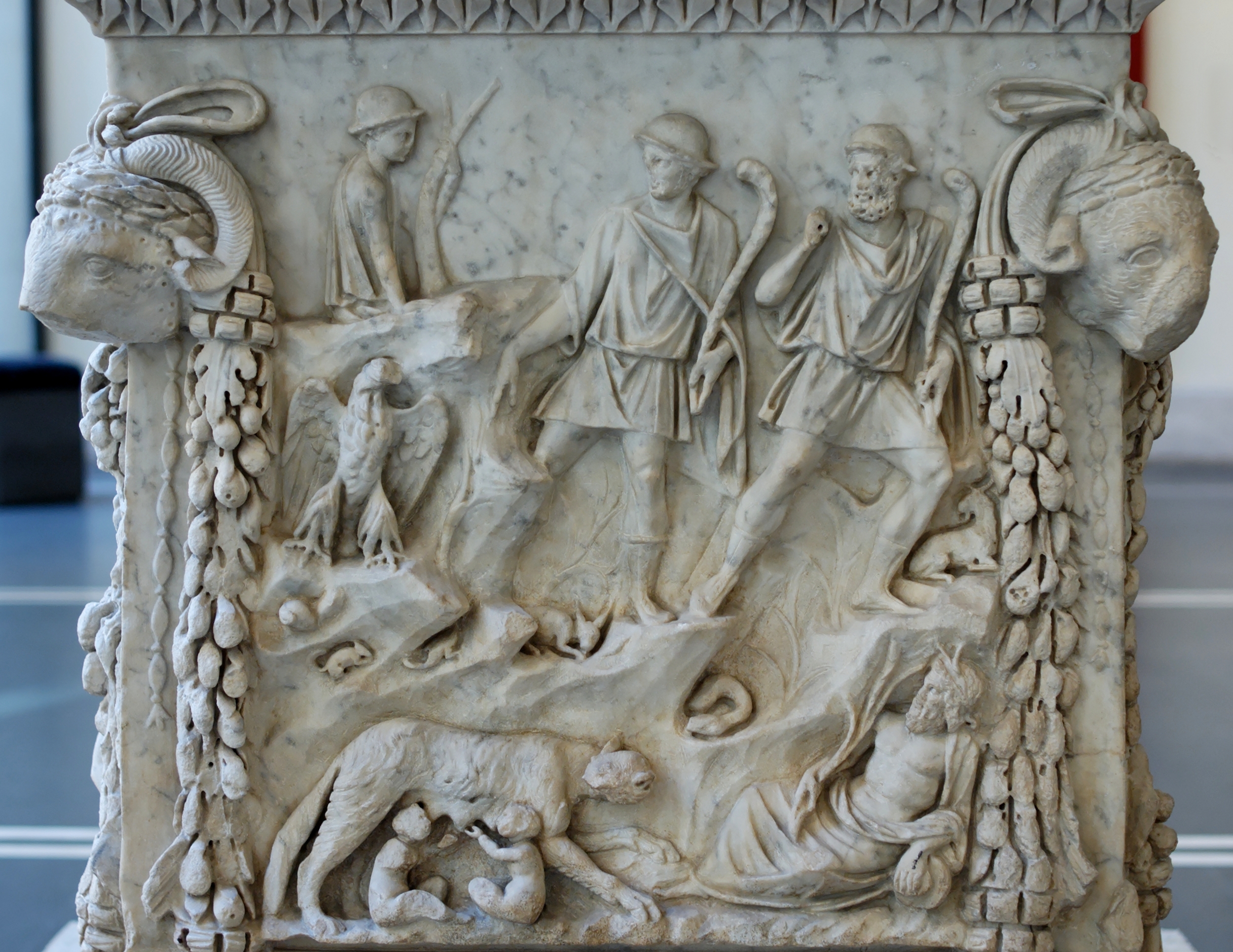

The robbers who were not part of our band of miscreants eventually grew tired of being mugged.  They plotted a trap for Romulus and Remus' group and sprang it one night while the young men were out drinking and partying at a festival.  In the confusion of the fight Remus was captured by the brigands.

Remus was taken by the bandits before King Amulius, though no one was aware of the duo's relationship.  The cunning thieves accused Remus and his band of the crimes that they themselves had committed - namely, robbing the lands of Numitor, who had begun to rule over a small section of land after his banishment.

Amulius was unconcerned with the accusations put forth against Remus - after all, it wasn't his lands that were being robbed.  He told the bandits to go and tell Numitor of the crimes, and so they dragged Remus to the lands of Numitor and brought him before the old man.

Numitor hardly paid attention as Remus was accused of robbing his lands.  The old man was too struck by something he saw within the young man.  Some stories I've read say he recognized his daughter Rhea Silvia in Remus.  Others say that he recognized something kingly in Remus' bearing.  Either way, Numitor began to wonder if perhaps the young man might be his grandson...particularly when he was told that Remus was a twin, since he had known of Rhea Silvia's having given birth to two sons.

Curious, Numitor ordered everyone except for Remus out of the room, desiring to question the lad alone.  His plans were foiled when Romulus burst into the room with his adopted father, both having come to save Remus.  Between the four of them the men managed to piece everything together, and Numitor was overjoyed to be united with his stepsons.

The youths had grown up without knowing of their royalty, or of their mother.  When Numitor told them of how Amulius had stolen his throne and had their mother killed, Romulus and Remus were furious.

To make a long story short, the two young men killed Amulius and retook his throne, avenging the death of their mother.  They bestowed his kingdom upon its rightful ruler, Numitor, and then left to found a city of their own.

Here is where tragedy enters the story.  Romulus and Remus could not decide who should be the rightful king of the city they were constructing.  They were twins, so neither had the definitive birthright to the throne.  They decided that they would each stand atop a hill and watch for a sign from the gods, and whoever received the sign would become king.

Unfortunately, both men received what they took to be signs, and so they began to argue about which sign was better.

Ahh, the joys of sibling rivalries.

In the end, Romulus decided that the city should be his and so began to construct a stone wall.  Remus, mocking his efforts, leapt over the wall to show how easily the city could be taken.  In a fit of anger Romulus struck his brother down, killing Remus for his insolence.
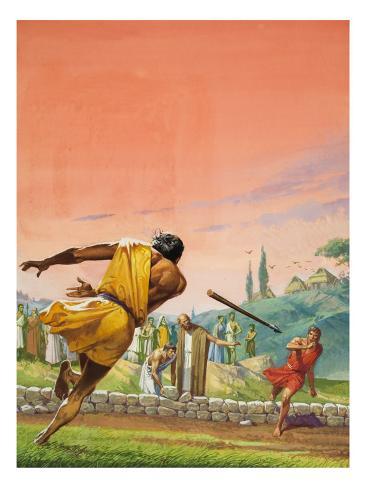

He then declared that such a fate would meet any who dared attempt to storm the gates of the city.

That city, named in his honor, was Rome.

I hope you guys enjoyed the story!  I'll be back next week with a special holiday post.  See you then!

Sunday, February 14, 2016

Valentine's Day: Hearts, Wolves, and Christianity

Hey guys!  Given our proximity to Valentine's Day, I thought that I would interrupt our series on Egyptian mythology to take a look at the origins of the holiday.
 
To accomplish that, we'll have to take a look at several different things.  An ancient Roman festival called Lupercalia (a reference to which appears in Shakespeare's works), the story of Saint Valentine, the holidays of Candlemas/Groundhog Day, and the modern celebration distilled from all of those shall all be discussed in this post...along with several gods and goddesses from Roman mythology.
 
Interested?  Awesome!  Let's get started, then.
 
Lupercalia
 
Blood is crimson
Milk is white
Central to a holiday
Long out of sight.
 
Sorry.  I tried, alright?  Poetry and I are not close associates.
 
Alright!  So, Lupercalia.  Lupercalia was an ancient festival in Rome, celebrated around February 15th.  I know I haven't begun my series on Roman mythology yet, but the celebration was closely tied to several figures from the myths.  The most prominent of these are Romulus and Remus.
 
I'll talk more about the duo when I do a post about them, but let me give you the basics.  Romulus and Remus were born the children of Mars, god of war, and a woman who was sworn to be a virgin.  These twins were the rightful heir to the throne.  Enraged by their birth, the relative who had seized the throne and forced their mother to take the oaths of virginity in the first place had the babies abandoned, exposed by a river to die.
 
Instead, the two boys were found by a female wolf, one who had recently had pups of her own and was lactating.  She suckled the boys and raised them until they were taken in by a human shepherd.  The cave where she is said to have cared for them is called the Lupercal.

 
Romulus and Remus went on to become the founders of Rome (though one of them was killed by the other).  They were exceptionally powerful, virile young men, and this aspect of their personality is glorified in the celebration of Lupercalia.
 
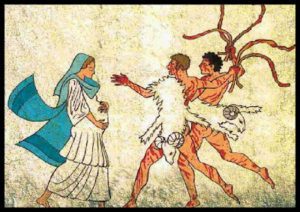
The religious rituals during the celebration of Lupercalia are quite interesting to me.  At the beginning of the festival priests would gather in the Lupercal and sacrifice both a goat and a dog.  Two young males would then strip down to loincloths.  The blood of the goat and the dog was smeared onto their foreheads, and then wiped away by a cloth dipped in milk.
 
The use of the goat and the dog as the sacrificial animals interests me.  The goat was associated with both virility and lust.  The dog was seen as a protector of fields and herds.  Lupercalia was both a fertility festival, and a festival of protection - the young men who had blood and milk both smeared across their foreheads ran around the boundary of Rome to place a circle of protection around the city.
 
(I feel that here I should point out the two dominant colors of the holiday so far - red and white.  Both colors are often seen on modern Valentine's Day cards, but I was quite amused to find the reason behind those colors while researching for this post.  As one sourcebook I have says, assuming that Valentine's Day has its origins in Lupercalia...
"If this is the case, then the red that dominates so many modern Valentine cards may have derived from the sacrificial blood of the Lupercalia."
Think of that the next time you send a card to your sweetheart!)
 
The sacrificial goat was used for another purpose.  It was skinned, and its hide was used to make whips for both of the young men.  The men would then run through the city, still clad only in loincloths, and whip everyone that they saw.  These whips were called februa, and women very much wanted to be whipped, as it was believed that a lashing from the goat-skin could make them more fertile.


This practice in referenced in Shakespeare's Julius Caesar, in which Antony is advised to whip his wife during the holiday to cure her barren womb.  I thought that was a very interesting reference.
 
A few more tidbits of information about Lupercalia, and then we'll move on:
 
I discussed in a post about Greek mythology the story of Hades, Demeter, and Persephone.  The same tale can be found in Roman mythology, with the names replaced as Pluto, Ceres, and Proserpina.  A very brief rundown of the story is that Proserpina represents spring, while her mother Ceres is goddess of the harvest.  When Proserpina is carried to the Underworld to be the bride of Pluto, Ceres mourns for her and refuses to tend to her divine duties, allowing all plant life to die - thus causing winter.  Ceres wanders the earth in search of Proserpina, eventually managing to find her and return her to the earth for part of each year.
 
This tale is celebrated during Lupercalia, since it is a fertility festival and harvest deities are generally associated with fertility.  The celebration revolved around a torchlight procession, meant to represent Ceres searching for her daughter.  We'll talk a bit more about that in the next section of this post.

 
Lastly: Before the beginning of the festival it was common for a box to go around with the names of all of the young women.  The men would each pick a name from this box, and the girl whose name they chose would be paired with them for the celebration of Lupercalia.  This becomes a very important link between holidays as we move to:
 
Candlemas/Groundhog Day
 
Candlemas has its origins in the feast of Lupercalia.  It is intricately tied to the procession representing Ceres' search.  When Christianity and the church arrived in Rome they took issue with the pagan rituals they found in Lupercalia and sought to change them to something more appropriate to the church.
 
This led to the creation of Candlemas.
 
There is a tradition in Jewish culture that the firstborn son of a family is taken to the Temple to be dedicated to God 40 days after his birth, with a sacrificial offering taking place.  After the birth of Jesus, Mary took Him to be dedicated 40 days after His birth.
 
Candlemas is celebrated on February 2nd - 40 days after Christmas.  The celebration is marked by a procession in which the people all hold candles - replacing the torches used in Lupercalia.
 
(While this doesn't necessarily tie into Valentine's Day, I thought it was interesting to note that Candlemas eventually became Groundhog Day.  On this day in the US a groundhog is checked upon.  Whether or not it can see its shadow determines whether winter is still in swing or if spring is coming.  This tradition can be found in many countries, though groundhogs are not always the animals used - sometimes they are a hedgehog, a badger, or "the Candlemas Bear".  Kind of cool, right?)

 
You might be wondering why I'm mentioning Candlemas and Groundhog Day in a post about Valentine's Day - after all, wasn't Groundhog Day on February 2nd?  Well, according to what I've read Groundhog Day was originally held around February 14th, before shenanigans occurred as the type of calendar used was changed in some parts of the world.

All of this ties together to bring us to the original reason for the post...

Valentine's Day

As is the case with so many holidays, a lot changed once the church arrived.  The Christian leaders of the early part of this millennia looked at the pagan rituals of Lupercalia and were horrified by what they saw.  The Pope at that time (469AD), one Pope Gelasius, decided to set aside the day of February 14th to honor a Saint who had been martyred on the same day centuries earlier.  That Saint was Valentine.

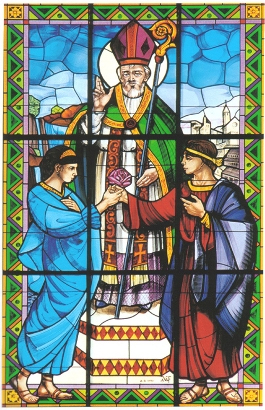
There are a lot of stories attached to Valentine.  He was a Christian living in Rome who refused to renounce his faith in God, and so was executed as punishment.  This was enough to make him a martyr, and he was later made a saint because of it.

However, stories also say that Valentine was associated with several romantic legends.  According to some he married young couples in love during a time when marriages were forbidden by the emperor (don't ask me why).
 
 
In others Valentine fell in love with a young woman who was blind.  His faith allowed her sight to be restored, and before he was executed he left her a note signed "From your Valentine."

This last story particularly suits Valentine's Day, though I have no idea how accurate it is.

Regardless of his accomplishments in life, Valentine was the saint tied to February 14th.  The day was declared the Feast of St. Valentine, later shortened to Valentine's Day.

The way Valentine's Day was celebrated changed throughout the centuries, but it retained many links to its earlier origins.  The Lupercalia tradition of drawing names from a jar to assign sweethearts remained, though those who were drawn were now dubbed valentines.

The cards which we now call valentines actually did not appear commercially until sometime around the 1800s, though records exist of individuals creating them long before - for instance, a Duke named Charles who was imprisoned over Valentine's Day wrote poems and sent them to his wife around the holiday.

Speaking of valentines...let's complicate matters a little more and throw in some:

Roman Mythology

Now, today a lot of valentines have ties to modern pop culture.  I myself gave out Star Wars valentines this holiday.  In the past I've handed out Avengers ones, Harry Potter ones, Pirates of the Caribbean valentines, additional Star Wars ones...you get the picture.  Tiny pieces of paper with geeky images and bad, vaguely flirtatious jokes are the norm now.

(I rest my case.)
 
But older valentines (and some of the classier ones, in addition to cards, that are around today), along with the thematic images still associated with the holiday, have their roots in Roman mythology.  Let's take a look at two things: doves and Cupid.

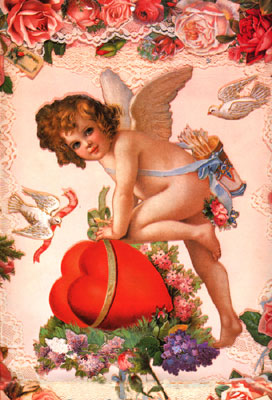
Doves are also called lovebirds.  These birds can be seen on many cards, balloons, and valentines around Valentine's Day.  Doves mate for life, and so are considered very romantic.  This is part of why they're tied to the holiday of Valentine's Day, but the other reason has to do with Roman mythology.  You see, doves were considered a sacred symbol of Venus, the goddess of love, and were offered to her as sacrifices.

Speaking of Venus...the Roman goddess of love is the mother of Cupid, god of love.  You can read more about Cupid in my post about him, but suffice it to say that he was not always depicted as the chubby winged baby with a bow and arrow that now graces many a card.  I've read theories that the god gained this appearance as Valentine's Day grew more commercial in order to better market to women, and that may or may not be so.

Still, a chubby baby he remains on most cards.  Cupid was famous in mythology for his skills with a bow and arrow - not because he was a fantastic archer, but because of what his shots could do.  Anyone struck with an arrow fired by Cupid would fall in love with the next person they saw.

This is another symbol commonly associated with Valentine's Day - that of a heart, pierced by an arrow.

(Behold!  Doves, heart, and Cupid!)
 
I hope you all enjoyed this post!  Did you enjoy your Valentine's Day?  What did you think of the origins of the holiday?

I'll see you next week with a return to the myths of Egypt!