Hello all! How's your week going? For those of you about to start finals, I wish you the best of luck. If you're swamped with homework, hang in there - the end of the semester is in sight!
(On a non-mythological note...Star Wars. Less than two weeks. AAAHHHH!)
I've got two stories left that I want to tell about Maui. Next week's will be one of the more interesting posts I've done. For this week, however, I want to talk about fire. There's a lot of variations on the story of how Maui stole fire, so I'll do a post about one story and then link you to another.
Having already raised the Polynesian islands and tamed the sun, one might think that Maui had done enough for humanity. But no! The hero was not yet done. He wanted to be of more help to mankind. So Maui decided that he was going to set out to steal fire, so that humans could warm themselves by its flames, cook their food, and have light even at night.
(Sound familiar? The Greek Titan Prometheus stole fire and distributed it to mankind.)
Maui went to visit Mahuika, the goddess of fire. He asked her to send some fire with him so that he could light the villages of man. Mahuika obligingly plucked out one of her fingernails - which was an ember - and gave it to Maui.
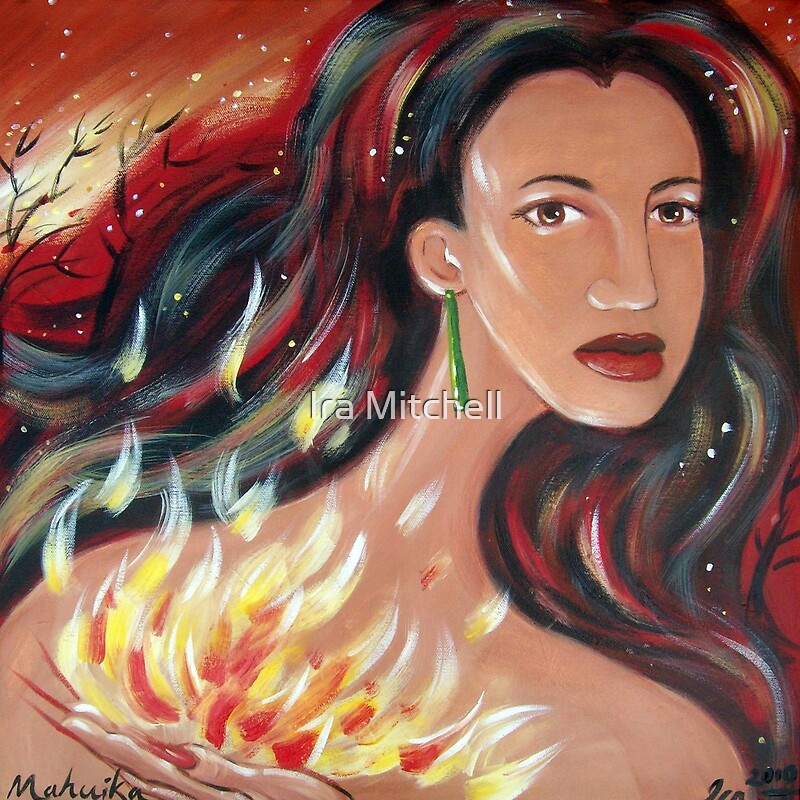
Remember that Maui is a trickster? He didn't just take the fire back to humans and call his trip a success. No, he had to figure out some way to trick Mahuika. So Maui left the cave she called home, and, as soon as he was out of sight, extinguished the nail she had given him. The demigod then reentered Mahuika's home and asked for more fire, since the last one had gone out.
Mahuika suspected nothing, and gave him another of her fingernails. This continued until she eventually had only one left. By now the goddess knew that she was being pranked, and she wasn't happy. She threw the last fingernail at Maui, but it caught on some dried wood and created a massive flame.
The demigod was able to escape, but Maui had learned the secret of fire. He returned to mankind and was able to teach them how to create flames of their own using dried wood.
That's the story I learned for how Maui found fire. If you want to read another, here's a link! In it, Maui is even more of a trickster - mankind already had fire, but he wanted to know where the flames came from, so he extinguished all of them to find out.
Interestingly enough, a couple of the Polynesian tribes in New Zealand have a variant on this story where Mahuika is actually Mahu-ika, and is a male giant. In their stories Maui wrestles the giant and eventually breaks his neck, then beheads him to take a spark of flame (which sets the world on fire, endangering everyone until the gods step in to save the day).
I find the way Mahuika's home is described fascinating, because it sounds to me like she lives inside a mountain. Though I've only ever heard her called the goddess of fires, I wonder if she's associated with volcanoes as well. The small sparks of flame (her fingernails) culminating in a huge woodland fire sound like a volcano spitting lava.
What do you guys think?
I'll be back next week with my final (and hilarious!) story about Maui. See you then!
Monday, December 5, 2016
Monday, November 28, 2016
Maui and the Taming of the Sun
Hello all! Welcome back to my series of posts about the Polynesian
hero Maui!
I hope that my American readers had a lovely Thanksgiving week. Did anyone get a chance to go and see Moana? I still haven't, but I've heard some really great things about it from my friends! I'm looking forward to checking it out (hopefully) over winter break.
Alright, on to this week's story!
I hope that my American readers had a lovely Thanksgiving week. Did anyone get a chance to go and see Moana? I still haven't, but I've heard some really great things about it from my friends! I'm looking forward to checking it out (hopefully) over winter break.
Alright, on to this week's story!
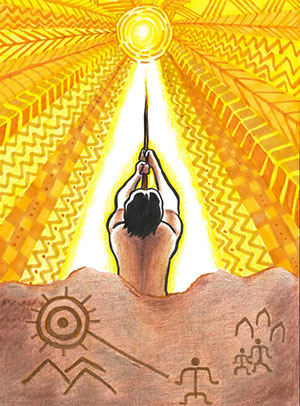
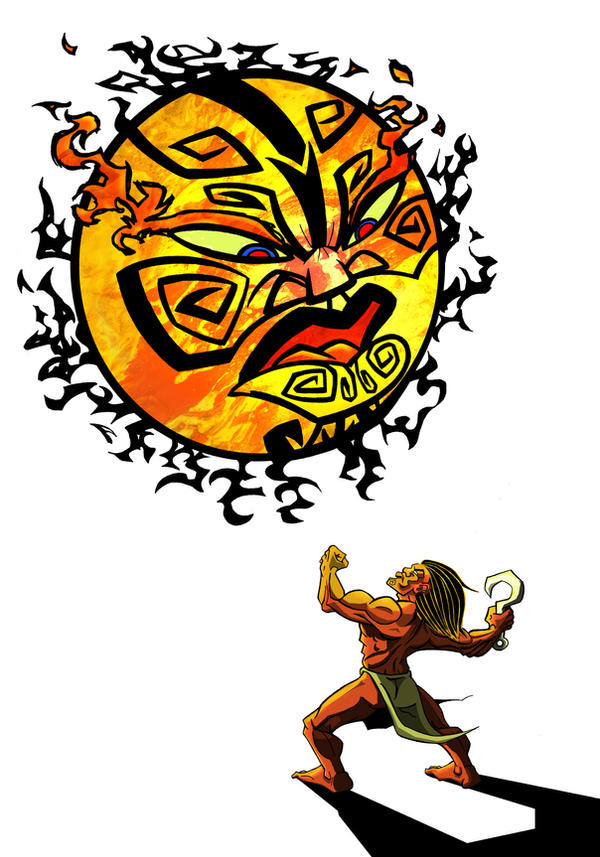
Many Polynesian cultures have stories about Maui beating up the sun.
That is the tale we're going to examine today. It helps to
demonstrate that Maui is a compassionate demigod, even if the ways he
shows that compassion are a little...violent.
Long ago there was a time when the days were exceptionally short.
The sun moved quickly across the sky, and daylight fled before
daytime tasks could be completed.
This issue came to Maui's attention. His mother complained that
there was not enough time for her to dry her kapa (a type of fabric
made out of bark). Other mortal women in the villages raised the
same complaints. Upon hearing of their troubles, Maui determined to
make the sun move more slowly so that the women would have more time
to complete their tasks.
There are several variations on how he accomplished this task. In
some versions of the story, Maui creates a lasso of sorts out of a
female relative's hair. In others, it is his own hair that he uses
to catch the sun and drag it towards him.
With the sun ensnared, Maui proceeds to beat it into submission.
Several cultures say that he uses the magical jawbone of his
grandmother to accomplish this task – how's that for a mental
picture? (One version of the story I read even said that he starved
his grandmother to death and took her jawbone for his weapon – but
that was only one version of the story, so I'd take it with a grain
of salt. None of the others mention him murdering his ancestress.)
The weakened sun is completely intimidated, and more than willing to
give in to Maui's demands. Because of the demigod's actions, the sun
begins to travel more slowly across the sky. Days are longer, and
the women have the time they need to complete their chores.
What do you guys think? Maui was so nice and helpful for his mama!
(This picture had a bit more of a Greco-Roman feel to the armor, but I really love the concept and artwork.)
So the good news is that I have successfully completed NaNoWriMo! That means that I'm no longer trying to cram 50,000 words into this month. I'm still swamped with papers and finals for school, but I've got more time to devote to posts now. That's very good news, because today's post is the last I had pre-written!
I'll be back next week with another post about Maui! See you guys then.
Monday, November 21, 2016
Maui and the Raising of the Islands
(It was so tempting to name this one “Go Fish With a Demigod!”)
Howdy all! I hope you had a lovely week. I'm back today with a story about Maui, a Polynesian demigod whose actions literally shaped the lands the Polynesians live upon – at least according to their stories!
Shall we begin?
The Maori, Hawaiians, and the Te Arawa of New Zealand are a few of the cultures who have stories about their homeland being raised from the depths of the ocean by Maui. It must have taken several fishing trips to raise all of those islands!
The stories usually say that two of Maui's brothers were going on a fishing expedition. The demigod asked to join them, and tagged along in their boat. After a day without catching anything, the brothers began to nod off. Before they fell asleep, Maui asked them to not make any noises, as they might startle his catch.
In some versions of the tale, Maui used his own blood as bait. In others, the fishing hook he used was the enchanted jawbone of his grandmother ('cause that's not disturbing at all!).
Whatever he used, Maui was ultimately successful. His line grew taut with the weight of his catch. He began to haul upon the rope.
Whatever spell Maui had cast was broken. The land fell off of his hook, only partially out of the water. The Polynesians of New Zealand use this to explain why their islands are so lopsided compared to the rest of the landmass. I've heard Hawaiian stories claim that the multiple islands are because the land fell off of Maui's hook one piece at a time.
In each story, Maui was only partially successful. He had raised land from the depths of the ocean...but not as much as he wanted.
Thanks for reading guys! I hope you enjoyed the post. Moana comes out this week - if you go see it, please let me know how it is! I'm wondering how many mythology references will be in it.
Have a good week, and happy early Thanksgiving to all of my American readers! I'll be back next week with the tale of how Maui beat up the sun. See you then!
Howdy all! I hope you had a lovely week. I'm back today with a story about Maui, a Polynesian demigod whose actions literally shaped the lands the Polynesians live upon – at least according to their stories!
Shall we begin?
The Maori, Hawaiians, and the Te Arawa of New Zealand are a few of the cultures who have stories about their homeland being raised from the depths of the ocean by Maui. It must have taken several fishing trips to raise all of those islands!
The stories usually say that two of Maui's brothers were going on a fishing expedition. The demigod asked to join them, and tagged along in their boat. After a day without catching anything, the brothers began to nod off. Before they fell asleep, Maui asked them to not make any noises, as they might startle his catch.
In some versions of the tale, Maui used his own blood as bait. In others, the fishing hook he used was the enchanted jawbone of his grandmother ('cause that's not disturbing at all!).
Whatever he used, Maui was ultimately successful. His line grew taut with the weight of his catch. He began to haul upon the rope.
In
some versions, Maui's brothers woke up and began to row backwards at
his command, helping him drag up his catch. Unfortunately, upon
seeing that Maui was hauling up not a fish, but a land
mass,
the brothers broke their silence. Despite Maui's warnings, they
exclaimed their shock.
Whatever spell Maui had cast was broken. The land fell off of his hook, only partially out of the water. The Polynesians of New Zealand use this to explain why their islands are so lopsided compared to the rest of the landmass. I've heard Hawaiian stories claim that the multiple islands are because the land fell off of Maui's hook one piece at a time.
In each story, Maui was only partially successful. He had raised land from the depths of the ocean...but not as much as he wanted.
Thanks for reading guys! I hope you enjoyed the post. Moana comes out this week - if you go see it, please let me know how it is! I'm wondering how many mythology references will be in it.
Have a good week, and happy early Thanksgiving to all of my American readers! I'll be back next week with the tale of how Maui beat up the sun. See you then!
Sunday, November 13, 2016
Maui the Shapeshifting Wonder
Hello all! I'm back with another Polynesian mythology post!
If you've seen the previews for Disney's Moana, you may have seen
Maui transforming into a bird. It looks awesome and it makes for a
really cool character concept – but it's also accurate to the
myths! Let's take a look.
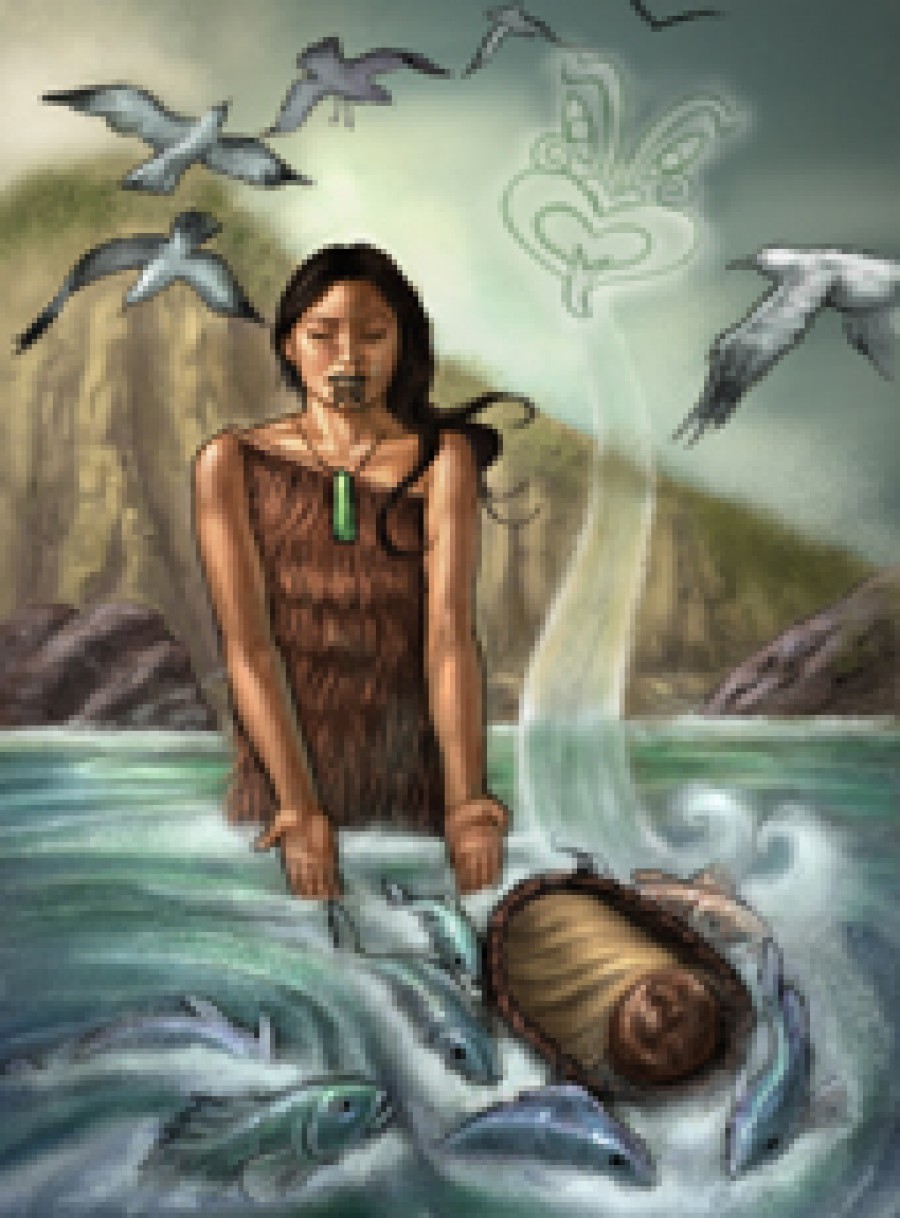
Our story begins with the birth of Maui. He was born prematurely,
and did not survive the birth. The baby Maui was wrapped in locks of
his mother's hair, and thrown into the ocean.
His mother's prayers on his
behalf drew the attention of the gods, who rescued Maui and restored
him to life by their fire.
When he was a young boy Maui decided that he wanted to return to his
birth family. His mind made up, the young demigod set out to find
his mother.
There's two variations of the story that I know of (though I'm sure
there are more!).
In one tale, Maui returns home and finds his brothers there. They
are wary of the newcomer, not knowing that he is their brother. Maui
eventually wins their favor by shapeshifting himself into several
kinds of birds.
Impressed by this, the boys become friends.
One night Maui is at a party with his brothers. When the event ends,
his mother has the boys line up so that she can count them all before
taking them home. To her surprise, she finds an extra child with
them – Maui! At first she ignores his claims that he is her son,
but when he tells her the story of his birth, she knows that Maui is
her lost child. At once the mother accepts him into her home.
The second version of the story is much the same as the first. In
it, Maui wins the favor of his brothers – though without
shapeshifting. He also attends the party and reunites with his
mother in the same fashion. After that the story becomes rather
different than the first.
Maui returns home with his family and sleeps in their house. He
discovers that his mother disappears each morning, and none of his
brothers know where she goes. Determined to find out, Maui blocks
the light from entering the house. Because the sun does not enter
the house the next morning, his mother oversleeps. When she wakes up
and realizes that she is late, she rushes from the house, not taking
care to cover her tracks.
The curious Maui shapeshifts into a bird – shocking and delighting
his brothers – and follows her. His mother unknowingly leads him
to a garden, where he finds her working alongside a man: his father!
Maui perches in a tree above the man's head and drops berries onto
him until his father takes note. Only then does Maui shapeshift back
into his human form. His mother explains who he is, and so Maui
meets his father for the first time.
While both stories are different, they show Maui shapeshifting at a
very young age.
Kind of a cool power to have, right? I'm very much looking forward
to seeing Maui shapeshifting in Disney animation!
See you next week!
Monday, November 7, 2016
Intro to Polynesian Mythology
Hey guys! I hope you're all doing well! This past weekend was Tucson Comic Con, so I am exhausted from vending and desperately trying to catch up on homework. Still, I had a blast! Thanks to everyone who stopped by to see me.
Because there are so many cultures under the name Polynesian, their mythology varies drastically at times. Their deities can have completely different names, but have the same stories – or have different stories, but the same names across cultures. Each group has myths that are unique to them; each also has stories that one can see tie into stories from other groups.
One character appears in all of the cultures I have looked into: Maui.
Maui is a trickster – and we've seen several of those across mythologies! Unlike the Norse Loki and the Japanese Susano, Maui is not antagonistic to mortals. He can be boastful and reckless, but he cares for humans and strives to help them. In so doing, he has more in common with the Greek trickster god, Hermes. Interestingly enough, Maui is not a full deity; he's only a demigod.
Maui is set to be one of the main characters in Moana, voiced by Dwayne Johnson. (I'm super excited for this casting for two reasons. 1: The Rock is in a Disney movie? I get to hear him sing?! Heck yes!! 2: Johnson actually has Samoan ancestry, so he's portraying a character from the stories of his ancestors. I love that!)
(By the way – one of the islands of Hawai'i is named Maui. If you want to look up more stories about the demigod, make sure and specify! Otherwise you'll end up looking at pictures of islands.)
For the next
several weeks I'm going to be doing a series of posts about
Polynesian mythology. Besides the fact that the mythology is
gorgeous, there is a reason for this: Disney's upcoming movie, Moana,
draws heavily from Polynesian myths. It's set to release on November
23, and I thought it would be neat to give my readers an introduction
to some of the stories their film might draw upon.
So, first things
first: What do I mean when I say Polynesian mythology?
The phrase
“Polynesian” covers a wide range of cultures, from the Samoans,
to Hawaiians, to groups living in New Zealand and Australia.
Polynesian culture is centered around a group of islands in the
Pacific. Many of the cultures traveled by boat, allowing them to
spread to other bodies of land – which is how the culture arrived
in New Zealand and Australia.
Because there are so many cultures under the name Polynesian, their mythology varies drastically at times. Their deities can have completely different names, but have the same stories – or have different stories, but the same names across cultures. Each group has myths that are unique to them; each also has stories that one can see tie into stories from other groups.
One character appears in all of the cultures I have looked into: Maui.
Maui is a trickster – and we've seen several of those across mythologies! Unlike the Norse Loki and the Japanese Susano, Maui is not antagonistic to mortals. He can be boastful and reckless, but he cares for humans and strives to help them. In so doing, he has more in common with the Greek trickster god, Hermes. Interestingly enough, Maui is not a full deity; he's only a demigod.
Maui is set to be one of the main characters in Moana, voiced by Dwayne Johnson. (I'm super excited for this casting for two reasons. 1: The Rock is in a Disney movie? I get to hear him sing?! Heck yes!! 2: Johnson actually has Samoan ancestry, so he's portraying a character from the stories of his ancestors. I love that!)
Because of this, I've decided to spend the next several weeks doing
posts about the adventures of Maui. At times he is triumphant, his
actions heroic. Other times his stories seem more like those of a
braggart. And though he tries his hardest to save mankind, failure
awaits him in the end.
(By the way – one of the islands of Hawai'i is named Maui. If you want to look up more stories about the demigod, make sure and specify! Otherwise you'll end up looking at pictures of islands.)
I'm really looking forward to this, guys! I'll see you next week.
Sunday, October 30, 2016
Diwali: The Festival of Lights
Hey guys!
Variations of Diwali are celebrated all over the world by Hindus, with the celebration taking on its own unique customs based on the country of celebration. An example is Tihar, a holiday similar to Diwali which is celebrated in Nepal. Though Tihar also honors sacred animals, it maintains many of the festivities of Diwali. Most similar is the practice of gambling and games of chance during Tihar (both of which are illegal during the rest of the year, but are allowed during the holiday) and the lighting of oil lamps to welcome Lakshmi, goddess of wealth, into a family's home.
If you're celebrating Diwali this year, I wish you a very happy one - and I'd love to see pictures! Want to learn more about the festival? Check out this link!
Tomorrow is another holiday, so if you'd like to read my post about Halloween/Day of the Dead/Samhain, check it out here.
I'll see you guys next week!
Today I'm doing a special holiday post.
That's because it's Diwali – the Hindu Festival of Lights!
If you're not familiar with the name,
you may have also seen it spelled as Dewali, Divali, or Deepavali.
I'll be sticking with Diwali in this post, but depending on where it
is celebrated it can be called by different names. Diwali is
celebrated all over the world, wherever Hindus worship. The holiday
marks the beginning of the New Year for Hindus in northern India.
I regret to say that I had never heard
of Diwali until about two months ago. I went to look at something on
Etsy and they were advertising gifts for Diwali. I was immensely
intrigued, and I've truly enjoyed looking into it! Diwali is a
beautiful festival.
Here's some of what I've learned:
Gambling and games of chance are a
major part of the festivities of Diwali. Stories in Hindu mythology
tell of mortals gambling with the gods, or of the gods gambling with
one another. When humans gamble during Diwali, it is hoped that
Lakshmi, the goddess of wealth, beauty, and luck, will grant them
some of her good fortune.
Besides gambling, Diwali celebrations
are marked by two truly beautiful visual celebratory acts. The first
are a series of patterns called alpanas. Only some regions of India
make alpanas part of their celebration, but some of the places which
do hold yearly competitions to find the most beautiful. Aplanas are
designs painted on the floor, traditionally using a flour-based
substance. I've also seen a similar style of floor art called
rangoli. These patterns are believed to bring good luck the
household...and they are beautiful.
(This pattern was called "simple". I can't imagine painting something like that - let alone a more complicated pattern!)
Yet it
is the second act for which Diwali is perhaps most famous.
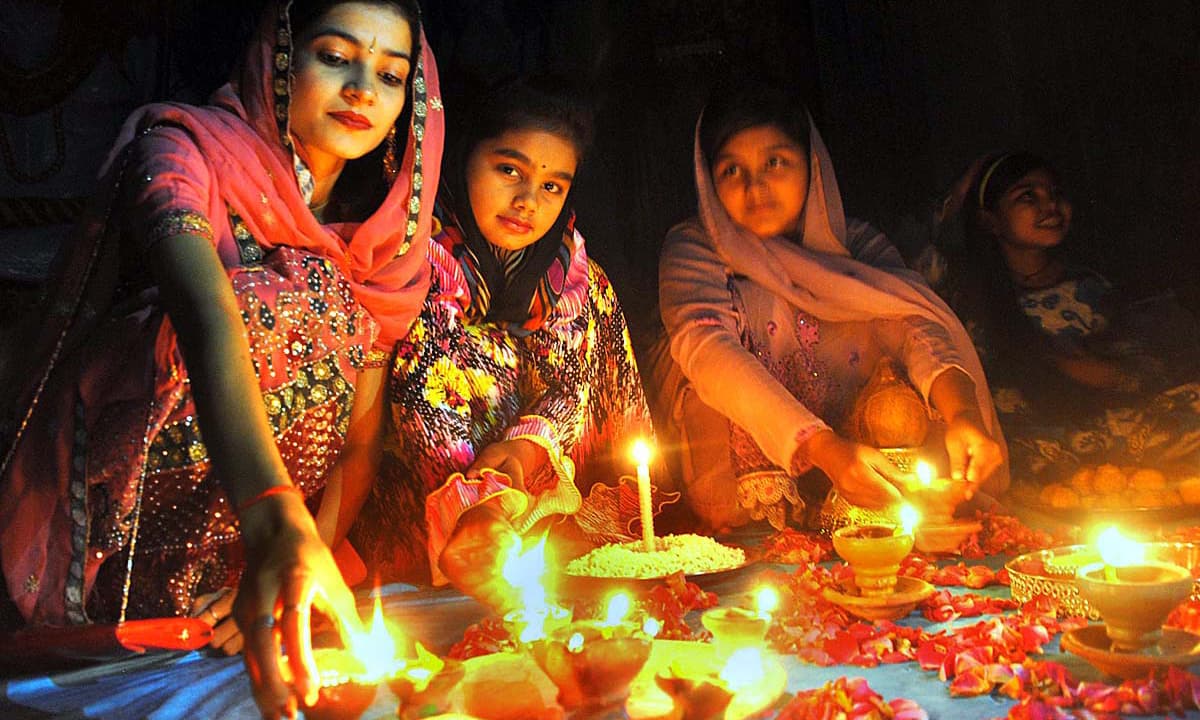
Throughout the celebration, there are lights everywhere. In recent
years electric bulbs have begun to be used, but fires, candles, and
oil-based lamps are still used. Enormous firework displays are also
common.
Depending
on where Diwali is being celebrated, the reasons for the lights vary.
I've heard stories say that the lights were lit to welcome a great
war hero home; other locations line paths with torches to help guide
the spirits of departed ancestors to the afterlife; still others say
that the lights are lit to celebrate a mighty god leading the world
out of darkness. However, the tale I've heard most often revolves
around Lakshmi. It says that the lights are lit to guide the goddess
to the houses of her worshipers so that she might bless them.
“During the festival
of Divali in October or November, Lakshmi roams the Earth in search
of a place to spend the night and bestow her gifts. All over India
hundreds of little oil lamps are lighted and placed around houses and
rooftops and even in ponds and streams to attract her to them. The
whole of India is like a fairyland, glittering and twinkling in
devotion.”
Variations of Diwali are celebrated all over the world by Hindus, with the celebration taking on its own unique customs based on the country of celebration. An example is Tihar, a holiday similar to Diwali which is celebrated in Nepal. Though Tihar also honors sacred animals, it maintains many of the festivities of Diwali. Most similar is the practice of gambling and games of chance during Tihar (both of which are illegal during the rest of the year, but are allowed during the holiday) and the lighting of oil lamps to welcome Lakshmi, goddess of wealth, into a family's home.
If you're celebrating Diwali this year, I wish you a very happy one - and I'd love to see pictures! Want to learn more about the festival? Check out this link!
Tomorrow is another holiday, so if you'd like to read my post about Halloween/Day of the Dead/Samhain, check it out here.
I'll see you guys next week!
Monday, October 24, 2016
Three Travelers and a Dream for Bread
Hello all! I hope your Monday is going
well so far.
A common trend in folktales is that the underdog is frequently the victor. The idiot often trumps the wise men. The beggar marries a princess. The youngest son bests his brothers and becomes king. In almost all of these stories, it is either the kindness or the intelligence of the underdog which causes them to win the day.
The same is true in this folktale.
There were once three men traveling together. One was poorer than the others, and they looked down on him somewhat. Their journey took some time, and one night they found that they were almost out of food. Between the three of them they only had enough flour to bake one loaf of bread.
However, the poorer man was cunning. He guessed that his traveling companions were trying to trick him so that they would get the loaf of bread. Rather than falling asleep, he waited until the other two had drifted into slumber. Then he arose, ate the loaf of bread, and returned to bed.
When the morning came one of the travelers sat bolt upright. He woke the other up and exclaimed that he had had the most amazing dream. The man claimed that in his sleep two angels had come to him, and had raised him up to the gates of heaven. Surely his was the most marvelous dream – and therefore deserving of the bread!
His companion disagreed. He claimed that he too had been approached by two angels in his sleep...but they had split open the earth and taken him to the bowels of hell. Obvious it was his dream which deserved the bread!
Little did the two know that their poor traveling companion had been listening to both of their stories – he was still laying as if asleep. Eager to claim the bread, the duo awoke him.
The poor man opened his eyes and exclaimed in shock that the two had returned. They were confused, and informed him that they hadn't gone anywhere. But the cunning man shook his head and told them that they had both been taken in the night. One had risen to heaven with two angels; the other had descended into hell with two others.
Seeing that they were both gone, and thinking it unlikely that either would return, the poor man had eaten the bread and gone back to bed.
And so it was that his traveling companions were outsmarted by their own “dreams”!
What did you guys think? I love the humor in the tale. There are many variations of this story. If you'd like to read some of them, you can find more here.
I'll see you next week with a special holiday post!
Today we're taking a quick look at a
folk tale. A friend of mine sent it to me – thanks for the idea,
Katie! I hadn't read this particular story before, but I've heard
several similar ones.
A common trend in folktales is that the underdog is frequently the victor. The idiot often trumps the wise men. The beggar marries a princess. The youngest son bests his brothers and becomes king. In almost all of these stories, it is either the kindness or the intelligence of the underdog which causes them to win the day.
The same is true in this folktale.
There were once three men traveling together. One was poorer than the others, and they looked down on him somewhat. Their journey took some time, and one night they found that they were almost out of food. Between the three of them they only had enough flour to bake one loaf of bread.
Now, a single loaf of bread would not
be enough food if it was split between three people. After setting
the bread to bake, one of the richer fellows came up with an idea.
He declared that they would go to bed, and whoever had the best dream
could eat the bread in the morning.
These terms were agreed to by all
three, and they went to sleep.
However, the poorer man was cunning. He guessed that his traveling companions were trying to trick him so that they would get the loaf of bread. Rather than falling asleep, he waited until the other two had drifted into slumber. Then he arose, ate the loaf of bread, and returned to bed.
When the morning came one of the travelers sat bolt upright. He woke the other up and exclaimed that he had had the most amazing dream. The man claimed that in his sleep two angels had come to him, and had raised him up to the gates of heaven. Surely his was the most marvelous dream – and therefore deserving of the bread!
His companion disagreed. He claimed that he too had been approached by two angels in his sleep...but they had split open the earth and taken him to the bowels of hell. Obvious it was his dream which deserved the bread!
Little did the two know that their poor traveling companion had been listening to both of their stories – he was still laying as if asleep. Eager to claim the bread, the duo awoke him.
The poor man opened his eyes and exclaimed in shock that the two had returned. They were confused, and informed him that they hadn't gone anywhere. But the cunning man shook his head and told them that they had both been taken in the night. One had risen to heaven with two angels; the other had descended into hell with two others.
Seeing that they were both gone, and thinking it unlikely that either would return, the poor man had eaten the bread and gone back to bed.
And so it was that his traveling companions were outsmarted by their own “dreams”!
What did you guys think? I love the humor in the tale. There are many variations of this story. If you'd like to read some of them, you can find more here.
I'll see you next week with a special holiday post!
Subscribe to:
Posts (Atom)