Sunday, October 25, 2015

Halloween: Tricks, Treats, and Pagan Rituals

I wrote this post a few months ago, and I've been so excited to put it up!  That's why you're getting it today instead of tomorrow.  Happy early Halloween - because that's the holiday we're talking about!

Before starting this post, I really have to thank the librarians at my community college.  They have graciously put up with 4+ years of me asking for tons of books on a myriad of strange topics that have absolutely nothing to do with my degree.  When I was researching for this post I checked out books about the origins of Halloween (for this), Santa Claus (a future post), Russian mythology (for a writing project), and gluten-free, allergy friendly cooking (a medical necessity).  The librarians didn't even bat an eye at my strange mix of books, and were quite helpful in suggesting additional resources and ordering them for me.  I love my librarians!

So...Halloween.  It's one of my favorite holidays.  For the past two years I've dressed in a different costume every day of the week leading up to Halloween.  I love coming up with costumes!  I also (still) love trick-or-treating, despite not being much of a candy eater.  Halloween has been a much loved part of my life for longer than I can remember - yet, I never really knew what Halloween was about.  I celebrated fun costumes, The Pumpkin Who Couldn't Smile, and pumpkin patches - but I didn't know the origins of the holiday.

Eventually I became aware that Halloween was somehow tied to Samhain (I believe Jim Butcher and the Dresden Files taught me that).  Still, I didn't know much about Samhain until I started researching it for this post.  When I looked into it I found out that Samhain is an old Celtic festival from which Halloween originates.  However, Halloween is more than just a modern reflection of Samhain.  The holiday we know and love has been shaped by many things.  The ones I'll be talking about are Samhain, All Saints' Day, All Souls' Day, Guy Fawkes Day, and Dias de los Meurtos.  Interested?  Good!  Let's get started.

Samhain

As far as I can tell, this is where Halloween started.  Samhain was a Celtic festival that took place on November 1st.  During this time the spirits of the dead were able to cross between our world and the world of the dead.  Bonfires were lit to guide the dead on their way, and special food was made for the spirits of loved ones.

At least, that's one way fire and food was used.

You see, on Samhain spirits were able to roam freely - and not all spirits are good.  Bonfires were used to keep the nastier spirits at bay, and food was offered to appease their wrath.  People would dress as evil spirits, hoping that disguising themselves would fool the spirits and make them pass over those who were costumed.


Samhian was celebrated as the start of the Celtic year.  It marked the end of the harvesting season and the beginning of winter.  Its traditions were celebrated for centuries without really changing...until the church came along.

All Saints' Day/All Souls' Day

Saint Patrick converted the Irish to Christianity sometime around 300-400AD.  It was around that time that the rituals of Samhain became modified by the church.  Note that I say modified - not gotten rid of.  The church was rather brilliant in its attempts to convert the Celtic people.  Instead of forbidding a pagan practice, the church changed it to suit their own agenda.

It began with declaring November 1st to be All Saints' Day: a day in which all of the saints who did not have their own special day were honored.  Upon realizing that this didn't really have anything to do with Samhain, the church made November 2nd All Souls' Day.  On All Souls' Day those who died in the previous year are remembered and celebrated.

The church made sure that the Irish knew that worshipping the Celtic gods as they had done on Samhain was wrong.  The restless spirits Samhain's rituals sought to keep at bay were changed to servants of the devil - demons, ghosts, and witches amongst them.  All of these remain popular modern Halloween costumes.

It is from All Saints' Day that we get the name for Halloween.  All Saints' Day is November 1st.  It was also called The Eve of All Hallows (from Hallowed), which is shortened to Hallow-Even (from evening).  This is sometimes shortened even further to Hallowe'en, or Halloween.

Guy Fawkes Day

Fast forward about a thousand years and look at Britain.  On November 5th of 1605 a man named Guy Fawkes attempted to blow up Parliament.  He was stopped, arrested, and killed quite graphically.  The event was commemorated the following year as a celebration of his actions having failed.  The holiday was named Guy Fawkes Day.

Sound familiar?  The movie V for Vendetta recalls these events.  "Remember, remember, the 5th of November, the gunpowder, treason and plot?  I know of no reason why the gunpowder treason should ever be forgot."

Of course, it might sound familiar because you're from a place that celebrates Guy Fawkes Day.  The holiday is still enormously popular in Britain and other parts of the world.  I'm sorry, readers from across the pond, but Guy Fawkes Day isn't celebrated over here; at least, not in my town/state that I'm aware.  Please let me know how your celebrations go!

You might be wondering what Guy Fawkes Day has to do with Halloween.  It is the traditions of Guy Fawkes Day that I want to look at.  Fireworks and bonfires are both lit to celebrate Fawkes' failed plot.
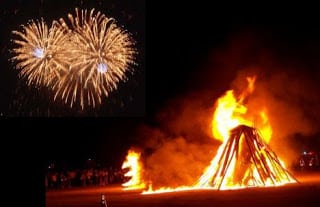
The bonfires could be held over from the older celebration of Samhain, but an important new tradition arises here - that of begging.

Leading up to the day of the holiday children create a straw or rag effigy of Guy.  They stand on a street corner with "him" and beg passerby for a penny for the Guy.  Could this act of children begging adults for a "treat" be where our own trick or treating comes from?

Fast forward a little more, and we come to America.

A Melding of Cultures

America is many things, including a giant melting pot of cultures.  The USA began as a British colony, so the tradition of Guy Fawkes Day was doubtless known to its denizens.  America also had a heavy influx of Irish settlers in its early days.  These settlers likely brought celebrations of Samhain, All Saints' Day, and All Souls' Day with them.  These traditions combined in America, and eventually became the Halloween we know today.  The transition was gradual, though...and aided by a little mischief.

Trick or Treat

The cry is familiar from my Halloweens, but I've never heard any trick-or-treater say it expecting to not get a treat.  Despite this, when you look at the statement you'll see that it is an either/or declaration.  There can be a trick, or there can be a treat - but not both.  As such, it's a little bit of a threat.

In the 1800-1900s tricks were pretty common around Halloween from the teenage population.  They were mostly harmless - gates temporarily being removed from fences, windows being dirtied, that sort of thing.  Shopkeepers ingeniously got out of that last one by decorating their store's windows for the holiday in the hopes that the wild youths would like it and not deface the windows.  Is this where Halloween window decals originated?

As time progressed, the tricks began to escalate.  Part of this was due to rising social tensions.  Unrest over the difference in living styles between the rich and the poor led to more tricks targeting the wealthy.  The conflict between whites and African Americans was growing, and many saw Halloween as a time to work off a little stress.  Things reached a head around the time of the World Wars, when fear and stress overflowed.  Tricks were no longer mostly harmless, and some serious damage was caused.

It was around this time that housewives began to have a brilliant idea.  On Halloween they would bake some sort of goody - donuts, brownies, hot cider, etc. - and keep an eye out for teenagers looking to trick their house.  Upon seeing a group, the woman would invite them into the house for refreshments.  It was hoped that the food would placate the tricksters and make them less likely to deface the house - and it worked!

News spread, and within a few years it became a common practice to offer treats on Halloween.  Youths began to visit houses in their neighborhoods for the express purpose of getting treats, and would spend the evening socializing in the homes of their neighbors.  Throughout all of this, the cry of trick or treat remained as a warning of what could happen if they weren't given some delicious goodies.

Over the years this practice has changed considerably.  Fear of poisoned goodies or blades hidden in apples led to a switch to pre-wrapped candies.  These were faster to eat, so more houses were visited in a night.  Children were discouraged from entering the house of someone they didn't know well, so much of the social aspect of Halloween was lost as the threshold ceased to be crossed.  Once again, that made the process faster, so children were able to expand the range of houses they visited.

That brings us up to today, when the cry of "Trick or treat!" still remains.
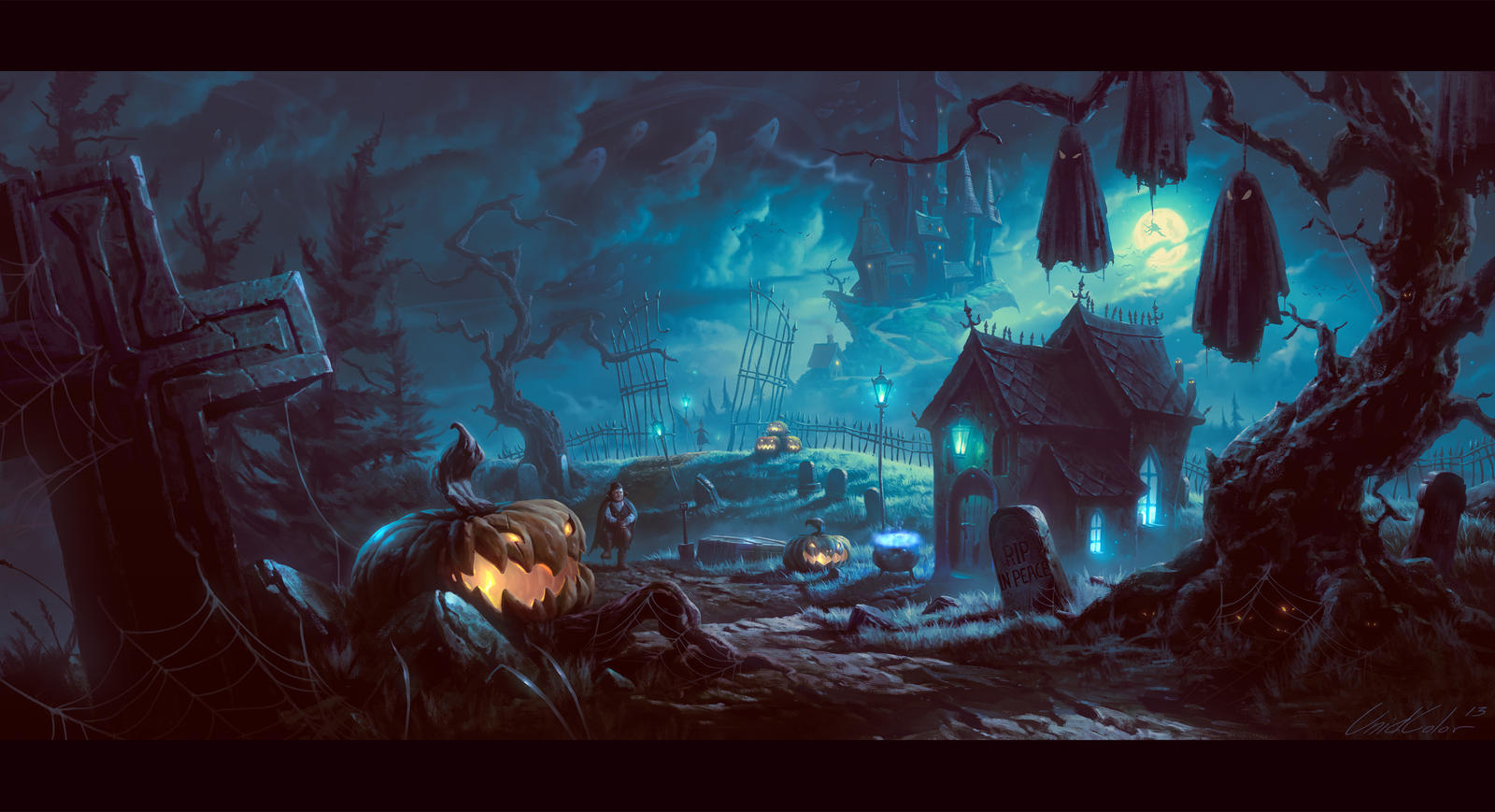

Dia de los Meurtos

I grew up in Southern Arizona, so it would be somewhat remiss of me to not mention Dia de los Meurtos.  Dia de los Meurtos, or "Days of the Dead", is a Mexican holiday.  It takes place from October 31st to November 2nd, and is a Mexican variation of All Souls' Day.

I'm not sure how much Dia de los Meurtos contributed to America's celebration of Halloween, but I can see some of its influence each October.  On Dia de los Meurtos Mexican families celebrate their deceased loved ones.  Small shrines are placed at their grave sites alongside food offerings, and a party is held in memory of the dead.  It might sound sad to you, but it's actually a very festive time.

Skeletons are a mainstay of Dia de los Meurtos, and my local Halloween stores always feature bright, flowery skeleton costumes.
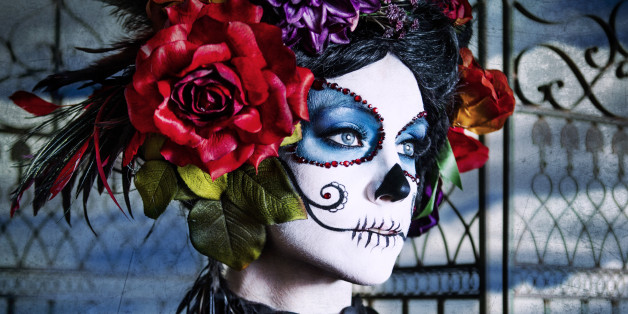

Sugar skulls, a treat on Day of the Dead, can be bought as both decorations and noms.  I'm not sure if Tucson has these just because of our proximity to Mexico, or if they can be found all over the US during Halloween season.

You guys tell me - do you find Dia de los Meurtos items near you in October?  Or is it just a local tradition?  I'm especially curious to know if my readers from other countries are familiar with them.  If nothing else, I know that World of Warcraft has worked the celebration into their Day of the Dead holiday from November 1st to 3rd.

(And, speaking of World of Warcraft: Halloween is celebrated in WoW as Hallow's End.  Here are two pictures from that holiday that I just had to share.)
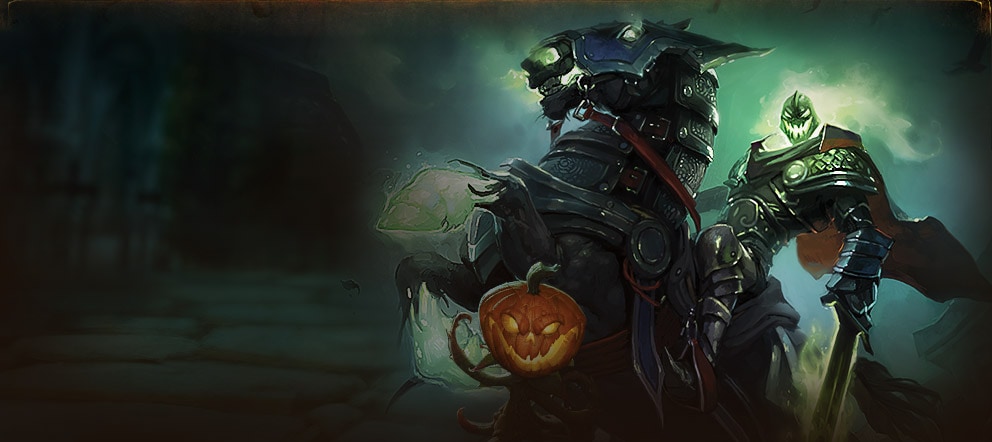
(The Headless Horseman is a boss monster you can fight during Hallow's End.  So cool!)

I hope you guys found this post interesting!  I had a ton of fun researching Halloween and finding out about its origins; I hope you did too!

If you're interested in learning more, I highly recommend the book Halloween and Other Festivals of Death and Life.  It is a fascinating collection of articles on the various subjects I've talked about here, as well as many others that I didn't have room to include.  (I figured this post was long enough already!)

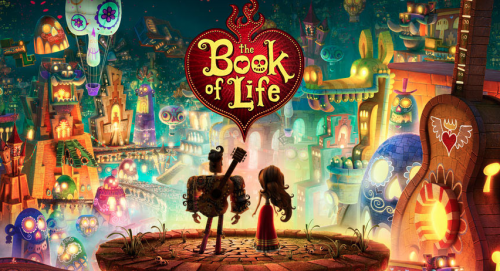
Lastly, because I love it so much, I have to recommend the movie The Book of Life to anyone curious about Dia de lost Meurtos.  It is a gorgeous look at the Day of the Dead, and it has a fun story to boot.  Those visuals!  So pretty!

I hope you all have a wonderful week and a safe, fun Halloween!  I'd love to see your costumes; feel free to send me pictures!  Happy trick or treating!

Sunday, October 18, 2015

Lovesick Published, Upcoming Panel, and Comic-con Appearance

Hey guys!  This has been a super exciting weekend, and I have some awesome news to share with you!

First off - we passed the 3000 pageview mark this weekend!  Thank you all so much for reading my blog!  I shall do my best to keep it entertaining for you.

Next: I published Lovesick!  You can purchase it here, or click the link to the right under "Buy my books".  Information about Lovesick can be found in this post, and you can read the first chapter here.  I hugely appreciate your support of me, and I hope you enjoy the book!  If you read it, I'd love it if you left me a review!


But wait - there's more!

On November 6-8th I will be at Tucson Comic-con as a vendor!  This is my first appearance at a con, and I would love to see you guys there!  I don't know what table I'll be at, but I'll keep you updated as I learn more.  I'll be selling both Hammerfall and Lovesick, signing books, and geeking out!  (Also, I'll probably be in costume.)  Come by and see me!


Last news for today: I'm going to be part of a mythology panel at Pima Community College!  I am hugely excited for this, and I'd like to invite you all to come and listen.  The panel is on November 10th; more information can be found on the poster below.  I'm going to be talking about the way mythology influences modern pop culture.  Comic books, World of Warcraft, Disney, and Star Wars (yes, I know it is technically Disney) will all be mentioned.  Basically, I get to spend the whole night geeking out about my favorite fandoms and tying them into mythology.  I'd love to hear your thoughts on the matter, so please join me!


That's all I've got for today!  Stay tuned...next week I've got a spooky surprise that fits the upcoming holiday.  I'll see you all then!

Monday, October 12, 2015

Merlin the Prophet

Hey guys! How are you? How was your week?
This post we're talking about Merlin, a figure who has been portrayed in a wide variety of mediums. When I think of Merlin, I always think of him as a wizard – a sort of Gandalf-esque figure, if you will. This is because a lot of different modern adaptations of Merlin focus on him as a wizard, a being with magical powers. He had these powers in the original stories, but they have been thoroughly expanded on until the wizard aspect of Merlin overcame his original role in Arthurian legend – that of a prophet.


The story of Merlin's birth is an interesting one. He was born the child of a woman (sometimes a noble, sometimes a nun) and an incubus. The word incubus is not used often in modern American culture, so I'd like to explain it a little. An incubus is a male demon who is incredibly handsome and possesses great powers of seduction. They impregnate females, and the resulting child is usually evil given their part-demonic nature. There is a female version of an incubus, called a succubus, who is seen more often in recent pop culture.
 
(For instance, the succubus is one of the demons a Warlock in World of Warcraft learns to summon.)

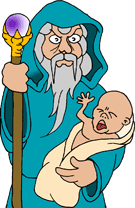
Anyway, Merlin's mom was impregnated by an incubus. She confessed what had happened to a priest, and he was able to bless the child so that when Merlin was born, he was not evil. However, Merlin maintained some of the powers he had inherited from his demonic father – notably, a gift for prophecy. He knew the past and was able to see the future, which came in handy when Merlin began to aid first Uther and then Arthur.

One unique catch to Merlin's prophetic abilities was the fact that he had to abide by what he saw in the future. In one story, Merlin becomes the tutor of a woman gifted with magical abilities. The woman has many names in the various translations of the story, but I'm going to stick with Nimue. (Remember the name – it will be important in a few posts!) Merlin falls in love with Nimue and teaches her everything that he knows.

Unfortunately, Merlin also sees that Nimue will betray him and imprison him in a magical tree, leading to his death. He knows that this will happen, but is unable to change the future he has seen – just as he is unable to prevent Arthur's eventual death.


I find this concept fascinating. Let me ask – if you could have any superpower in the world, what would it be? I've known a lot of people who wanted to be able to see the future. It makes sense; if you could see the winning lottery numbers, or whether your crush would ever like you back, you could make your life a lot better...or so a person might think. But Arthurian legend explores another side to the power of prophecy – what if you knew what was going to happen, but were unable to stop it? What if you saw your own death, but couldn't do anything to prevent it? How would you like to see all of your friends die horribly in a vision, then have to live with them knowing that just such a thing would come to pass?

It's a horrible idea, but one that the stories in Arthurian legend play out well.

As I said, Merlin eventually became known more as a wizard than as a prophet. His abilities were made more magical as the stories were retold, and eventually his role as a prophet was almost forgotten. Instead, stories focus on his ability to shapeshift, to teleport from place to place, or other various and sundry magical tricks.

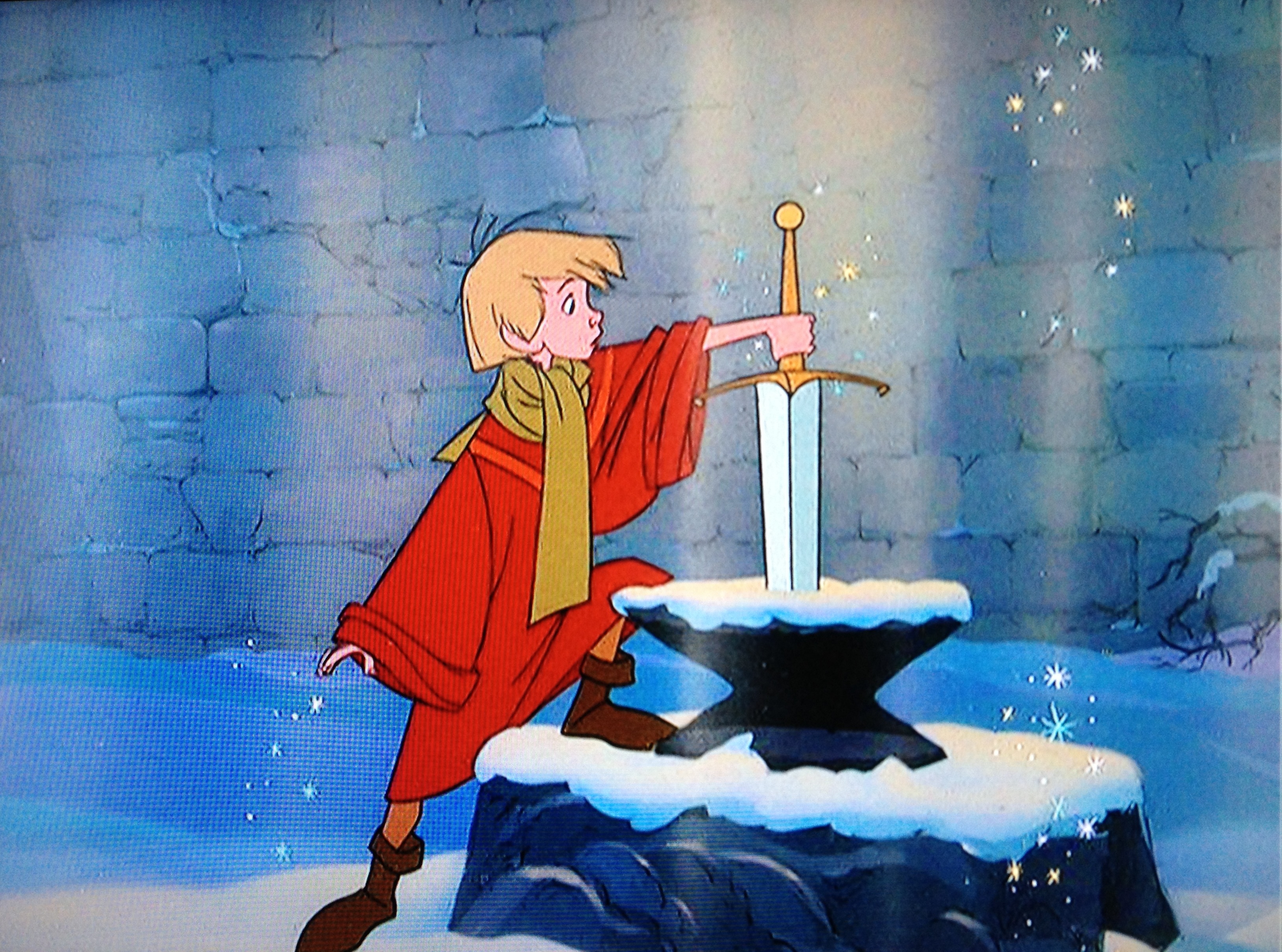
(Anyone remember this shapeshifting duel from The Sword in the Stone?)

But, originally, Merlin was a prophet – and his powers were as much a curse as they were a blessing, given their origin in a demonic father.

I hope you guys found the post interesting! I really do want to know – if you could have any superpower, what would it be?

We'll be taking a short break from Arthurian legend for the next two weeks. I have two very special posts written up...so stay tuned, and I'll see you next Monday!

Sunday, October 4, 2015

Arthur and the Sword in the Stone

Hello! I hope your weekend was as totally utterly amazing as mine was. I got to go to a reptile and amphibian exhibit yesterday. There were crocodiles and alligators (one of which I got to pet!!!), some gorgeous snakes and lizards, and for some reason a mammal-filled petting zoo. The capybaras were adorable, as was the gargantuan bunny (20+ pounds – bigger than my cats! Soooo soft and fluffy) – but the porcupine named Cuddles took the cake. Yes, I spent yesterday petting a porcupine's head and getting my hand thoroughly licked in return. Kind of (read: totally) an awesome day.

Anyway, on to today's post!

 I think most of us have probably heard some variation of the story of the Sword in the Stone. The story has Arthur heroically withdrawing the sword from its magical entrapment in the stone (as the name implies). Maybe you've read about it, or seen it in one of these shows/movies. However, the original story is...a little different than you might be familiar with.

For starters, what is the sword that Arthur pulls from the stone? It is frequently assumed to be and portrayed as being Excalibur, the great sword that King Arthur made famous. That assumption is false. There are actually a lot of swords with magical origins in Arthurian legend. Excalibur is a sword given to Arthur during his kinghood (kingship? Let's go with reign) by a Lady of the Lake. (I say a Lady of the Lake because there are actually several women with that title that appear in Arthurian legend. I'll talk more about that in a later post.) Arthur replaces the Sword in the Stone – which, as far as I know, never had another name - with Excalibur as soon as he gets it.

The next major difference between the original legend and modern portrayals lies in Arthur's claiming of the sword. Arthur is frequently shown taking the Sword in the Stone as an adult or older teenager. In fact, he took the sword before he was 10 years old. Even those stories that get Arthur's age right tend to show Arthur claiming the sword and the kingship for himself. In fact, Arthur was considerably more humble than that. Let me tell you the story.

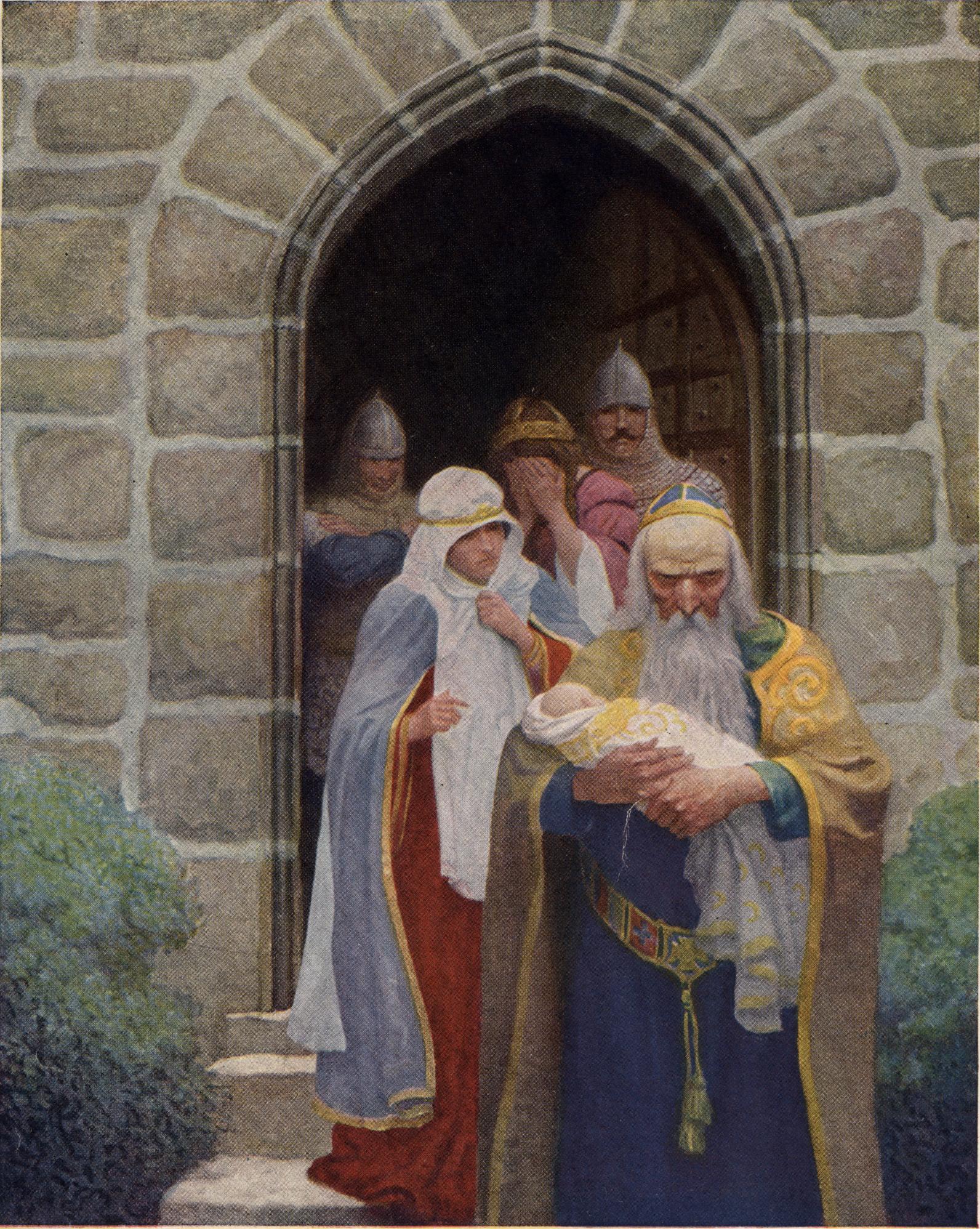
In last week's post I talked about King Uther, Arthur's father. Arthur was born of a union between Uther and Igraine – and the boy was promised to Merlin in exchange for the wizard's...”matchmaking skills”. As soon as Arthur was born Merlin took him and gave him to the knight Sir Ector to be raised.
 
Neither Ector nor Arthur knew of the child's royal origins.

Not long after giving up his son, Uther took ill. The king did not survive for long – only a few years after the birth of his son. Finally, the end drew near. On his deathbed Uther summoned his advisers, including Merlin. Under the wizard's prompting, Uther named his son Arthur his heir and the future king. Uther then died.

Of course, there were a few problems with this. Firstly, none of the advisers (save Merlin, of course) knew who Arthur was. The wizard also faced a dilemma – Arthur was still incredibly young. Were he to take the throne now, youthful and untrained as he was, Arthur would risk being used as a puppet king. Merlin needed to figure out a way to stall for time.

The death of the king left a serious power vacuum. Many lords were wealthy and had large armies, and they expected to be crowned king since no heir was readily apparent. To thwart them, Merlin went to the Archbishop and asked him to summon every noble to the city on Christmas. Merlin swore that God would provide some miracle to show who He would make king.

The nobles all answered the summons, and come Christmas morning they were found praying in the church. When they left, a great stone stood in the middle of the yard. Within the stone was a sword, and an inscription on the rock read that whoever was able to pull the sword from the stone was the rightful king.
(Sounds a little bit like Marvel's Thor and Mjolnir, doesn't it?)
 
Of course, everyone rushed to try and withdraw the sword – but none were successful. Realizing that the rightful king was not present, the Archbishop declared that a great tournament would be held to draw all of the knights of the realm to the city.

Let me back up and change perspectives for a little bit. Arthur had grown up and been educated in his foster father's house. (In some stories, Arthur's education was helped along a bit by some tutoring from Merlin himself.) Sir Ector and his wife also had a son who was several years older than Arthur, a boy named Kay. Kay had recently been made a knight, and his family – including Arthur – were quite proud of this fact.

When news of the great tournament to be held reached Sir Ector's house, Kay immediately wanted to go and compete. His wish was granted, and the day of the tourney came. Ector and Arthur went with Kay to the tournament grounds, where Ector went to find a seat while Arthur helped his foster brother to prepare.

Unfortunately, Kay had been so excited to compete in his first tournament that he had left his sword at home! Kay began to panic and sent Arthur to retrieve his sword and bring it to him before the tournament began.

Arthur raced home, eager to help his foster brother. To his dismay, he found the house locked, since everyone was at the tournament to watch Kay.

Unwilling to fail his foster brother, Arthur came up with a plan. He had heard of a sword just sitting in the churchyard, waiting for someone to claim it. Arthur hurried to the church and easily pulled the sword from the stone.
 
 
He then returned to the tournament and gave it to Kay.

Kay immediately recognized the sword – and, unlike Arthur, he knew the story behind it. He called Ector to him; as soon as his father arrived, Kay said that he had the Sword in the Stone – which made him the rightful king. And Arthur did not protest!

Ector was shocked by the news, but he recognized the sword. He took Kay and Arthur to the church, where he asked Kay how he had come by the sword. Kay replied that his brother Arthur had brought it to him. Ector then turned to his foster son and asked how he had found the sword. Arthur told the story to them casually, not realizing the significance.

Upon hearing of how Arthur had pulled the sword from the stone, Ector asked him to put it back in. Arthur easily slid the sword back into the rock. Both Ector and Kay tried to remove the sword, but they could not. Ector then asked Arthur to reclaim the sword, and the boy did so. Upon seeing this, Ector and Kay bowed down to Arthur as their rightful king.

Of course, the lords of the land were not pleased to hear that a boy had done what no knight or noble could do. Twice they tested his right to the kingship by having the sword placed back into the rock. All the knights and lords tried to remove it, and they all failed. Only Arthur was able to claim the sword.

At last, after tests and protests, the commoners cried out that they loved Arthur, and that he was their rightful king. The boy was crowned, and he became a fair and just ruler, much loved by all.

And so you have the story of the Sword in the Stone! I find it very interesting that the sword is not placed in the stone by magic – at least, not according to Merlin. He claimed that God would show the rightful king. Are we then to assume that the sword was placed by divine providence? Or did the wizard work a little magic to help God's plan along?

What did you guys think? Did you know this version of Arthur's story, or was it new to you?

I'll see you next week with a post about Merlin himself!

Sunday, September 27, 2015

Uther Pendragon

Hey there!  This post is going up a little early, since I'm going to be super busy tomorrow.  I figured early was better than late, right?
Did any of you see the eclipse?  I was quite lucky to have borrowed some binoculars from my grandfather for a different astronomy project.  My brother called to let me know about the eclipse, and I was able to use the binoculars to get a closer look.  It was quite lovely - I hope you got a chance to see it!

This week's post is about a character named Uther.  It's kind of sad that I'm more familiar with the Uther of World of Warcraft than I am with the Arthurian one.  While writing this post I kept referring to him as "Uther the Lightbringer" in my head.

Anyway!  On to the post!

Before I talk about Arthur it is important to discuss the circumstances behind his birth.  The story of Arthur's father, Uther Pendragon, showcases just how important Arthur was.  Uther's story shows that the great wizard Merlin had an interest in Arthur before he was even conceived.  The story also sets the stage for many events to follow, including the birth of Gawain, one of Arthur's knights, and Mordred...who would one day kill Arthur.

But I've jumped ahead in the story.  Let me start at the beginning.

Uther was not originally a king.  He was the youngest son in his family, and so it was his elder brother who inherited the throne when Uther's father died. Uther was a loyal brother and did not seek power for himself.  Instead, he fought his brother's battles for him.


During a campaign against a nearby kingdom Uther met the wizard Merlin, who aided him in his endeavors.

It was Merlin who bestowed the epithet of "Pendragon" upon Uther.  While out riding one day Uther spotted a comet shaped like a dragon shooting across the sky.

(One wonders if this was the inspiration for the comet in A Song of Ice and Fire...)

Uther pointed the comet out to Merlin, who took it as a portent of things to come.  The wizard claimed that the comet showed the coming death of Uther's brother, and Uther's subsequent rise to power.  Based on the shape of the comet he named him Uther Pendragon.  Basically, the title translates to "leader of warriors".

Shortly after this, Uther returned to his lands and found that his brother the king had been murdered.  Uther became king in his stead, and he adopted the dragon as his symbol because of the comet.

King Uther ruled well for a time.  Eventually his army won a great battle and Uther threw a celebration for his victory.  Many of Uther's allies attended the party - one was a man named Gorlois, who brought his beautiful wife Igraine with him.  As soon as he saw her Uther fell in love with Igraine - which was somewhat awkward, since she was married and all.


When he made his feelings known to Igraine, she and her husband fled from the king.  Gorlois hid his wife in a well-defended castle.  Thinking her safe from Uther, Gorlois walled himself away in another castle and prepared to fight all the king's horses and all the king's men.

Completely smitten with Igraine, Uther started a war to win her.  Gorlois' and Uther's men clashed on the fields, and there were many casualties on both sides.

Unfortunately for Gorlois, Uther had a wizard as an ally.

Uther called upon Merlin, who went to the king's aid.  In exchange for his help, Merlin extracted from Uther a promise that anything which resulted from his night with Igraine would belong to Merlin.  Uther readily agreed.

The wizard fashioned a spell which would disguise Uther, temporarily making him look like Gorlois.  Merlin instructed the king to go and spend the night with Igraine before returning to his forces.  He cautioned Uther to not say too much during the night; the more he spoke, the more likely Igraine was to realize that Uther wasn't her husband.

I'm torn about how to feel about this.  On the one hand, Merlin is pretty much the ultimate wingman here.  On the other hand, Uther is plotting to sleep with a woman who wants nothing to do with him, while trying to kill her husband.  There's some seriously disturbing undertones of rape and adultery here, for all that the story is told from a romantic point of view.

What interests me most about this part of the story are the parallels it has to a couple of other famous stories.  First off: the tale of King David from the book of 2 Samuel.  David falls in love with the wife of one of his soldiers.  He plots to kill her husband, and sleeps with her while the man is out in the field.  Eventually David manages to get the soldier killed and takes the woman as his own wife.  However, he never adopts the form of her husband.  No, that tactic is more along the lines of Greek mythology.  It was one of Zeus' favorite techniques to sleep with a married woman.

I found it quite interesting that the story of Uther and Igraine blended elements from Greek and Jewish stories.

Anyways, Uther successfully spends the night with Igraine.  In the morning he leaves to return to his war camp.  Upon arriving, King Uther is greeted with joyous news: Gorlois was slain in battle during the night.

Of course, Igraine isn't particularly joyful when she hears the same news.  It isn't just that she's mourning her husband's death; Igraine is a smart woman, and she realizes that the man who left her that morning could not possibly have been Gorlois.  Afraid, Igraine keeps silent on the matter.  To admit to sleeping with a man she wasn't married to would have been a great crime - she could have been tried and punished for adultery.

Uther still wants Igraine, so during the truce that follows Gorlois' death he asks for her hand in marriage.  Igraine has been left in charge of her husband's forces, but her advisors tell her that they cannot hope to beat Uther's armies.  Left with no choice, Igraine reluctantly agrees to wed King Uther and become his queen.


It takes a month or two for the wedding to be finalized and the vows exchanged.  Shortly after the wedding, it becomes obvious that Igraine is pregnant.  The poor woman is terrified when Uther asks her who the father is.  She confesses everything that happened the night of Gorlois' death.  Igraine swears that she doesn't know who impregnated her, since he looked like Gorlois.

At this point Uther finally spills the beans.  He admits that he disguised himself with magic to have sex with her.  Since they're now married, Igraine has nothing to fear - the child will be legitimate.  (Bastards were very looked down upon in those times - as was the mother who birthed one, particularly if she was noble.  Igraine had very good reason to be terrified.)

I really do feel bad for Igraine.  Uther not telling her the truth as soon as they were married - and particularly his confronting her about being pregnant with another man's child - is just cruel.  The books I've read try to romanticize his actions, but it's kind of hard to make such things sound pretty.

Still, something good came of the act.  Several months later the child of Igraine and Uther was born.  He's kind of famous - maybe you've heard of him: Arthur.  As soon as the child was born Merlin whisked him away, sending him to be the foster son of a knight named Sir Ector.


As far as the king is concerned - unfortunately, Uther's choice in women would eventually catch up to Arthur, and one day lead to his death.  Igraine had a few kids from her previous marriage, you see.  One was a daughter named Morgan le Fey.  The other, also a girl, was called Morgause.  In a very Luke/Leia plot twist, Arthur would grow up to sleep with Morgause (without knowing she was his half sister).  The child of this union, Mordred, would grow up to kill his father...but that's a story for another time!

What did you guys think?  Is Uther a colossal jerk or what?

If you're familiar with the TV show Merlin, the story is quite a bit different from the legends.  However, King Uther is portrayed brilliantly by Sir Anthony Stewart Head.


I confess to only having seen the first season of Merlin, quite a while ago - before I watched Buffy the Vampire Slayer and realized how much I adore its character of Giles, also played by Head.  Have you guys seen Merlin?  Should I revisit the show?

Have a great week!

Monday, September 21, 2015

Intro to Arthurian Legend

Hey guys!  Once again, I apologize for the lateness of this post.  I came down with an ear infection on top of recovering from having my appendix removed, and looking at the computer screen made my head spin like crazy for several days.  I'm slowly getting better, but this post is likely to be a bit shorter and more brusque than usual due to my medical stuff.  Hope you all are doing well!

Arthurian legends are the stories about King Arthur and his knights.  While some of the stories take place before his birth, and some after his death, they all revolve around Arthur - hence the title of Arthurian.


But who is King Arthur?  It has been debated as to whether he actually existed in history, or whether he is entirely made up.  If Arthur did exist, his exploits have been drastically exaggerated in the tales told of him.  Arthurian legend is called such because legends may or may not have had some historical basis.

The stories of King Arthur originated as early as the 6th century.  The tales modern audiences are most familiar with come from a book from the late 15th century.  In the hundreds of years between them huge changes were made to the original stories.  Additional characters were added; those that already existed were hugely embellished.  More drama became present, as did large quantities of romance and unrequited love.  Magic grew in importance, and family trees became complicated as unbeknown incestuous relationships were formed (think Luke and Leia from the first Star Wars).

For a long time most of the stories of Arthurian legend were told in the form of poems.  Perhaps the best known of these poems was the French Vulgate cycle  (When I say poems, I mean as in epics like Homer's Iliad and Odyssey.  These things were long.)  That changed when a knight named Thomas Mallory was imprisoned.  Mallory spent his confinement adapting the Vulgate cycle into a prose form for English audiences.  Several French concepts, such as that of courtly love (a complicated concept that I'll explain more in a later post), were discarded or modified into something that Mallory thought made more sense.  He called his book Le Morte d'Arthur - The Death of Arthur.  (Spoilers!  In the very title!)Le Morte d'Arthur was published in 1485.  Most later adaptations of Arthurian legend stem from this book.
 

As I mentioned, Arthurian legend is full of drama and heartbreak.  You start off knowing that the main character is going to die - of course there's drama!  It focuses on Arthur and his various family and friends.  Main characters include Lancelot, Merlin, Guinevere, Uther, Galahad, Morgan le Fay....the list goes on and on.  We'll focus more on specific characters in later posts.  Many of the cast of Arthurian legend show up in popular culture, ranging from the BBC TV show Merlin to Disney's Sword in the Stone to the many books by T. A. Barron.

Of course, if I'm going to talk about popular culture references to Arthurian legend, there are two things I must mention.  Firstly, the TV show The Librarians.  The Librarians is a spin-off of a movie series that I've watched and enjoyed for years - very cheesy, but very fun.  The TV show has a great cast (Christian Kane, anyone?) and some rather lovely nods to Arthurian legend.  Morgan le Fay shows up, and several characters have their own mysterious ties to Arthurian legend.  I definitely recommend the show!


The other thing I want to mention is a movie called Quest for Camelot.  Until recently, Quest for Camelot was about all I knew of Arthurian legend.  I grew up watching the movie, and I absolutely adore it.  It's one of those animated movies that I always think must be a Disney movie because it is so good, but isn't - like Anastasia!  If you love knights, strong characters, musicals, dragons, and touching stories, I highly recommend you watch Quest for Camelot.


I'll be back next week to tell you about Uther, the father of King Arthur.  See you guys then!

Monday, September 14, 2015

Delayed

My Intro to Arthurian Legend will have to go up later in the week.  I apologize.  I went into the ER last week and wound up getting my appendix removed, and I'm still pretty out of it as I recover from the surgery.  I'll make sure and let you know on Facebook and Twitter as soon as I get the post out.

UPDATE: Came down with an ear infection on top of my recovery.  Head spins like crazy when I look at the computer.  Intro to Arthurian Legend will go up on Monday the 21st.  Sorry for the delay.