Hey all! I hope you had a lovely weekend and are doing well.
Alright guys, let's talk serious for a moment. I know that ISIS is currently a very uncomfortable topic for most people. I've read articles about Nutella refusing to print a customized jar for a girl named Isis out of fear that it would be associated with ISIS. I myself had a friend advise me to get rid of mentioning the goddess Isis in Lovesick out of worry that it would bring to mind the terrorist organization.
To quote a very wise fictional wizard: "Fear of a name only increases fear of the thing itself."
Isis was a goddess in ancient Egypt long before the acronym ISIS came into being. She was a deity of duty, honor, and beauty, and is one of my favorite mythological characters.
I refuse to allow all mention of her to be automatically associated with ISIS, and so I'm going to do a blog post that instead focuses on the positive being behind the name. I hope, in time, that more people will remember Isis the goddess than ISIS the group.
That having been said, here's the post:
The story of Isis' birth is very interesting to me, and it helps to explain some of the mysticism possessed by the goddess. I mentioned in my post last week that the god of the earth, Geb, had four children with the goddess of the sky, Nut. These children were Isis, Osiris, Nepthys, and Set. While this is technically true, it is only true in some versions of the myth. It is to another version of the story of their birth that I wish to turn.
The story goes that Nut was originally married to Ra, god of the sun. Unfortunately for Ra, Nut fell in love with the god Geb.
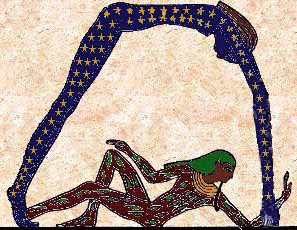
The two conceived four children together, but Ra found out about their union before the babies could be born. Enraged by Nut's infidelity, Ra cursed her so that her babies could not be born in any month of any year.
Now, most women who become pregnant eventually reach the point where they are fed up and just want the baby out of them. This is especially true around the last trimester when the baby is biggest.
Imagine that there are four children inside of you.
Imagine that you have a due date for them. The end is in sight, and there is much rejoicing!
Then imagine that you are cursed so that you can never get the kids out. You'll have to carry them around, for all eternity.
Understandably, Nut freaked out.
Luckily for Nut, she was a very beautiful woman and a lot of gods loved her. When she approached Thoth, the god of knowledge, she found her solution. Thoth was willing to do anything for Nut, and he was very clever. The god made a bet with the goddess of the moon and won, allowing him to take some of her light. Thoth used this light to create 5 days outside of the normal calendar, allowing Nut to give birth to one child each day. One of these children was Isis.
Isis grew up and embraced the mystical nature that surrounded her birth. She became the goddess of magic, but she was also the embodiment of all that was considered good in both a wife and a mother. She was dutiful and loyal above all else. My post last week talked about Isis' quest to resurrect her husband/brother Osiris. In the process she became pregnant with his child (possibly conceived while Osiris was dead, but hey, let's not dwell on the creepy past). Let us turn now to an adventure Isis had while pregnant with Horus, one which highlights her more compassionate, mothering nature.
After reassembling Osiris' body and raising him from the dead (after a fashion), Isis was found by a furious Set. The god trapped her in his house, intending to hold her prisoner until Horus was born.
Luckily for Isis, Thoth was looking out for her. He found where she was imprisoned and set the goddess free, advising her to run to the Delta area and hide until Horus was born. Isis took his advice and set out.
Another deity, the goddess Selket, also lent her aid to Isis.
Selket was the goddess of scorpions, but she was also represented as the protector of the throne and kings...and the unborn Horus was the rightful king of Egypt. As such, Selket sent seven giant scorpions to escort Isis and Horus to safety.
In the midst of their journey night fell, and Isis grew weary. She sought shelter at the home of one of the leaders of a town. Unfortunately, when the wife of the owner saw the scorpions accompanying the goddess she panicked and refused.
This refusal really pissed Selket off. After all, here was a goddess carrying the rightful king of the gods, and this mortal had the audacity to refuse her shelter? Nuh-uh. Not happening. So Selket had six of her scorpions transfer their venom to the seventh (apparently making an uber-venom), and then sent that scorpion into the woman's home. It sought out the woman's young son and stung him, immediately bringing him close to death.
When the woman realized what had happened she carried her son out into the street, crying and lamenting. His demise was imminent, but Isis heard the cries of the grieving mother and took pity on her. She went to the boy and used her magic, instantly healing him. She and the scorpions then took their leave and hid far from civilization until Horus was born.
That is the Isis that I like to remember.
What do you guys think of the goddess?
I'll see you next week with a post continuing the adventures of the divine family!
Monday, January 18, 2016
Monday, January 11, 2016
Osiris: The Resurrected God
Hey guys! Welcome back to my series about Egyptian mythology! Today we're going to be taking a look at Osiris, one of the main Egyptian deities.
The story of Osiris is one of the more interesting ones in Egyptian mythology (at least to me). Let's start at the beginning, shall we? Two of the first Egyptian deities - Nut, goddess of the sky, and Geb, god of the earth - once had four children. These heavenly kids were Nepthys, Isis, Set, and Osiris. Once they had grown up, Osiris wound up being put in charge of the kingdom.
(As a note: before Osiris took the throne, the kids had split up into couples. Nepthys and Set had married, as had Isis and Osiris. Siblings getting married is actually pretty common in mythology - take a look at the Greek myths!)
Unfortunately, Osiris' rule was not to last. His brother Set became incredibly jealous at the power given to Osiris...power which he thought should belong to him. Set was quite cunning, and developed a plan to fool his brother. After much shenanigans and conniving he tricked Osiris into laying down in a box. Set then closed the box on his unsuspecting brother, nailed it shut, and sealed the edges with lead. Osiris, and his prison, were then thrown into the Nile River.
Ahhh, sibling quarrels. Always so much fun!
When she realized that something had happened to her husband, Isis immediately set out to look for him.
(By some accounts their sister Nepthys helped her search. Of course, by some accounts Set murdered Osiris for sleeping with Nepthys, so...) Eventually the box containing Osiris was found at the bottom of the river. Isis pried off the lid and was heartbroken to find her husband dead within.
Now, we'll talk a little more about Isis and her abilities in a post specifically about her, but it is important to know that Isis is the goddess of magic. When she discovered that Osiris was dead, instead of giving up she decided "There's a spell for that!"
Are you ready for the story to get really creepy? Tell me, how do you guys feel about necrophilia?
While taking Osiris' body back to Egypt for burial, Isis conceived a child - Horus. Now, according to some stories she used a magical scroll to raise Osiris from the dead for one night. According to others...let's just leave it at "the child was conceived through magic" and move away from the creepiness, shall we?
At any rate, Osiris' body was returned to Egypt, but Isis had to go into hiding to prevent Set from killing her unborn son. During the time she was hiding Set found Osiris' body and, in a rage, tore it into fourteen pieces. These pieces were scattered by the angry Set throughout all of Egypt.
Poor pregnant Isis once again landed the task of finding her husband's body - albeit in 14 different locations this time. She managed to track down all of the pieces...save for one, a rather crucial part of male anatomy. That particular appendage had been eaten by a fish, and Isis was not able to recover it. Instead she reassembled her husband's body and had a golden phallus made in place of Osiris' missing flesh one.
Then Isis truly showed her mastery of magic. She used her abilities to resurrect Osiris, though perhaps not in the way most people would think. Osiris was returned to the realm of the living after a fashion, but was consigned to spend the rest of his new life in the Netherworld, the Egyptian afterlife. Because of this Osiris effectively became king of the Underworld. Unfortunately, that left him unable to reclaim his throne from Set, setting up (see what I did there?) a future conflict between Set and the rightful heir to the throne....Osiris' son, Horus.
We'll get to that story in a future post.
What I find most interesting about Osiris' story is the connection it has to the Egyptian practice of mummification and the journey to the afterlife. Just about every detail in the tale of Osiris' resurrection has important ties to the process of mummification. All parts of the body are to be assembled in a certain way. Certain rituals (which are performed by Isis in the myth) must be performed. If all is done properly, the spirit of the deceased will journey to the afterlife, just as the god Osiris did.
How interesting is it to have a god who actually died, and then returned to rule? It's a motif not seen too often in mythology. Hades, in the Greek myths, was a living being who nonetheless ruled over the dead. Ereshkigal in Mesopotamia was also living. Izanami, the Japanese goddess of death, died before begin given that title...but her death changed her and made her into a terrifying being. Egyptian mythology is one of the only places where I have seen a god die, return, and reign without his nature changing - though it does have some interesting parallels to Christianity.
What did you guys think of Osiris?
I'll be back next week to tell the story of Isis and the birth of Horus, continuing the dramatic tale of this family's conflict. See you then!
The story of Osiris is one of the more interesting ones in Egyptian mythology (at least to me). Let's start at the beginning, shall we? Two of the first Egyptian deities - Nut, goddess of the sky, and Geb, god of the earth - once had four children. These heavenly kids were Nepthys, Isis, Set, and Osiris. Once they had grown up, Osiris wound up being put in charge of the kingdom.
(As a note: before Osiris took the throne, the kids had split up into couples. Nepthys and Set had married, as had Isis and Osiris. Siblings getting married is actually pretty common in mythology - take a look at the Greek myths!)
Unfortunately, Osiris' rule was not to last. His brother Set became incredibly jealous at the power given to Osiris...power which he thought should belong to him. Set was quite cunning, and developed a plan to fool his brother. After much shenanigans and conniving he tricked Osiris into laying down in a box. Set then closed the box on his unsuspecting brother, nailed it shut, and sealed the edges with lead. Osiris, and his prison, were then thrown into the Nile River.
Ahhh, sibling quarrels. Always so much fun!
When she realized that something had happened to her husband, Isis immediately set out to look for him.
(By some accounts their sister Nepthys helped her search. Of course, by some accounts Set murdered Osiris for sleeping with Nepthys, so...) Eventually the box containing Osiris was found at the bottom of the river. Isis pried off the lid and was heartbroken to find her husband dead within.
Now, we'll talk a little more about Isis and her abilities in a post specifically about her, but it is important to know that Isis is the goddess of magic. When she discovered that Osiris was dead, instead of giving up she decided "There's a spell for that!"
Are you ready for the story to get really creepy? Tell me, how do you guys feel about necrophilia?
While taking Osiris' body back to Egypt for burial, Isis conceived a child - Horus. Now, according to some stories she used a magical scroll to raise Osiris from the dead for one night. According to others...let's just leave it at "the child was conceived through magic" and move away from the creepiness, shall we?
At any rate, Osiris' body was returned to Egypt, but Isis had to go into hiding to prevent Set from killing her unborn son. During the time she was hiding Set found Osiris' body and, in a rage, tore it into fourteen pieces. These pieces were scattered by the angry Set throughout all of Egypt.
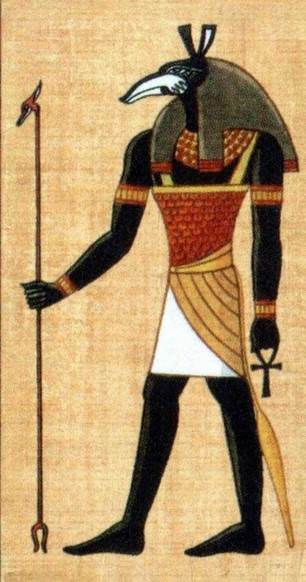
(This, for the record, is Set. No one is entirely sure what animal Set's head is supposed to be based on. There have been actual debates about it.)
Poor pregnant Isis once again landed the task of finding her husband's body - albeit in 14 different locations this time. She managed to track down all of the pieces...save for one, a rather crucial part of male anatomy. That particular appendage had been eaten by a fish, and Isis was not able to recover it. Instead she reassembled her husband's body and had a golden phallus made in place of Osiris' missing flesh one.
Then Isis truly showed her mastery of magic. She used her abilities to resurrect Osiris, though perhaps not in the way most people would think. Osiris was returned to the realm of the living after a fashion, but was consigned to spend the rest of his new life in the Netherworld, the Egyptian afterlife. Because of this Osiris effectively became king of the Underworld. Unfortunately, that left him unable to reclaim his throne from Set, setting up (see what I did there?) a future conflict between Set and the rightful heir to the throne....Osiris' son, Horus.
(Yay, family photo time! Mostly because I think baby Horus is just too adorable.)
We'll get to that story in a future post.
What I find most interesting about Osiris' story is the connection it has to the Egyptian practice of mummification and the journey to the afterlife. Just about every detail in the tale of Osiris' resurrection has important ties to the process of mummification. All parts of the body are to be assembled in a certain way. Certain rituals (which are performed by Isis in the myth) must be performed. If all is done properly, the spirit of the deceased will journey to the afterlife, just as the god Osiris did.
How interesting is it to have a god who actually died, and then returned to rule? It's a motif not seen too often in mythology. Hades, in the Greek myths, was a living being who nonetheless ruled over the dead. Ereshkigal in Mesopotamia was also living. Izanami, the Japanese goddess of death, died before begin given that title...but her death changed her and made her into a terrifying being. Egyptian mythology is one of the only places where I have seen a god die, return, and reign without his nature changing - though it does have some interesting parallels to Christianity.
What did you guys think of Osiris?
I'll be back next week to tell the story of Isis and the birth of Horus, continuing the dramatic tale of this family's conflict. See you then!
Sunday, January 3, 2016
Intro to Egyptian Mythology
Hey guys, welcome to 2016! I hope you had a good 2015, and I'm looking forward to geeking out about mythology with you this coming year. I've got some fun things planned, and I hope you'll enjoy!
To kick off 2016 let's take a look at Egyptian mythology.
Egyptian mythology has long interested me because of its unique view of animals. Many of the deities in Egyptian mythology have the bodies of humans but the heads of animals. For instance:
Anubis, a god of the underworld, is depicted as having a human body with the head of a jackal.
Bast, the goddess of music and warfare, is shown with the head of a cat but the body of a woman.
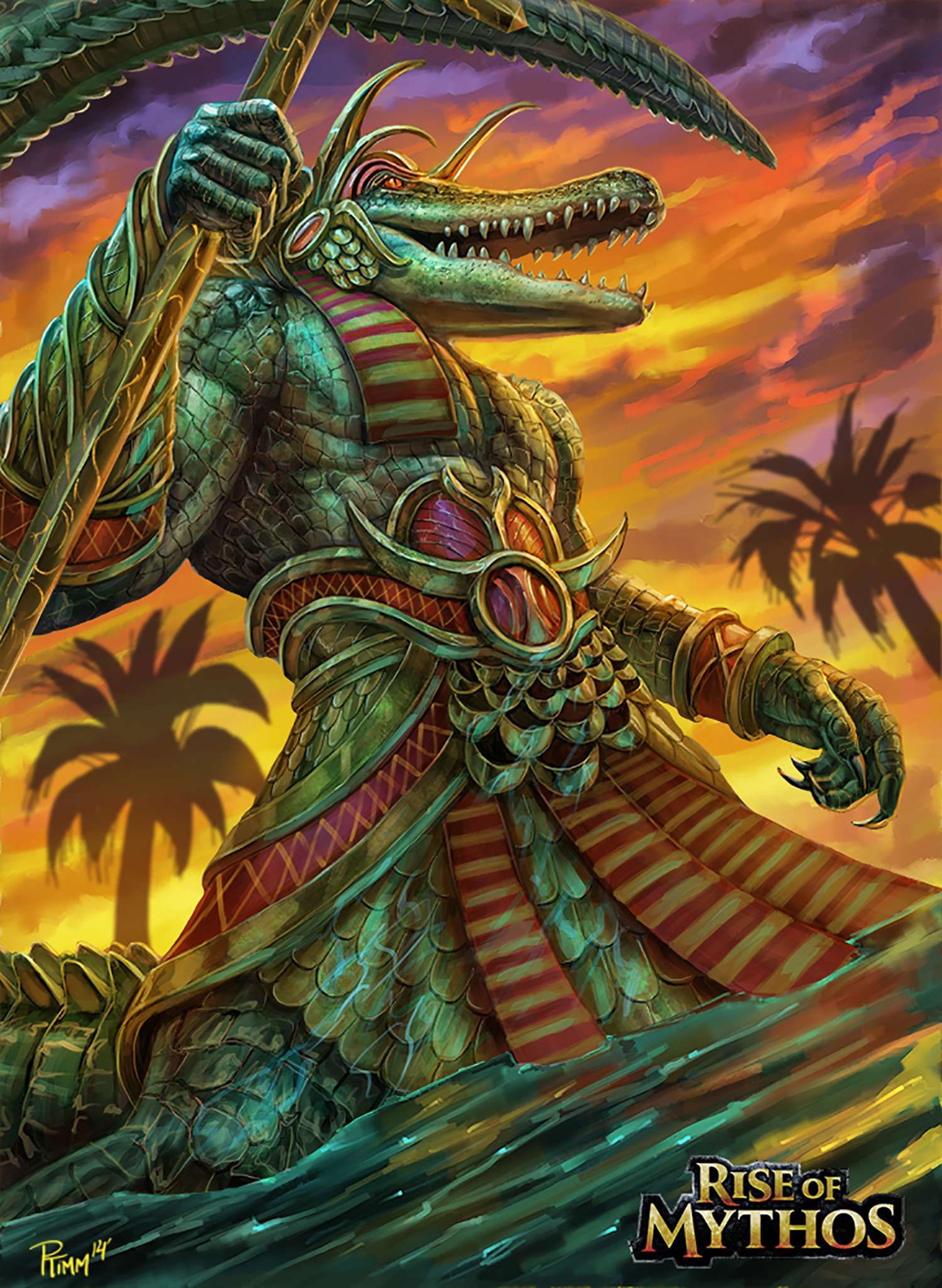
Perhaps my favorite is Sobek, a protective military god with the head of a crocodile.
All of the above gods are very interesting, and I plan to do posts on them in the coming weeks. However, the main players of Egyptian mythology are Isis, Osiris, Set, and Horus. You know how the Star Wars movies all focus around the adventures and drama of one family, the Skywalkers? Osiris and his family are basically the Skywalkers of Egyptian mythology.
We'll talk more about this in future posts, but the main conflict of Egyptian mythology revolves around those four characters. Set and Osiris are brothers, and a jealous Set murders Osiris and literally tears him into pieces, scattering him to the corners of the world. Isis, Osiris' wife, puts her husband back together again (much like Humpty Dumpty!). Their son Horus winds up in an eternal conflict with his nefarious uncle Set. Sounds like fun, right?
Another aspect of Egyptian mythology which I find fascinating is the way it personifies some forces of nature. A perfect example of this is the Nile River. The land around the Nile is particularly fertile, and is fantastic for growing crops. The river is also prone to flooding at certain times of the year, leaving those who dwell with it with a healthy respect for the water. This respect was represented in early Egyptian mythology by creating the Nile into a sort of deity. Praises and hymns were written in its honor, because the Nile provided life to the surrounding lands. Appeasements were also offered to the river in the hopes of preventing early flooding.
I'll leave you guys with that. Have a great week, and I'll see you next Monday with a post about one of the gods!
To kick off 2016 let's take a look at Egyptian mythology.
Egyptian mythology has long interested me because of its unique view of animals. Many of the deities in Egyptian mythology have the bodies of humans but the heads of animals. For instance:
Anubis, a god of the underworld, is depicted as having a human body with the head of a jackal.
Bast, the goddess of music and warfare, is shown with the head of a cat but the body of a woman.
Perhaps my favorite is Sobek, a protective military god with the head of a crocodile.
All of the above gods are very interesting, and I plan to do posts on them in the coming weeks. However, the main players of Egyptian mythology are Isis, Osiris, Set, and Horus. You know how the Star Wars movies all focus around the adventures and drama of one family, the Skywalkers? Osiris and his family are basically the Skywalkers of Egyptian mythology.
We'll talk more about this in future posts, but the main conflict of Egyptian mythology revolves around those four characters. Set and Osiris are brothers, and a jealous Set murders Osiris and literally tears him into pieces, scattering him to the corners of the world. Isis, Osiris' wife, puts her husband back together again (much like Humpty Dumpty!). Their son Horus winds up in an eternal conflict with his nefarious uncle Set. Sounds like fun, right?
Another aspect of Egyptian mythology which I find fascinating is the way it personifies some forces of nature. A perfect example of this is the Nile River. The land around the Nile is particularly fertile, and is fantastic for growing crops. The river is also prone to flooding at certain times of the year, leaving those who dwell with it with a healthy respect for the water. This respect was represented in early Egyptian mythology by creating the Nile into a sort of deity. Praises and hymns were written in its honor, because the Nile provided life to the surrounding lands. Appeasements were also offered to the river in the hopes of preventing early flooding.
I'll leave you guys with that. Have a great week, and I'll see you next Monday with a post about one of the gods!
Sunday, December 27, 2015
The Romance of Reuben and Penina
Hey guys! I hope you all had a wonderful Christmas!
This week I'm wrapping up my series on Jewish folklore with a special tale.
There's a story in Jewish folklore about a challenge between King Solomon - the wisest of Israel's kings - and the Queen of Sheba. The Queen was a frequent guest of Solomon's, and she loved to question him and put his beliefs to the test.
One day Solomon was explaining that God has a perfect match for everyone - a marriage made in Heaven, as it were. The Queen took issue with this, insisting that there were some circumstances wherein a person could not possibly find a mate. She proposed a test, and Solomon agreed to her terms. Together they would find an unmarried young woman. She would be imprisoned in a tree on a deserted island for five years. If, at the end of that time, God had found her a husband, the Queen of Sheba would believe that Solomon had spoken the truth.
The two royals walked through Jerusalem, looking for the perfect candidate. At last they decided upon a lovely maiden named Penina. Solomon and the Queen accompanied her to her home, where Solomon arranged to hire her for five years. He paid her parents well for her employment, and then shipped Penina off to an isolated island.
Penina's home on the island was a single room inside a hollowed out tree trunk. The room had a window - though it was too small for her to fit through - and a door that was sealed and locked from the outside. Her tiny house had a loom for weaving and musical instruments to make her time there more pleasant. Penina was not thrilled by her temporary exile, but she did resolved to do her best to bear it with good cheer.
Now, in this story King Solomon is able to speak with birds. Every day he sent one to pass supplies through the window to Penina. The birds reported to him of her doings, allowing Solomon to keep an eye on her from a distance.
Some time passed, and a ship happened to be sailing somewhat near the island. The sea was calm that day, so the ship's captain went below to take a nap, leaving his son Reuben to steer the ship. For a brief time all was well, but then a violent storm rose up out of nowhere! Reuben did his best to control the ship, but a towering wave swept over it and knocked him into the water. The young man managed to cling to a plank of wood, but he could do nothing but hold on as the waves carried him away from his father's vessel.
Can you guess where he wound up?
The storm carried Reuben to the banks of a strange island, where he was deposited on the sand. Exhausted, Reuben nonetheless went on a search for food and water. There was fresh fruit and spring water in abundance, so Reuben was able to sustain himself.
After several days the young man had explored nearly all of the island. An enormous tree near its center had piqued his interested, and Reuben was determined to climb it. (What else are you going to do on a deserted island? After all, he didn't have a volleyball named Wilson!) When he approached the tree he noticed something quite curious. A bird had approached the foliage, laden down with a basket of fruit and other supplies.
As Reuben watched, the bird perched near a small opening carved into the tree trunk. A hand reached through the opening and took the basket, and the bird flew away.
Reuben was amazed by this. For several days he watched the window. Every day at the same time the bird arrived with supplies. Reassured at last that the bird only came once a day, Reuben approached the window right after it had flown away. He climbed the tree and looked through the hole - and found a beautiful face looking back at him!
Penina was shocked to discover that she had company on the island. The two struck up a conversation, and soon found that they liked one another very much. They talked all day and all night, and then Reuben carved the window a little wider and climbed in side. They were in love.
The birds reported all of this to King Solomon, who smiled and arranged for enough food for two to be sent to the island every day.
Time passed, and eventually Reuben and Penina married. The birds told King Solomon of this, and he sent a wedding feast for the couple. Despite having arguably won the test by the Queen of Sheba, Solomon did not tell her of the events on the island...at least, not yet.
Nine months after the wedding a child was born to Penina and Reuben. They named her Sheba in honor of the woman who had brought them together.
When King Solomon heard the news he was delighted. As it happened, his son was getting married soon and a huge feast was planned. The Queen of Sheba would be attending, and the King wanted to surprise her. Solomon arranged for Reuben and Penina to be taken from the island and brought to the feast.
When the couple arrived at the port the first thing Reuben saw was a picture of a handsome man. He inquired after it, and was told that the man was the son of a sea captain. He had been lost during a voyage, and though is father had searched for many days he could not find him. Upon reaching town the captain had hung up pictures of his son in the hopes that someone would recognize him and reunite them.
Reuben began to cry, realizing that he was the man in the picture.
The group began to travel inland. In a few days Penina, Reuben, and Sheba had arrived and Jerusalem. King Solomon greeted them joyfully. Upon hearing of Reuben's father the King sent for him, along with Penina's parents. A tearful reunion followed, and the families enjoyed themselves immensely at the wedding feast.
As for the Queen of Sheba - she could not argue with the image of Reuben and Penina holding their baby daughter. The Queen admitted that she had lost he wager, and that Solomon was right: God really does have a match for everyone.
I really love this story. I think its message is charming and romantic. I also adore the similarities to the story of Rapunzel. What did you guys think?
I wish you all a happy New Year! I'll see you in 2016 with a new series of posts!
This week I'm wrapping up my series on Jewish folklore with a special tale.
There's a story in Jewish folklore about a challenge between King Solomon - the wisest of Israel's kings - and the Queen of Sheba. The Queen was a frequent guest of Solomon's, and she loved to question him and put his beliefs to the test.
One day Solomon was explaining that God has a perfect match for everyone - a marriage made in Heaven, as it were. The Queen took issue with this, insisting that there were some circumstances wherein a person could not possibly find a mate. She proposed a test, and Solomon agreed to her terms. Together they would find an unmarried young woman. She would be imprisoned in a tree on a deserted island for five years. If, at the end of that time, God had found her a husband, the Queen of Sheba would believe that Solomon had spoken the truth.
The two royals walked through Jerusalem, looking for the perfect candidate. At last they decided upon a lovely maiden named Penina. Solomon and the Queen accompanied her to her home, where Solomon arranged to hire her for five years. He paid her parents well for her employment, and then shipped Penina off to an isolated island.
Penina's home on the island was a single room inside a hollowed out tree trunk. The room had a window - though it was too small for her to fit through - and a door that was sealed and locked from the outside. Her tiny house had a loom for weaving and musical instruments to make her time there more pleasant. Penina was not thrilled by her temporary exile, but she did resolved to do her best to bear it with good cheer.
Now, in this story King Solomon is able to speak with birds. Every day he sent one to pass supplies through the window to Penina. The birds reported to him of her doings, allowing Solomon to keep an eye on her from a distance.
Some time passed, and a ship happened to be sailing somewhat near the island. The sea was calm that day, so the ship's captain went below to take a nap, leaving his son Reuben to steer the ship. For a brief time all was well, but then a violent storm rose up out of nowhere! Reuben did his best to control the ship, but a towering wave swept over it and knocked him into the water. The young man managed to cling to a plank of wood, but he could do nothing but hold on as the waves carried him away from his father's vessel.
Can you guess where he wound up?
The storm carried Reuben to the banks of a strange island, where he was deposited on the sand. Exhausted, Reuben nonetheless went on a search for food and water. There was fresh fruit and spring water in abundance, so Reuben was able to sustain himself.
After several days the young man had explored nearly all of the island. An enormous tree near its center had piqued his interested, and Reuben was determined to climb it. (What else are you going to do on a deserted island? After all, he didn't have a volleyball named Wilson!) When he approached the tree he noticed something quite curious. A bird had approached the foliage, laden down with a basket of fruit and other supplies.
As Reuben watched, the bird perched near a small opening carved into the tree trunk. A hand reached through the opening and took the basket, and the bird flew away.
Reuben was amazed by this. For several days he watched the window. Every day at the same time the bird arrived with supplies. Reassured at last that the bird only came once a day, Reuben approached the window right after it had flown away. He climbed the tree and looked through the hole - and found a beautiful face looking back at him!
Penina was shocked to discover that she had company on the island. The two struck up a conversation, and soon found that they liked one another very much. They talked all day and all night, and then Reuben carved the window a little wider and climbed in side. They were in love.
The birds reported all of this to King Solomon, who smiled and arranged for enough food for two to be sent to the island every day.
Time passed, and eventually Reuben and Penina married. The birds told King Solomon of this, and he sent a wedding feast for the couple. Despite having arguably won the test by the Queen of Sheba, Solomon did not tell her of the events on the island...at least, not yet.
Nine months after the wedding a child was born to Penina and Reuben. They named her Sheba in honor of the woman who had brought them together.
When King Solomon heard the news he was delighted. As it happened, his son was getting married soon and a huge feast was planned. The Queen of Sheba would be attending, and the King wanted to surprise her. Solomon arranged for Reuben and Penina to be taken from the island and brought to the feast.
When the couple arrived at the port the first thing Reuben saw was a picture of a handsome man. He inquired after it, and was told that the man was the son of a sea captain. He had been lost during a voyage, and though is father had searched for many days he could not find him. Upon reaching town the captain had hung up pictures of his son in the hopes that someone would recognize him and reunite them.
Reuben began to cry, realizing that he was the man in the picture.
The group began to travel inland. In a few days Penina, Reuben, and Sheba had arrived and Jerusalem. King Solomon greeted them joyfully. Upon hearing of Reuben's father the King sent for him, along with Penina's parents. A tearful reunion followed, and the families enjoyed themselves immensely at the wedding feast.
As for the Queen of Sheba - she could not argue with the image of Reuben and Penina holding their baby daughter. The Queen admitted that she had lost he wager, and that Solomon was right: God really does have a match for everyone.
I really love this story. I think its message is charming and romantic. I also adore the similarities to the story of Rapunzel. What did you guys think?
I wish you all a happy New Year! I'll see you in 2016 with a new series of posts!
Monday, December 21, 2015
Solstice and Christmas: Old Traditions Made New
Hey guys!
First off: oh my dear sweet goodness Star Wars!!!! SO. GOOD.
(If you're interested, you can check out two posts I've done in the past about the mythology behind Star Wars here and here.)
Now that I've got my fangirling out of the way, let's take a look at today's post!
I have a tradition of looking at different holidays in this blog - you can check out my Christmas post from last year here. Due to that, I want to move away from Jewish folk tales to look at some of the ancient traditions and celebrations that have influenced the modern holiday of Christmas. The holidays I've chosen to discuss today primarily come from Celtic, Norse, and Roman traditions, but if you're curious and go looking you might find that the mythologies of a lot of different cultures have influenced the current celebration of Christmas. Should you do so, please shoot me a message - I'd be interested in seeing what you find!
Let us begin with the celebration of Yule.
Mention of Yule appears frequently in the celebration of Christmas. A certain song immediately comes to my mind:
If, like me, you've sung this song while caroling, the words Yuletide carols being sung by a choir might have made you question their meaning. After years of cheerfully singing along I began to wonder...just what is Yule? The mention of a Yule log in several older books also piqued my curiosity, and so I began to research.
Yule is an old Norse holiday celebrating the end of the cold season. Many cultures have festivities to celebrate the turning of the seasons (we'll talk more about another in a minute), and the Norse were no exception. Yule was marked by feasting (particularly upon boar, which was hunted during the season), drinking, and praising Odin (called the Yule father at times) for victories and Freyr and his father Niord for successful harvests.
Perhaps the most important aspect of Yule was the burning of the Yule log. Yule is celebrated from November to January, which are the darkest and coldest parts of the year (in the region in which it is celebrated, at least). Many cultures from around the world have celebrations during those months that revolve around light and fire. A few older examples come to mind - the Egyptians praying for Ra, god of the sun, to rise again - but there are a considerable number of modernly celebrated festivals as well. We talked about Hanukkah last week, which celebrates the miracle of light. Kwanzaa begins later this week, and also revolves around the lighting of candles. The Yule log, still commonly used in some parts of the modern world, is lit and then allowed to smolder for 12 days. Should the fire go out, bad luck is signified. The remnants of the log are then saved for a year and used to light the Yule log the following year.
Certain aspects of Yule can be seen in modern Christmas celebrations. I know that ham is one of my favorite holiday foods, and while I don't pray to Odin, Freyr, or Niord I do tend to give thanks around Christmas. My heater is currently broken, so fires in the fireplace have been a huge blessing this year...though I tend to look forward to a blazing fire every Christmas season. What about you guys? Do any of the practices of Yule show up in your own celebrations?
Lastly, we have the tradition of mistletoe. While not specifically tied to Yule, mistletoe nonetheless has strong ties to both Norse and Celtic mythology. When Loki goes full-on Dark Side and arranges the death of Baldr, it is mistletoe that ends the god. As such, it was regarded as a very powerful plant.
Mistletoe was also considered sacred by the Celts and druids; enemies who met under it were required to stop fighting and make a temporary peace.
I'm not sure how we went from that to kissing under the mistletoe, but hey. Whatever works?
If you're interested in learning more about Yule, I found this quick guide quite interesting, especially since it focuses more on the modern celebration of the holiday and some of its Celtic influences. For a truly fantastic in-depth look at the Norse origins of Yule, check out this article.
We'll move now to a Roman holiday called Saturnalia.
Saturnalia is celebrated towards the middle/end of December - another solstice festival. It is named for the Roman god Saturn, god of the harvest. Candles were commonly used as both home decorations and gifts during this time - for it was a time of gift giving. Sweets and goodies were exchanged, and both holly and ivy were used as decorations given their being sacred plants to Saturn. All of these things show up in modern Christmas celebrations.
What I find most interesting about Saturnalia is the common reversal of roles, including the election of a Mock King. During Saturnalia slaves and masters swapped places for a time, allowing the slaves to give the commands to their masters. Of course, to quote Terry Pratchett: "We suspect that the slaves were magnanimous in office, though; tomorrow the masters would be the masters again." After all, it isn't wise to antagonize the person who will soon rule over your life once again!
This custom of swapping roles is still alive in some places of the world. It was adapted into Christianity in the form of the Boy Bishop. Around the feast of Saint Nicholas (the patron saint of children), a church would elect a boy to be temporary bishop. He would then elect many of his fellows to aid him in his duties. The boy was allowed to give the sermons and lead the church for a time, before the actual bishop resumed his duties. This practice is still held, primarily in Europe.
I hope you found this post interesting! I was very intrigued to see just how much of what I celebrate has been influenced by past holidays. If you're interested in learning more I recommend checking out a book on holidays symbols (if your library has one) - the one I flipped through is called Holiday Symbols and Customs.
If you haven't read anything by Terry Pratchett, I highly recommend all of his works. I usually reread Hogfather during this time of year, which blends all of the traditions mentioned above with many others to create an entirely unique take on holidays - plus, Death is Santa!
I hope you all have a very merry Christmas, and whatever other holidays you might celebrate. I'll leave you with a cheerfully burning Yule log of sorts, and I'll see you next week!
First off: oh my dear sweet goodness Star Wars!!!! SO. GOOD.
(If you're interested, you can check out two posts I've done in the past about the mythology behind Star Wars here and here.)
Now that I've got my fangirling out of the way, let's take a look at today's post!
I have a tradition of looking at different holidays in this blog - you can check out my Christmas post from last year here. Due to that, I want to move away from Jewish folk tales to look at some of the ancient traditions and celebrations that have influenced the modern holiday of Christmas. The holidays I've chosen to discuss today primarily come from Celtic, Norse, and Roman traditions, but if you're curious and go looking you might find that the mythologies of a lot of different cultures have influenced the current celebration of Christmas. Should you do so, please shoot me a message - I'd be interested in seeing what you find!
Let us begin with the celebration of Yule.
Mention of Yule appears frequently in the celebration of Christmas. A certain song immediately comes to my mind:
If, like me, you've sung this song while caroling, the words Yuletide carols being sung by a choir might have made you question their meaning. After years of cheerfully singing along I began to wonder...just what is Yule? The mention of a Yule log in several older books also piqued my curiosity, and so I began to research.
Yule is an old Norse holiday celebrating the end of the cold season. Many cultures have festivities to celebrate the turning of the seasons (we'll talk more about another in a minute), and the Norse were no exception. Yule was marked by feasting (particularly upon boar, which was hunted during the season), drinking, and praising Odin (called the Yule father at times) for victories and Freyr and his father Niord for successful harvests.
(Of course there was drinking at the feasts!)
Perhaps the most important aspect of Yule was the burning of the Yule log. Yule is celebrated from November to January, which are the darkest and coldest parts of the year (in the region in which it is celebrated, at least). Many cultures from around the world have celebrations during those months that revolve around light and fire. A few older examples come to mind - the Egyptians praying for Ra, god of the sun, to rise again - but there are a considerable number of modernly celebrated festivals as well. We talked about Hanukkah last week, which celebrates the miracle of light. Kwanzaa begins later this week, and also revolves around the lighting of candles. The Yule log, still commonly used in some parts of the modern world, is lit and then allowed to smolder for 12 days. Should the fire go out, bad luck is signified. The remnants of the log are then saved for a year and used to light the Yule log the following year.
(Modern versions of the Yule log tend to include the burning of candles instead of the actual log. As such, they can be very beautifully decorated!)
Certain aspects of Yule can be seen in modern Christmas celebrations. I know that ham is one of my favorite holiday foods, and while I don't pray to Odin, Freyr, or Niord I do tend to give thanks around Christmas. My heater is currently broken, so fires in the fireplace have been a huge blessing this year...though I tend to look forward to a blazing fire every Christmas season. What about you guys? Do any of the practices of Yule show up in your own celebrations?
Lastly, we have the tradition of mistletoe. While not specifically tied to Yule, mistletoe nonetheless has strong ties to both Norse and Celtic mythology. When Loki goes full-on Dark Side and arranges the death of Baldr, it is mistletoe that ends the god. As such, it was regarded as a very powerful plant.
(Death by mistletoe...gotta be an embarrassing way to go!)
I'm not sure how we went from that to kissing under the mistletoe, but hey. Whatever works?
If you're interested in learning more about Yule, I found this quick guide quite interesting, especially since it focuses more on the modern celebration of the holiday and some of its Celtic influences. For a truly fantastic in-depth look at the Norse origins of Yule, check out this article.
We'll move now to a Roman holiday called Saturnalia.
Saturnalia is celebrated towards the middle/end of December - another solstice festival. It is named for the Roman god Saturn, god of the harvest. Candles were commonly used as both home decorations and gifts during this time - for it was a time of gift giving. Sweets and goodies were exchanged, and both holly and ivy were used as decorations given their being sacred plants to Saturn. All of these things show up in modern Christmas celebrations.
What I find most interesting about Saturnalia is the common reversal of roles, including the election of a Mock King. During Saturnalia slaves and masters swapped places for a time, allowing the slaves to give the commands to their masters. Of course, to quote Terry Pratchett: "We suspect that the slaves were magnanimous in office, though; tomorrow the masters would be the masters again." After all, it isn't wise to antagonize the person who will soon rule over your life once again!
This custom of swapping roles is still alive in some places of the world. It was adapted into Christianity in the form of the Boy Bishop. Around the feast of Saint Nicholas (the patron saint of children), a church would elect a boy to be temporary bishop. He would then elect many of his fellows to aid him in his duties. The boy was allowed to give the sermons and lead the church for a time, before the actual bishop resumed his duties. This practice is still held, primarily in Europe.
I hope you found this post interesting! I was very intrigued to see just how much of what I celebrate has been influenced by past holidays. If you're interested in learning more I recommend checking out a book on holidays symbols (if your library has one) - the one I flipped through is called Holiday Symbols and Customs.
If you haven't read anything by Terry Pratchett, I highly recommend all of his works. I usually reread Hogfather during this time of year, which blends all of the traditions mentioned above with many others to create an entirely unique take on holidays - plus, Death is Santa!
I hope you all have a very merry Christmas, and whatever other holidays you might celebrate. I'll leave you with a cheerfully burning Yule log of sorts, and I'll see you next week!
Sunday, December 13, 2015
Hanukkah: The Festival of Lights
Hey guys, I hope you all had a wonderful week! I'm super happy - the semester is almost over, and this Friday is STAR WARS!!!!!!
(Not that I'm excited or anything.)
Ahem. Anyway, on with the post! The Jewish people celebrate several festivals throughout the year. Last week we talked about the festival of Purim; this week, in keeping with the season, we're going to talk about Hanukkah.
Hanukkah, also known as the Festival of Lights, is celebrated in December. I think most people know at least that much about the holiday. Menorahs, the eight-branched candleholders used in the festival, may also be familiar to some.
But how many of us know the history behind the holiday, or the reason for the candles? I know I didn't until I took an Old Testament class last year. I found the story of the origins of Hanukkah beautiful, and I wanted to share it with you.
The story of Hanukkah takes place after the end of the book of Isaiah. In the Christian Bible, Isaiah is the last book of what Christians call the Old Testament. Following Isaiah is the period of several hundred years before the next book in the Christian Bible - the gospel of Matthew. This is quite a large time gap, with nothing there to fill in the blanks.
The Jewish Bible ends at Isaiah, but they have several writings to fill in the centuries-long period that follows. These writings are not actually part of the Hebrew Bible, but are considered historical instead of sacred. Their stories are commonly taught in synagogues, for they focus on a part of history that is particularly important to the Jews.
The story of the origins of Hanukkah is contained in the books of 1st and 2nd Maccabee. Its events take place between 200-150BC, when Greece took over Jewish lands and attempted to outlaw their religion.
The Greek leader in charge of this expansion was named Antiochus; texts more commonly refer to him as Antiochus Epiphanes. "Epiphanes" translates to "God Manifest", and it was a title Antiochus had given to himself.
Yeah. He was slightly full of himself.
Antiochus hated the Jews because they refused to acknowledge the Greek gods. As revenge, he passed laws forbidding the Jews from practicing their faith. One law forbade the Jewish custom of circumcision, something their beliefs required of them. Another set a death sentence for any Jew found worshipping their God.
Then Antiochus did something truly horrific: he stormed the Temple of Jerusalem and desecrated it. He raised a statue of Zeus within the Temple, and sacrificed a pig upon its altar. These acts were known as the Abomination of Desolation.
I don't know how familiar you guys are with the Jewish religion, so I'd like to explain why these acts were so awful. One of the 10 Commandments given by the Hebrew God is "You shall have no other God before me." Raising a statue of a heathen god within God's own Temple was a huge violation of that commandment.
Certain foods are considered unclean in the Jewish faith. Eating them is forbidden. This includes anything with cloven hooves - including pigs. The act of sacrificing an unclean animal upon the Temple's altar made the entire Temple unclean. No additional sacrifices could be made to God, because they would be tainted and unpure. At the time, animal sacrifice was a huge part of the Jewish faith - and it had to be done at that Temple. Antiochus' act made that nigh impossible.
One of the books I have on the subject calls this act "abhorrent". The word does not do the deed justice.
For some Jews, this was the last straw. Instead of subduing them, it made them rise up.
In a village near Jerusalem there lived an old priest named Mattathias. His temper was at the breaking point, and it snapped completely when a group of Greek soldiers attempted to force him to make sacrifices to the Greek gods. He rose up and killed the soldiers, then escaped into the country with his five sons.
(These sons were called the Maccabees, commonly translated as "hammer". It is from them that the books of Maccabee get their names, along with the Maccabean revolution I'm about to talk about.)
Jews began to flock to Mattathias, who led them in rebellion against the Greeks. The Jewish army was small, but its members knew the land well. They used their knowledge of the area to make hit-and-run attacks against the larger forces of the Greeks. The tactic was quite successful.
Eventually Mattathias died of his age and his son Judas took his place. Under his leadership Jews who had fled when the Greek army first came returned to take up arms. Judas was a genius at military strategies; after many defeats Antiochus began to consider the Jews a serious threat.
Antiochus raised an army of tens of thousands to crush the Jewish rebellion. Several generals commanded this army, and one of them led a few thousand men to make a surprise attack on the Jewish camp.
Judas got wind of this before it happened and moved his army. Instead of running, he headed straight for the main part of Antiochus' army, hoping to catch them unawares. The plan worked beautifully - after all, the Greeks expected Judas and his army to be under attack! Though vastly outnumbered, the element of surprise left the Jews victorious and sent the unprepared Greek army fleeing.
When the general who had planned to ambush Judas' forces returned to camp his found it in ruins. Realizing that the Jews had bested his allies, the general retreated with is remaining soldiers.
With no forces left to oppose them, Judas and his men made for Jerusalem. They retook the city and began to ritually cleanse the Temple - a process that would be quite lengthy and difficult. Eventually the work was completed, and Judas began to rededicate the Temple to God.
After he had lighted the menorah Judas made a nasty discovery. Once lit, the menorah was supposed to stay aflame. This was a problem, because here was only one jar of oil left - and that was only enough for the light to burn for one day! It would take eight days to prepare more oil.
There was nothing the Jews could do.
And then...a miracle occurred.
The oil that was only enough for one day somehow kept the lights burning for eight days. It was enough time for more oil to be prepared. The menorah was able to stay lit.
And so it is that the Jews celebrate Hanukkah, the Festival of Lights - a festival which revolves around the lighting of a menorah for eight days.
Whether you guys celebrate Hanukkah or are just reading this post because you were curious, I hope you have a happy Hanukkah, since today is the last day of the holiday this year. And, given the approaching movie, I'll end with this picture:
Have a great week!
(Not that I'm excited or anything.)
Ahem. Anyway, on with the post! The Jewish people celebrate several festivals throughout the year. Last week we talked about the festival of Purim; this week, in keeping with the season, we're going to talk about Hanukkah.
Hanukkah, also known as the Festival of Lights, is celebrated in December. I think most people know at least that much about the holiday. Menorahs, the eight-branched candleholders used in the festival, may also be familiar to some.
But how many of us know the history behind the holiday, or the reason for the candles? I know I didn't until I took an Old Testament class last year. I found the story of the origins of Hanukkah beautiful, and I wanted to share it with you.
The story of Hanukkah takes place after the end of the book of Isaiah. In the Christian Bible, Isaiah is the last book of what Christians call the Old Testament. Following Isaiah is the period of several hundred years before the next book in the Christian Bible - the gospel of Matthew. This is quite a large time gap, with nothing there to fill in the blanks.
The Jewish Bible ends at Isaiah, but they have several writings to fill in the centuries-long period that follows. These writings are not actually part of the Hebrew Bible, but are considered historical instead of sacred. Their stories are commonly taught in synagogues, for they focus on a part of history that is particularly important to the Jews.
The story of the origins of Hanukkah is contained in the books of 1st and 2nd Maccabee. Its events take place between 200-150BC, when Greece took over Jewish lands and attempted to outlaw their religion.
The Greek leader in charge of this expansion was named Antiochus; texts more commonly refer to him as Antiochus Epiphanes. "Epiphanes" translates to "God Manifest", and it was a title Antiochus had given to himself.
Yeah. He was slightly full of himself.
Antiochus hated the Jews because they refused to acknowledge the Greek gods. As revenge, he passed laws forbidding the Jews from practicing their faith. One law forbade the Jewish custom of circumcision, something their beliefs required of them. Another set a death sentence for any Jew found worshipping their God.
Then Antiochus did something truly horrific: he stormed the Temple of Jerusalem and desecrated it. He raised a statue of Zeus within the Temple, and sacrificed a pig upon its altar. These acts were known as the Abomination of Desolation.
I don't know how familiar you guys are with the Jewish religion, so I'd like to explain why these acts were so awful. One of the 10 Commandments given by the Hebrew God is "You shall have no other God before me." Raising a statue of a heathen god within God's own Temple was a huge violation of that commandment.
Certain foods are considered unclean in the Jewish faith. Eating them is forbidden. This includes anything with cloven hooves - including pigs. The act of sacrificing an unclean animal upon the Temple's altar made the entire Temple unclean. No additional sacrifices could be made to God, because they would be tainted and unpure. At the time, animal sacrifice was a huge part of the Jewish faith - and it had to be done at that Temple. Antiochus' act made that nigh impossible.
One of the books I have on the subject calls this act "abhorrent". The word does not do the deed justice.
For some Jews, this was the last straw. Instead of subduing them, it made them rise up.
In a village near Jerusalem there lived an old priest named Mattathias. His temper was at the breaking point, and it snapped completely when a group of Greek soldiers attempted to force him to make sacrifices to the Greek gods. He rose up and killed the soldiers, then escaped into the country with his five sons.
(These sons were called the Maccabees, commonly translated as "hammer". It is from them that the books of Maccabee get their names, along with the Maccabean revolution I'm about to talk about.)
Jews began to flock to Mattathias, who led them in rebellion against the Greeks. The Jewish army was small, but its members knew the land well. They used their knowledge of the area to make hit-and-run attacks against the larger forces of the Greeks. The tactic was quite successful.
Eventually Mattathias died of his age and his son Judas took his place. Under his leadership Jews who had fled when the Greek army first came returned to take up arms. Judas was a genius at military strategies; after many defeats Antiochus began to consider the Jews a serious threat.
Antiochus raised an army of tens of thousands to crush the Jewish rebellion. Several generals commanded this army, and one of them led a few thousand men to make a surprise attack on the Jewish camp.
Judas got wind of this before it happened and moved his army. Instead of running, he headed straight for the main part of Antiochus' army, hoping to catch them unawares. The plan worked beautifully - after all, the Greeks expected Judas and his army to be under attack! Though vastly outnumbered, the element of surprise left the Jews victorious and sent the unprepared Greek army fleeing.
When the general who had planned to ambush Judas' forces returned to camp his found it in ruins. Realizing that the Jews had bested his allies, the general retreated with is remaining soldiers.
With no forces left to oppose them, Judas and his men made for Jerusalem. They retook the city and began to ritually cleanse the Temple - a process that would be quite lengthy and difficult. Eventually the work was completed, and Judas began to rededicate the Temple to God.
After he had lighted the menorah Judas made a nasty discovery. Once lit, the menorah was supposed to stay aflame. This was a problem, because here was only one jar of oil left - and that was only enough for the light to burn for one day! It would take eight days to prepare more oil.
There was nothing the Jews could do.
And then...a miracle occurred.
The oil that was only enough for one day somehow kept the lights burning for eight days. It was enough time for more oil to be prepared. The menorah was able to stay lit.
And so it is that the Jews celebrate Hanukkah, the Festival of Lights - a festival which revolves around the lighting of a menorah for eight days.
Whether you guys celebrate Hanukkah or are just reading this post because you were curious, I hope you have a happy Hanukkah, since today is the last day of the holiday this year. And, given the approaching movie, I'll end with this picture:
Have a great week!
Monday, December 7, 2015
Esther and the Festival of Purim
Hey guys! My last post was an Intro to Jewish Folktales. Following in that vein, today I'm going to be talking about the Jewish folk hero named Esther.
The Jewish people have quite a few festivals that they celebrate every year. These festivals are to commemorate special events in the history of the Jews. One such celebration, the Festival of Purim, remembers the story of a girl named Esther and the way she saved her people from destruction. The full tale can be read in the Book of Esther (interestingly the only book in the Bible to not mention God) or in the movie One Night with the King [for those of you who prefer visuals over text (or just like John Rhys-Davies)], but I'll give you a condensed version.
The story goes like so:
There was once a Persian king named Ahasuerus. (This king has been historically identified with Xerxes I - does the name sound familiar? A certain movie involving three hundred Spartans might explain why...)
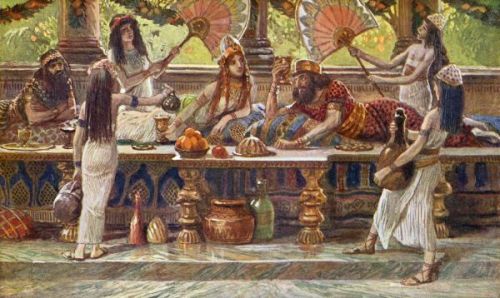
King Ahasuerus had a beautiful wife, Queen Vashti. At that time men and women often dined separately from one another. During a party with some friends (and after a few drinks) Ahasuerus began to boast of Vashti's beauty. His friends wanted to see her looks for themselves, so Ahasuerus sent a messenger commanding the queen to make herself beautiful and come to him.
When the message reached Vashti she was less than pleased to be told to parade her looks before the king's guests like a common dancing girl. To make a long story short, she refused to come before the king. He was frustrated by this, and his guests were worried that their own wives might decide that they could refuse their husbands if the queen set a precedent for it, so Ahasuerus dismissed Vashti.
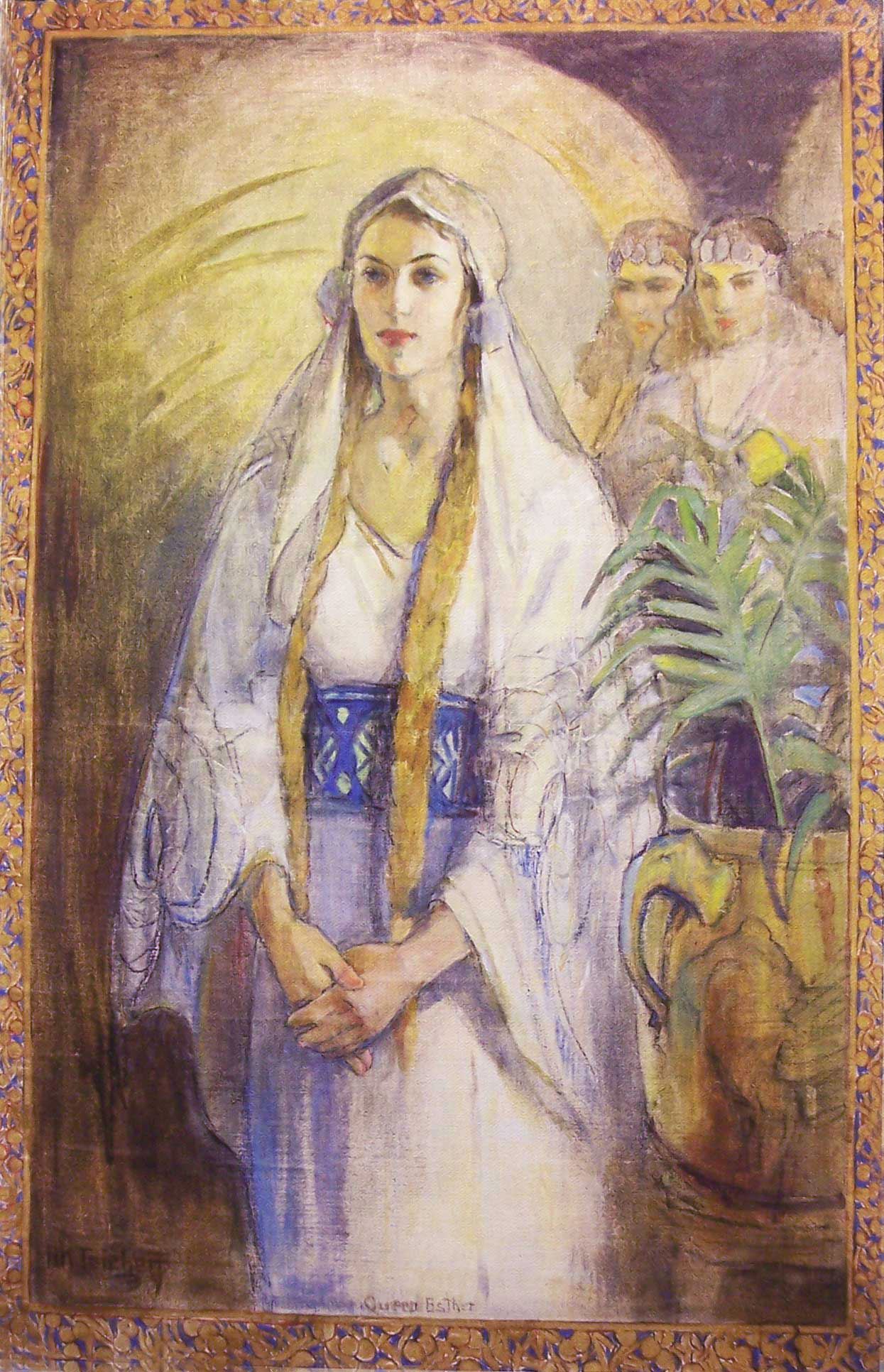
Of course, this left the king without a queen - and that could not be. All of the beautiful maidens in the land were summoned so that the king could choose a new bride from amongst them. One of these women was a girl named Esther, born Hadassah. Esther had been orphaned and fostered by her cousin Mordecai. Mordecai and Esther were both Jewish, though Esther kept this fact hidden from the king. The girl was very beautiful, and she was chosen to be the new queen.
Around this time Mordecai overheard two members of the palace plotting to kill Ahasuerus. He sent a message to Esther, who warned the king, and in so doing saved Ahasuerus' life. The event was recorded with credit going to Mordecai, but the king forgot to reward the Jew.
Now, Ahasuerus had an advisor - a vizier - named Haman. (Of course he would be a vizier! So many of the best villains are!) Haman was passing through the town outside the castle walls one day, and everyone fell before him and bowed...except for one man. That man was Mordecai. Mordecai, as a Jew, did not wish to show obeisance to a man who was descended from the enemies of the Jews.
Haman was furious at this lack of respect, and rushed to Ahasuerus. He told the king that there was a culture who refused to bow to their betters and serve them, and that they must be disposed of to preserve the king's reign. Ahasuerus granted Haman permission to kill the Jews. The vizier cast lots to determine the day on which the extermination would take place. It is from the Jewish word for lot - "purim" - that the name of the festival comes from.
Bans were posted announcing the date that the extermination was to take place. Mordecai tore his clothes and rubbed his face with ash (a sign of mourning) when he saw the signs. He took the news to Esther and begged her to use her influence with the king to try and stop the genocide that was scheduled - but the queen was afraid. There was a rule in the court that no one could approach the king without permission on pain of death. She did not want to lose her life by attempting to speak to Ahasuerus.
Despite her fear, Esther was loyal to her people. She asked Mordecai to have the Jews fast for three days and pray for her. At the end of these three days Esther approached Ahasuerus. To her relief, he extended his rod of command upon seeing her approach - a sign that he would allow her to speak to him, and would not take her life as punishment.
Esther invited the king and Haman to come to a banquet she had prepared. They came and dined, and she extended a similar invitation for the following night. After dinner Ahasuerus found himself unable to sleep. He ordered a servant to read documents of the court to him, and in so doing heard of Mordecai's previous efforts to save the king from assassination. The king realized that he had never rewarded Mordecai for his actions.
The following morning Haman entered the king's chambers in a great mood. He was so sure of Mordecai's coming destruction that he had constructed a gallows in front of his home from which to hang the Jew. As Haman came before Ahasuerus the king asked him how the vizier would honor a man who had aided the king. Thinking that Ahasuerus was speaking of Haman, the man proudly answered that he would have the savior dressed in one of the king's robes and paraded through the city for all to see. Haman was horrified when Ahasuerus ordered him to honor Mordecai in this way!
That night Ahasuerus and a seething Haman went to Esther's dinner. At the second banquet Esther told the king that she was a Jew, and that Haman was seeking to end her life and the lives of her people. Ahasuerus stepped outside to think, and Haman flung himself before Esther and begged for his life. Unfortunately, Ahasuerus walked back in at this moment and thought that Haman was attacking the queen. Furious, the king ordered Haman killed - and, when he was informed that Haman had a gallows ready-made outside his home, ordered him hung there.
I believe that's what is called irony, folks.
The story ends on a happy note. Unable to get rid of a rule he had already created, Ahasuerus instead issued a new proclamation that gave the Jews the right to defend themselves on the designated day of their destruction. The Jews survived, and many Persians who attempted to kill them - including some of Haman's family - were killed instead. It is this survival, and the victory over their enemies, that Jews today still celebrate in March during the Festival of Purim.
I'll end my post there - I hope you guys enjoyed it! As I said in my last post, next week I'll be talking about Hanukkah. I'm very excited, and I hope you'll like what I have written! What did you think of the story of Esther?
The Jewish people have quite a few festivals that they celebrate every year. These festivals are to commemorate special events in the history of the Jews. One such celebration, the Festival of Purim, remembers the story of a girl named Esther and the way she saved her people from destruction. The full tale can be read in the Book of Esther (interestingly the only book in the Bible to not mention God) or in the movie One Night with the King [for those of you who prefer visuals over text (or just like John Rhys-Davies)], but I'll give you a condensed version.
The story goes like so:
There was once a Persian king named Ahasuerus. (This king has been historically identified with Xerxes I - does the name sound familiar? A certain movie involving three hundred Spartans might explain why...)
King Ahasuerus had a beautiful wife, Queen Vashti. At that time men and women often dined separately from one another. During a party with some friends (and after a few drinks) Ahasuerus began to boast of Vashti's beauty. His friends wanted to see her looks for themselves, so Ahasuerus sent a messenger commanding the queen to make herself beautiful and come to him.
When the message reached Vashti she was less than pleased to be told to parade her looks before the king's guests like a common dancing girl. To make a long story short, she refused to come before the king. He was frustrated by this, and his guests were worried that their own wives might decide that they could refuse their husbands if the queen set a precedent for it, so Ahasuerus dismissed Vashti.
Of course, this left the king without a queen - and that could not be. All of the beautiful maidens in the land were summoned so that the king could choose a new bride from amongst them. One of these women was a girl named Esther, born Hadassah. Esther had been orphaned and fostered by her cousin Mordecai. Mordecai and Esther were both Jewish, though Esther kept this fact hidden from the king. The girl was very beautiful, and she was chosen to be the new queen.
Around this time Mordecai overheard two members of the palace plotting to kill Ahasuerus. He sent a message to Esther, who warned the king, and in so doing saved Ahasuerus' life. The event was recorded with credit going to Mordecai, but the king forgot to reward the Jew.
Now, Ahasuerus had an advisor - a vizier - named Haman. (Of course he would be a vizier! So many of the best villains are!) Haman was passing through the town outside the castle walls one day, and everyone fell before him and bowed...except for one man. That man was Mordecai. Mordecai, as a Jew, did not wish to show obeisance to a man who was descended from the enemies of the Jews.
Haman was furious at this lack of respect, and rushed to Ahasuerus. He told the king that there was a culture who refused to bow to their betters and serve them, and that they must be disposed of to preserve the king's reign. Ahasuerus granted Haman permission to kill the Jews. The vizier cast lots to determine the day on which the extermination would take place. It is from the Jewish word for lot - "purim" - that the name of the festival comes from.
Bans were posted announcing the date that the extermination was to take place. Mordecai tore his clothes and rubbed his face with ash (a sign of mourning) when he saw the signs. He took the news to Esther and begged her to use her influence with the king to try and stop the genocide that was scheduled - but the queen was afraid. There was a rule in the court that no one could approach the king without permission on pain of death. She did not want to lose her life by attempting to speak to Ahasuerus.
Despite her fear, Esther was loyal to her people. She asked Mordecai to have the Jews fast for three days and pray for her. At the end of these three days Esther approached Ahasuerus. To her relief, he extended his rod of command upon seeing her approach - a sign that he would allow her to speak to him, and would not take her life as punishment.
Esther invited the king and Haman to come to a banquet she had prepared. They came and dined, and she extended a similar invitation for the following night. After dinner Ahasuerus found himself unable to sleep. He ordered a servant to read documents of the court to him, and in so doing heard of Mordecai's previous efforts to save the king from assassination. The king realized that he had never rewarded Mordecai for his actions.
The following morning Haman entered the king's chambers in a great mood. He was so sure of Mordecai's coming destruction that he had constructed a gallows in front of his home from which to hang the Jew. As Haman came before Ahasuerus the king asked him how the vizier would honor a man who had aided the king. Thinking that Ahasuerus was speaking of Haman, the man proudly answered that he would have the savior dressed in one of the king's robes and paraded through the city for all to see. Haman was horrified when Ahasuerus ordered him to honor Mordecai in this way!
That night Ahasuerus and a seething Haman went to Esther's dinner. At the second banquet Esther told the king that she was a Jew, and that Haman was seeking to end her life and the lives of her people. Ahasuerus stepped outside to think, and Haman flung himself before Esther and begged for his life. Unfortunately, Ahasuerus walked back in at this moment and thought that Haman was attacking the queen. Furious, the king ordered Haman killed - and, when he was informed that Haman had a gallows ready-made outside his home, ordered him hung there.
I believe that's what is called irony, folks.
The story ends on a happy note. Unable to get rid of a rule he had already created, Ahasuerus instead issued a new proclamation that gave the Jews the right to defend themselves on the designated day of their destruction. The Jews survived, and many Persians who attempted to kill them - including some of Haman's family - were killed instead. It is this survival, and the victory over their enemies, that Jews today still celebrate in March during the Festival of Purim.
I'll end my post there - I hope you guys enjoyed it! As I said in my last post, next week I'll be talking about Hanukkah. I'm very excited, and I hope you'll like what I have written! What did you think of the story of Esther?
Subscribe to:
Posts (Atom)